Potential fixes to our COE system
18 Mar 2026|15 views
The Land Transport Authority (LTA) announced that it will be "reviewing the COE system to improve the categorisation of cars in Singapore". This response is likely on the back of sky-high premiums in recent years, as well as the recent instance of Cat A premiums eclipsing Cat B.
But let's immediately pump the brakes: A review is but a review, and there’s no indication that any change is definitely incoming.
That said, well, we have some ideas.
Change isn't without precedent. Indeed, we moved from 5 passenger car categories in 1990 to the 3 that we currently have, and that was again adjusted for power output (not just engine capacity).
We previously explored some potential ideas back in 2022, but the market has also evolved since then. EVs are a significant disruption - with electric motors, it is much easier to ‘tweak’ the power output than with a combustion engine, resulting in more malleability when it comes to fitting EV models down into Cat A. Since 2022, there have also been many new entrants into the market, further increasing competition for a scarce commodity (COEs).
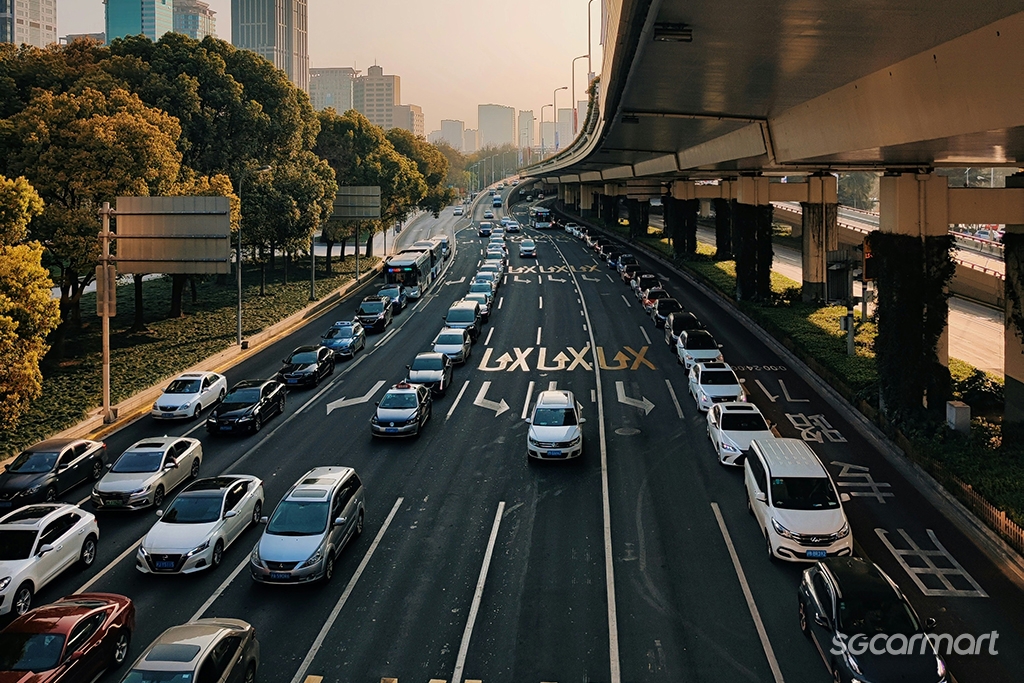
China is the only other country in the world that employs some kind of quota-based control on vehicle population, and only in specific cities
For some greater context, Singapore is currently the only country to implement a strict market-based quota system. In economics terms, it is a form of quantity-control policy using an auctioned permit system. The only other place a tangentially-similar style of quota control exists is China, which implements a mix of auction and lottery-based allocation, and only in a few cities (Shanghai, Beijing, Guangzhou).
And our system is certainly not going away - the Government has been very clear about wanting to restrict and control the number of vehicles on the road, and there’s also no shying away from the reality that it generates plenty of tax revenue ($8.7 billion in the fiscal year ending March 2026).
Of course, not all ideas are equal, either in effect or in practicality of implementation. Here, we’re going to explore a range of ideas and proposals (small and large) that might address concerns that many are expressing about the COE system in its current form.
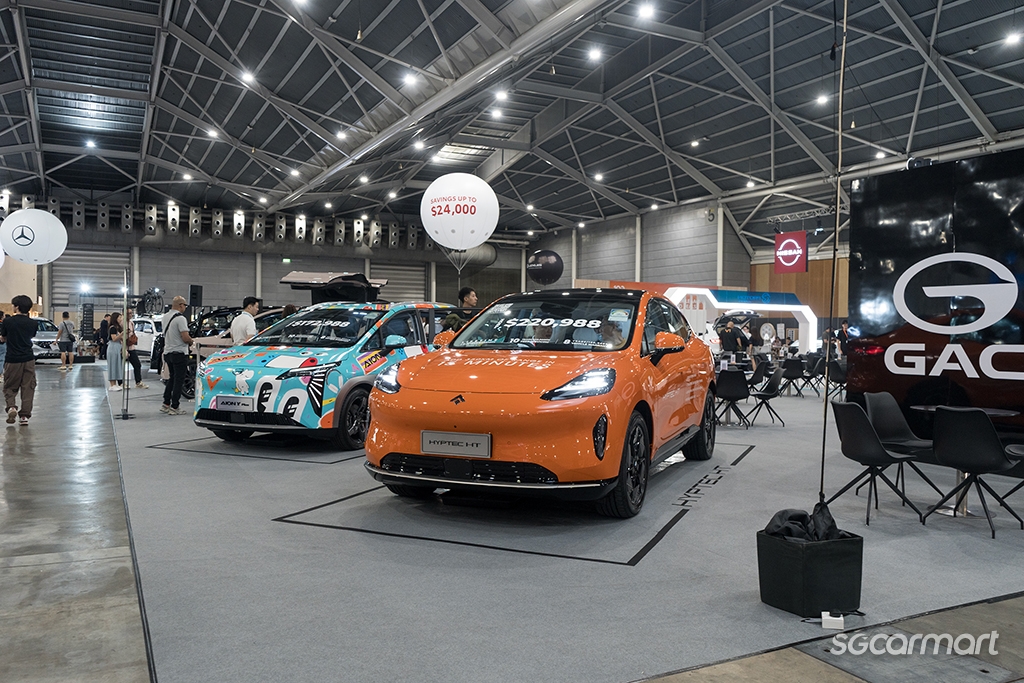
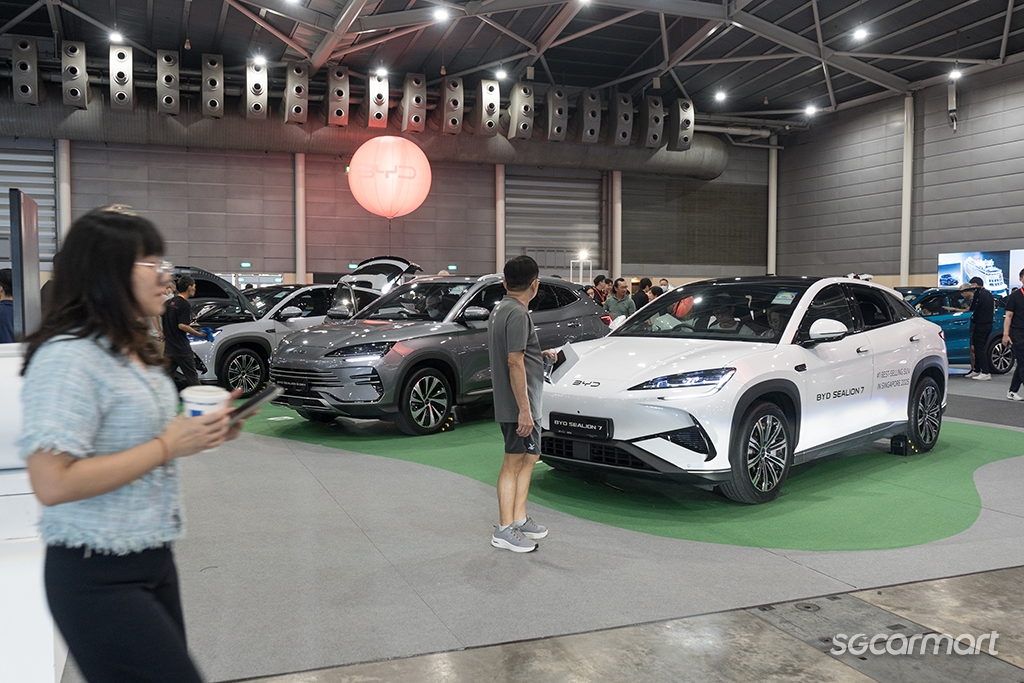
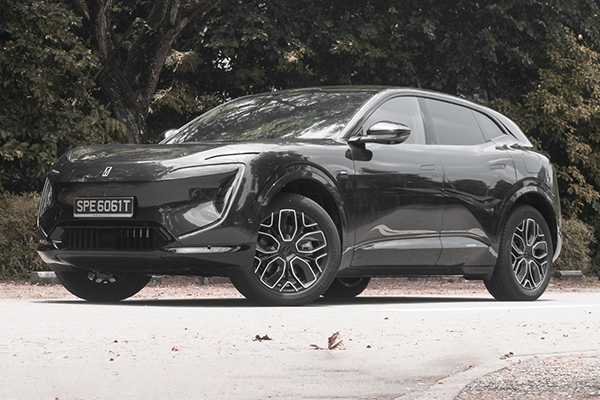
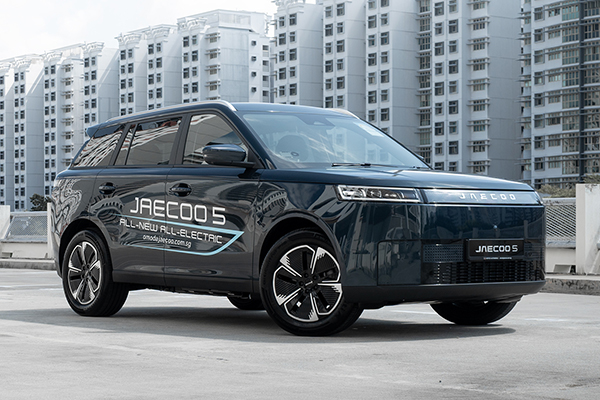
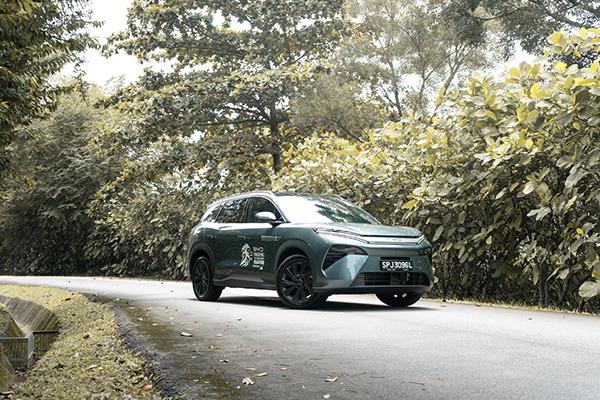
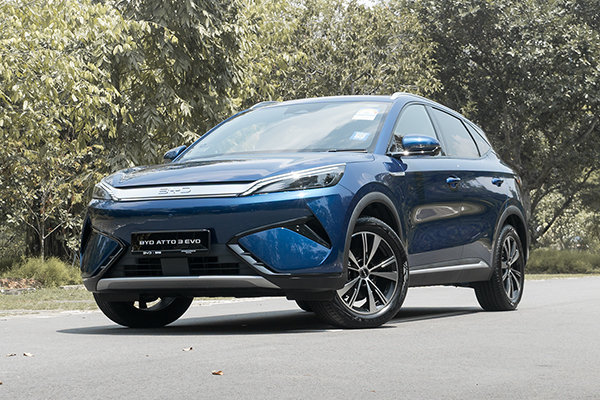
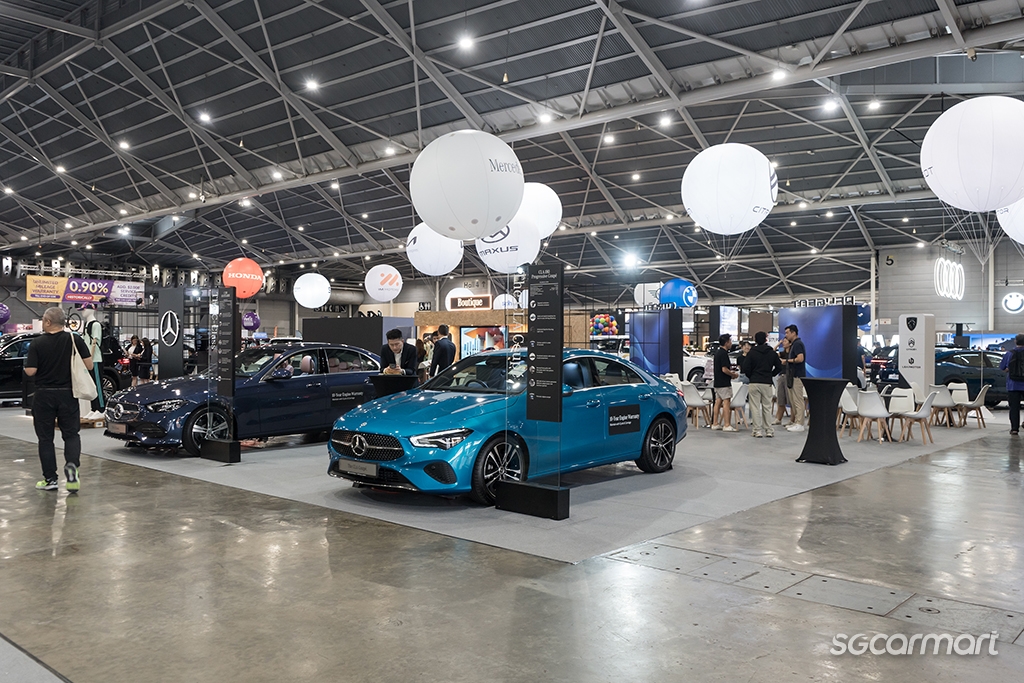
The rapid influx of new brands into the market - many of them offering Cat A EVs - has resulted in increased competition for a scarce resource (COEs)
Improving categorisation
We’ll start first with addressing categorisation specifically - the most explicit takeaway from this LTA announcement.
1. Move the line between Cat A and Cat B downwards
This is probably the 'simplest' change to make, but probably also the least effective. Moving the line downwards - by reducing the power cap - makes Cat A more restrictive, potentially excluding some higher-priced models and reducing the competition pool. Conversely, it could increase the pool of competition in Cat B, which could then increase prices upwards relative to Cat A.
Pros:
- Minimal disruption to current system
- Easiest to understand
Cons:
- Arbitary line-drawing, though that's probably already true of our current system
- Doesn’t really address fundamental issues, and arguably makes it even more difficult for buyers shopping in the more 'budget' segment
- Still leaves open plenty of possibility for OEMs to 'game' the system, especially for EVs since it's easy to adjust power output
2. Segment strictly according to output, more segments
These days, engine capacity really isn’t a very indicative marker anymore, and this is especially true with more and more EVs in the market. Categorisation could be simply by power output. It can be a similar-enough system to the current one, but more category lines can be drawn, especially for the higher-output cars (maybe a separate category for 250+bhp, another for 400+bhp etc). Ironically, this would be conceptually more similar to the old 5-category system.
Pros:
- More neatly group shoppers according to buying preferences - low-end, mid-range, high-end
- Reduces competition for COE across segments
Cons:
- Arbitrary line-drawing
- Still doesn't really address the issue of in-between brands/models doing what they can to move between categories
- Doesn't really do much in 'helping" buyers on the lower end of the price spectrum
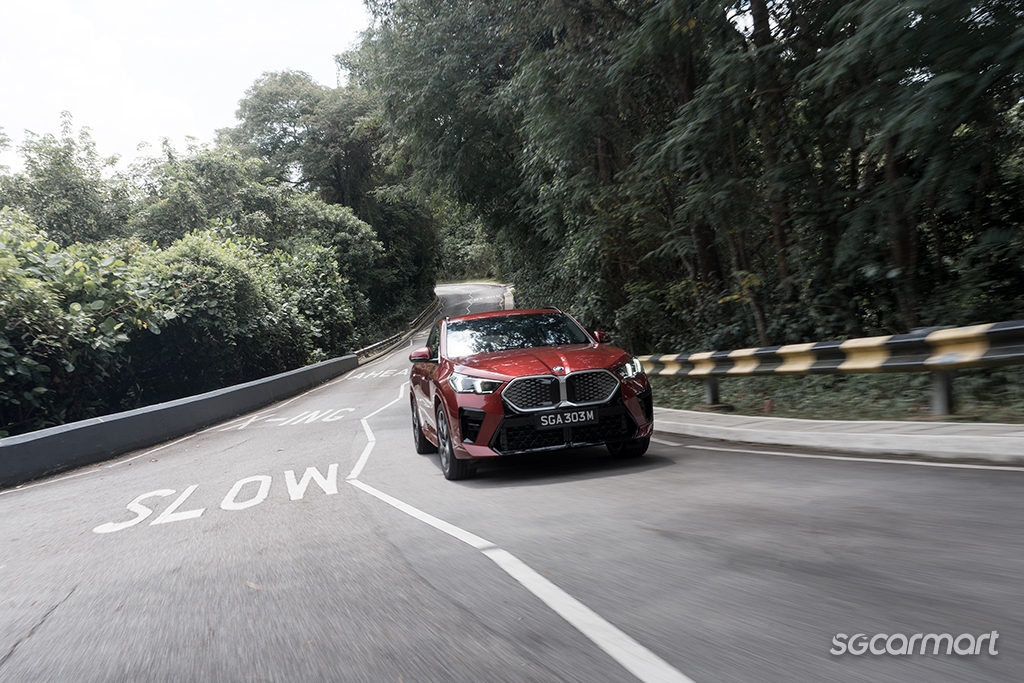
It's telling that while both cars qualify for a Cat A COE, the OMV of an iX2 is almost four times that of a Suzuki Swift - reflecting the wide spread of cars price-wise within the same COE segment
3. Segment according to OMV
This idea has been floated plenty before, and arguably makes the most obvious sense. It directly targets a cars ‘value’, and is likely more equitable from brand to brand (premium cars are generally always going to be more expensive). For context, in our current COE system, a BMW iX2 eDrive20 M Sport, OMV $50,149, qualifies for Cat A (it's the highest OMV of a Cat A model, almost four times as much as the OMV of the Suzuki Swift, which has the current lowest OMV of all passenger cars). A Honda HR-V Hybrid 1.5 HX e:HEV, OMV $21,600, is the lowest-OMV Cat B model (that OMV is less than most Cat A EVs). There’s clearly some disparity built into the system as it is currently structured.
And, there’s already some present form of this in the way tiered ARF is structured - segmentation could take reference from the 20k/40k/60k/80k tiers.
Pros:
- Very clear boundaries
- Probably the cleanest way to distinguish between segments through price point
- Already exists other taxes tagged to OMV
- Harder for OEMs to 'game' the system as reducing OMV is largely contingent on reducing the specification on the car
Cons:
- Wherever the line is drawn is always going to arbitrary, especially if the current Cat A/B segmentation is maintained, though we can also argue (correctly) that about current ARF tiers.
- Some limited possibility of same car falling either side of the line depending on spec/year/etc. OMV tends to be a moving number (depending on exchange rate and other factors), so that variance is hard to account for over time (especially over many years). That’s probably still why it's still currently tagged to output because that’s a ‘fixed’ number that doesn't fluctuate over time. One possibility is to take the OMV upon launch and peg car to that point – car COE renewals will function similarly to how old Cat A cars unaffected by the power output regulation can still be renewed with a Cat A COE.
- Not future-proof: Cars tend to increase in OMV over time, especially with increasing levels of technological sophistication
- Still some possibility of brands 'gaming' the system by reducing car OMV, though less easily effected than detuning power
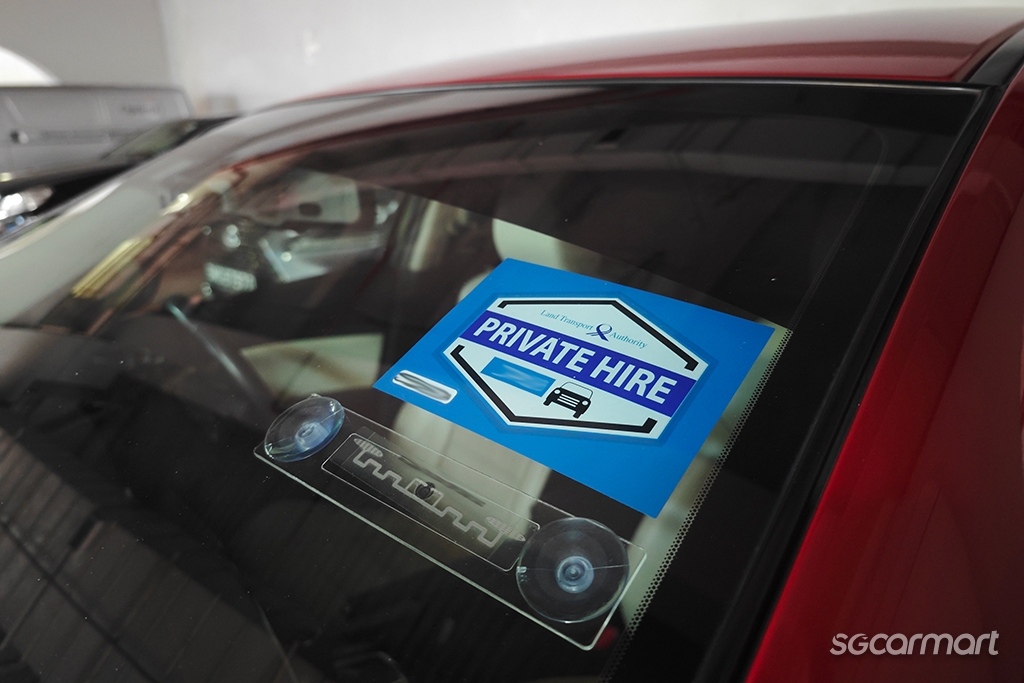
4. Separate category for PHVs
This has been discussed a lot in recent years - to consider these vehicles as a separate category of cars, similar to how commercial vehicles are considered. Specific rules can also be introduced: Reduced life span (similar to taxis), financing rules that match private cars, and usage cannot be converted back to private cars.
Pros:
- Less competition among passenger vehicles, which may slightly deflate COE prices
- Might lower the appetite for aggressive bidding by leasing companies
- Potential population control of PHVs
Cons:
- PHVs all things considered still make up a smaller proportion of total vehicles
- Not addressing for structural issues in the current system
- Badly affects mixed-use drivers (private car owners who do private-hire as supplementary income rather than a full-time gig)
5. Single COE category
Treat all cars as a luxury good, and leave it to be a completely open market. There’s some existing basis for this: Cat D motorcycle COEs. While motorcycle licenses are segmented into 3 licenses, all bikes have the same COE. Ironically it's the inverse for cars: Segmented COEs, but just one license requirement. (As a biker, is my opinion coloured? Of course it is.)
Pros:
- No gaming of the system since segmentation is removed
Cons:
- Likely lead to overall increase in COE premiums as there's more perceived competition
- In all likelihood more beneficial to higher income buyers, as COE premiums factor as a smaller proportion of total car price
- Lose the effect of trying to segregate between affordable models and premium models
Systemic adjustments to the COE system
These ideas try to address larger system issues that go beyond simply where the line between categories are drawn. These could work in tandem with proposed adjustments to categorisation.
Redistribute Cat A and B quotas
For the current period, there are 7,585 Cat A and 4,864 Cat B COEs available. That’s roughly a 3:2 ratio. Allocating more COEs to Cat A could beef up supply and potentially drive prices downward. The challenge is that COE supply is presently directly determined by deregistrations of that particular category, and in fact as of the end of 2025, there are actually more Cat B than Cat A cars on our roads (337,060 vs 322,377).
There’s going to be a need to somehow magically morph expiring Cat B COEs into Cat A ones. One possibility is to move the 10% contribution to Cat E for Cat B deregistration to Cat A instead. Or else, LTA can simply make a one-time/multi-time adjustment.
Pros:
- Increases supply of Cat A COE quota, which could help place downward pressure on prices
- Inversely, reducing supply in Cat B could increase prices, and create a more tangible gap between the two categories
Cons:
- Greater availability of Cat A COEs may drive even more OEMs to tweak their vehicles to fit into Cat A
- LTA putting its thumb on the proverbial scale could have unforeseen long-term impacts, and also affecting the ‘free-market’ balance
'Pay as you bid' system
In this system, the bidder will be required to pay whatever amount was placed as the bid. Currently, bidders who ‘over-bid’ are not penalised for doing so. And given most bids are handled by dealers with overt incentives to want to deliver cars, there’s in-built incentive (and certainly financial clout) to bid aggressively.
Pros:
- Prevents bidders from driving bids up aggressively, as there’s an in-built financial cost of doing so
- Forces bidders to exercise more financial prudence and to only bid amounts that they are comfortable with
Cons:
- Doesn’t change the fact that some people who need a car will be potentially priced out of the ability to own one
- Doesn't address existing concerns about segmentation
Complete overhaul (aka Wild ideas)
As the header suggests, these are wild, almost certainly impossibly to implement ideas (and maybe a little bit half-banked). But it's interesting food for thought...
Car Ownership Permit
This idea is some variation of the Hong Kong taxi license/New York taxi medallion. In effect, the permit allows you to own a car, regardless of the car. That permit is tied to owner ID and is transferable. This then removes the car from the equation and actually makes a ‘fairer’ car-buying market. In effect, you pay exactly for the car however much it ‘costs’, with prices not fluctuating due to competition. The competition is instead moved onto a separate commodity, effectively separating the cost of car ownership from the cost of the good. There's also potentially the ability to segmentise tokens between private buyers and businesses, thus delineating and separating competition.
Pros:
- Highly transparent in terms of cost and pricing
- Possibility to limiting number of permits an individual can own, though there are obvious workarounds
- Can further tax people holding multiple permits, similar to ABSD
- Possibility of also minimally allocating one per household to try to democratise car ownership, though there are obvious potential problems to doing this
Cons:
- Immediate question of how to determine the initial batch of permits. Simple 1-to-1 conversion of current COEs to permits disproportionately benefit the wealthy who own multiple cars
- Likely will create a market for permit trading (as is the case with the taxi licenses in HK/NY)
- Will completely blow up the used car market in the short to medium term.
- Again, likely favours the wealthy who can/will buy more permits.
2. COE lottery
Instead of an auction, COE allocation could be done via a lottery instead. This way, there's arguably more fairness to a random allocation. As for the actual price of the COE, that could instead be tagged to a fixed percentage of the car's OMV (in effect becoming another tax on the car).
Pros:
- Immediately takes 'buying power' out of the equation
- Reduces speculation/COE-hoarding by distributors
Cons:
- Well, it is random, bringing with it all the complications that randomness entails. For example, you will run into instances of people who "need" a car and are willing to pay for it, but just miss on the lottery
- Will drastically affect how car dealers do their sales forecasting, bringing with it a heavy amount of uncertainty
The very nature of a quota system means that there's inherent cost to the consumer - the question now is whether there are potential fixes that are more in-line with where the car market is today, and moving forward
Conclusion
Look, any quota system is going to be inherently imperfect and subject to plenty of public scrutiny and indignation (just ask any Singaporean car owner). What changes are likely? It's impossible to say. LTA could make a small, incremental change with a small, incremental effect, or go big and radically overhaul the system (this seems much less likely, but never say never). Or, LTA could also do absolutely nothing (would we be surprised?). After all, even with all the moaning and grumbling, it's not like many people are giving up car ownership in protest. In fact, the inverse is true - high COE premiums tell us that demand remains high (though there is some valid concern about where exactly that demand is coming from).
But as things stand, a shake up would probably be welcomed. Now, it's just the question on what exactly that could look like.
The Land Transport Authority (LTA) announced that it will be "reviewing the COE system to improve the categorisation of cars in Singapore". This response is likely on the back of sky-high premiums in recent years, as well as the recent instance of Cat A premiums eclipsing Cat B.
But let's immediately pump the brakes: A review is but a review, and there’s no indication that any change is definitely incoming.
That said, well, we have some ideas.
Change isn't without precedent. Indeed, we moved from 5 passenger car categories in 1990 to the 3 that we currently have, and that was again adjusted for power output (not just engine capacity).
We previously explored some potential ideas back in 2022, but the market has also evolved since then. EVs are a significant disruption - with electric motors, it is much easier to ‘tweak’ the power output than with a combustion engine, resulting in more malleability when it comes to fitting EV models down into Cat A. Since 2022, there have also been many new entrants into the market, further increasing competition for a scarce commodity (COEs).

China is the only other country in the world that employs some kind of quota-based control on vehicle population, and only in specific cities
For some greater context, Singapore is currently the only country to implement a strict market-based quota system. In economics terms, it is a form of quantity-control policy using an auctioned permit system. The only other place a tangentially-similar style of quota control exists is China, which implements a mix of auction and lottery-based allocation, and only in a few cities (Shanghai, Beijing, Guangzhou).
And our system is certainly not going away - the Government has been very clear about wanting to restrict and control the number of vehicles on the road, and there’s also no shying away from the reality that it generates plenty of tax revenue ($8.7 billion in the fiscal year ending March 2026).
Of course, not all ideas are equal, either in effect or in practicality of implementation. Here, we’re going to explore a range of ideas and proposals (small and large) that might address concerns that many are expressing about the COE system in its current form.

The rapid influx of new brands into the market - many of them offering Cat A EVs - has resulted in increased competition for a scarce resource (COEs)
Improving categorisation
We’ll start first with addressing categorisation specifically - the most explicit takeaway from this LTA announcement.
1. Move the line between Cat A and Cat B downwards
This is probably the 'simplest' change to make, but probably also the least effective. Moving the line downwards - by reducing the power cap - makes Cat A more restrictive, potentially excluding some higher-priced models and reducing the competition pool. Conversely, it could increase the pool of competition in Cat B, which could then increase prices upwards relative to Cat A.
Pros:
- Minimal disruption to current system
- Easiest to understand
Cons:
- Arbitary line-drawing, though that's probably already true of our current system
- Doesn’t really address fundamental issues, and arguably makes it even more difficult for buyers shopping in the more 'budget' segment
- Still leaves open plenty of possibility for OEMs to 'game' the system, especially for EVs since it's easy to adjust power output
2. Segment strictly according to output, more segments
These days, engine capacity really isn’t a very indicative marker anymore, and this is especially true with more and more EVs in the market. Categorisation could be simply by power output. It can be a similar-enough system to the current one, but more category lines can be drawn, especially for the higher-output cars (maybe a separate category for 250+bhp, another for 400+bhp etc). Ironically, this would be conceptually more similar to the old 5-category system.
Pros:
- More neatly group shoppers according to buying preferences - low-end, mid-range, high-end
- Reduces competition for COE across segments
Cons:
- Arbitrary line-drawing
- Still doesn't really address the issue of in-between brands/models doing what they can to move between categories
- Doesn't really do much in 'helping" buyers on the lower end of the price spectrum

It's telling that while both cars qualify for a Cat A COE, the OMV of an iX2 is almost four times that of a Suzuki Swift - reflecting the wide spread of cars price-wise within the same COE segment
3. Segment according to OMV
This idea has been floated plenty before, and arguably makes the most obvious sense. It directly targets a cars ‘value’, and is likely more equitable from brand to brand (premium cars are generally always going to be more expensive). For context, in our current COE system, a BMW iX2 eDrive20 M Sport, OMV $50,149, qualifies for Cat A (it's the highest OMV of a Cat A model, almost four times as much as the OMV of the Suzuki Swift, which has the current lowest OMV of all passenger cars). A Honda HR-V Hybrid 1.5 HX e:HEV, OMV $21,600, is the lowest-OMV Cat B model (that OMV is less than most Cat A EVs). There’s clearly some disparity built into the system as it is currently structured.
And, there’s already some present form of this in the way tiered ARF is structured - segmentation could take reference from the 20k/40k/60k/80k tiers.
Pros:
- Very clear boundaries
- Probably the cleanest way to distinguish between segments through price point
- Already exists other taxes tagged to OMV
- Harder for OEMs to 'game' the system as reducing OMV is largely contingent on reducing the specification on the car
Cons:
- Wherever the line is drawn is always going to arbitrary, especially if the current Cat A/B segmentation is maintained, though we can also argue (correctly) that about current ARF tiers.
- Some limited possibility of same car falling either side of the line depending on spec/year/etc. OMV tends to be a moving number (depending on exchange rate and other factors), so that variance is hard to account for over time (especially over many years). That’s probably still why it's still currently tagged to output because that’s a ‘fixed’ number that doesn't fluctuate over time. One possibility is to take the OMV upon launch and peg car to that point – car COE renewals will function similarly to how old Cat A cars unaffected by the power output regulation can still be renewed with a Cat A COE.
- Not future-proof: Cars tend to increase in OMV over time, especially with increasing levels of technological sophistication
- Still some possibility of brands 'gaming' the system by reducing car OMV, though less easily effected than detuning power
4. Separate category for PHVs
This has been discussed a lot in recent years - to consider these vehicles as a separate category of cars, similar to how commercial vehicles are considered. Specific rules can also be introduced: Reduced life span (similar to taxis), financing rules that match private cars, and usage cannot be converted back to private cars.
Pros:
- Less competition among passenger vehicles, which may slightly deflate COE prices
- Might lower the appetite for aggressive bidding by leasing companies
- Potential population control of PHVs
Cons:
- PHVs all things considered still make up a smaller proportion of total vehicles
- Not addressing for structural issues in the current system
- Badly affects mixed-use drivers (private car owners who do private-hire as supplementary income rather than a full-time gig)

5. Single COE category
Treat all cars as a luxury good, and leave it to be a completely open market. There’s some existing basis for this: Cat D motorcycle COEs. While motorcycle licenses are segmented into 3 licenses, all bikes have the same COE. Ironically it's the inverse for cars: Segmented COEs, but just one license requirement. (As a biker, is my opinion coloured? Of course it is.)
Pros:
- No gaming of the system since segmentation is removed
Cons:
- Likely lead to overall increase in COE premiums as there's more perceived competition
- In all likelihood more beneficial to higher income buyers, as COE premiums factor as a smaller proportion of total car price
- Lose the effect of trying to segregate between affordable models and premium models
Systemic adjustments to the COE system
These ideas try to address larger system issues that go beyond simply where the line between categories are drawn. These could work in tandem with proposed adjustments to categorisation.
Redistribute Cat A and B quotas
For the current period, there are 7,585 Cat A and 4,864 Cat B COEs available. That’s roughly a 3:2 ratio. Allocating more COEs to Cat A could beef up supply and potentially drive prices downward. The challenge is that COE supply is presently directly determined by deregistrations of that particular category, and in fact as of the end of 2025, there are actually more Cat B than Cat A cars on our roads (337,060 vs 322,377).
There’s going to be a need to somehow magically morph expiring Cat B COEs into Cat A ones. One possibility is to move the 10% contribution to Cat E for Cat B deregistration to Cat A instead. Or else, LTA can simply make a one-time/multi-time adjustment.
Pros:
- Increases supply of Cat A COE quota, which could help place downward pressure on prices
- Inversely, reducing supply in Cat B could increase prices, and create a more tangible gap between the two categories
Cons:
- Greater availability of Cat A COEs may drive even more OEMs to tweak their vehicles to fit into Cat A
- LTA putting its thumb on the proverbial scale could have unforeseen long-term impacts, and also affecting the ‘free-market’ balance
'Pay as you bid' system
In this system, the bidder will be required to pay whatever amount was placed as the bid. Currently, bidders who ‘over-bid’ are not penalised for doing so. And given most bids are handled by dealers with overt incentives to want to deliver cars, there’s in-built incentive (and certainly financial clout) to bid aggressively.
Pros:
- Prevents bidders from driving bids up aggressively, as there’s an in-built financial cost of doing so
- Forces bidders to exercise more financial prudence and to only bid amounts that they are comfortable with
Cons:
- Doesn’t change the fact that some people who need a car will be potentially priced out of the ability to own one
- Doesn't address existing concerns about segmentation

Complete overhaul (aka Wild ideas)
As the header suggests, these are wild, almost certainly impossibly to implement ideas (and maybe a little bit half-banked). But it's interesting food for thought...
Car Ownership Permit
This idea is some variation of the Hong Kong taxi license/New York taxi medallion. In effect, the permit allows you to own a car, regardless of the car. That permit is tied to owner ID and is transferable. This then removes the car from the equation and actually makes a ‘fairer’ car-buying market. In effect, you pay exactly for the car however much it ‘costs’, with prices not fluctuating due to competition. The competition is instead moved onto a separate commodity, effectively separating the cost of car ownership from the cost of the good. There's also potentially the ability to segmentise tokens between private buyers and businesses, thus delineating and separating competition.
Pros:
- Highly transparent in terms of cost and pricing
- Possibility to limiting number of permits an individual can own, though there are obvious workarounds
- Can further tax people holding multiple permits, similar to ABSD
- Possibility of also minimally allocating one per household to try to democratise car ownership, though there are obvious potential problems to doing this
Cons:
- Immediate question of how to determine the initial batch of permits. Simple 1-to-1 conversion of current COEs to permits disproportionately benefit the wealthy who own multiple cars
- Likely will create a market for permit trading (as is the case with the taxi licenses in HK/NY)
- Will completely blow up the used car market in the short to medium term.
- Again, likely favours the wealthy who can/will buy more permits.
2. COE lottery
Instead of an auction, COE allocation could be done via a lottery instead. This way, there's arguably more fairness to a random allocation. As for the actual price of the COE, that could instead be tagged to a fixed percentage of the car's OMV (in effect becoming another tax on the car).
Pros:
- Immediately takes 'buying power' out of the equation
- Reduces speculation/COE-hoarding by distributors
Cons:
- Well, it is random, bringing with it all the complications that randomness entails. For example, you will run into instances of people who "need" a car and are willing to pay for it, but just miss on the lottery
- Will drastically affect how car dealers do their sales forecasting, bringing with it a heavy amount of uncertainty

The very nature of a quota system means that there's inherent cost to the consumer - the question now is whether there are potential fixes that are more in-line with where the car market is today, and moving forward
Conclusion
Look, any quota system is going to be inherently imperfect and subject to plenty of public scrutiny and indignation (just ask any Singaporean car owner). What changes are likely? It's impossible to say. LTA could make a small, incremental change with a small, incremental effect, or go big and radically overhaul the system (this seems much less likely, but never say never). Or, LTA could also do absolutely nothing (would we be surprised?). After all, even with all the moaning and grumbling, it's not like many people are giving up car ownership in protest. In fact, the inverse is true - high COE premiums tell us that demand remains high (though there is some valid concern about where exactly that demand is coming from).
But as things stand, a shake up would probably be welcomed. Now, it's just the question on what exactly that could look like.

Thank You For Your Subscription.