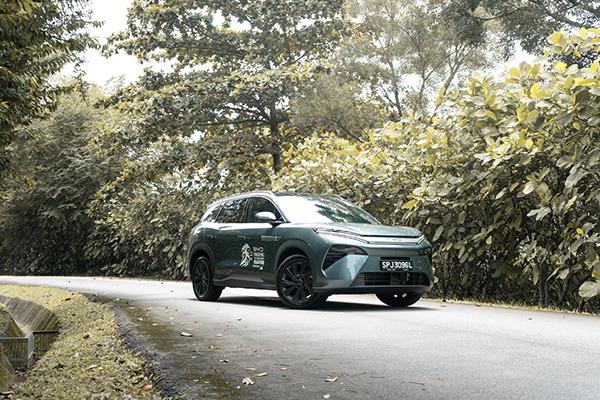
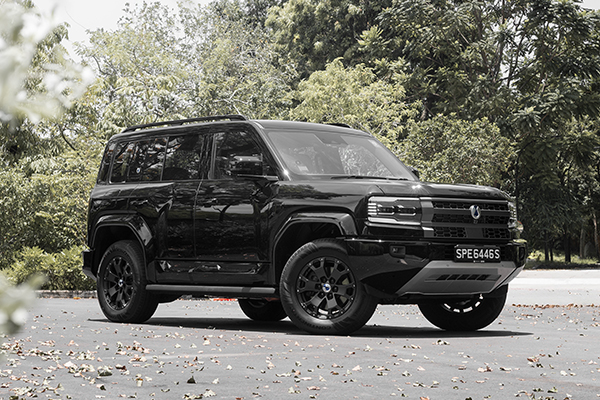
The days of the internal combustion engine (ICE) are numbered, and its death knell is continually being sounded. Several carmakers have signalled their intent to go all-electric. Audi, for instance, said that all new models will be fully electric from 2026 onwards.
Sports car manufacturer Lotus has declared that the Emira is its last ICE model. Volvo's entire lineup will be fully electric from 2030 onwards.
And from 2035 onwards, all new cars sold in the European Union cannot have any CO2 emissions, so drivers who want to buy petrol and diesel vehicles can only buy used models.
Many unanswered questions
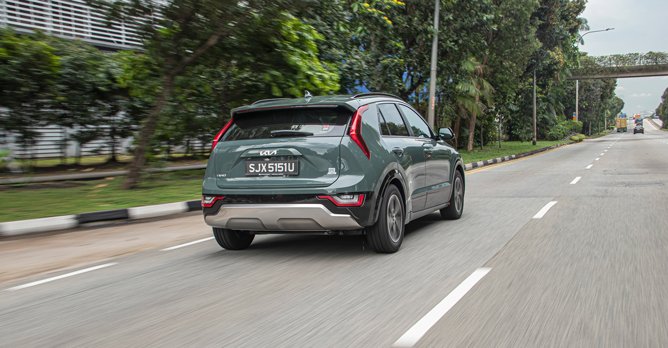
 The Kia Niro Hybrid is an example of a cleaner-energy model According to the Singapore Green Plan 2030, all cars and taxis registered from 2030 onwards must be cleaner-energy models. Cleaner energy models are defined as electric, hybrid or hydrogen fuel-cell vehicles. Cars with 12-volt and 48-volt mild hybrid systems are currently also classified as petrol-electric models.
The end goal is that by 2040, Singapore's entire car population will only consist of cleaner-energy vehicles.
Does this mean that classic cars can no longer be driven? Will owners need to deregister them to keep them (if they have the space) as museum pieces? What about owners of conventional ICE cars? Can they still renew their COEs?
If only cleaner-energy models are allowed in from 2040 onwards, new regulations will have to be enacted to ensure that this target is met.
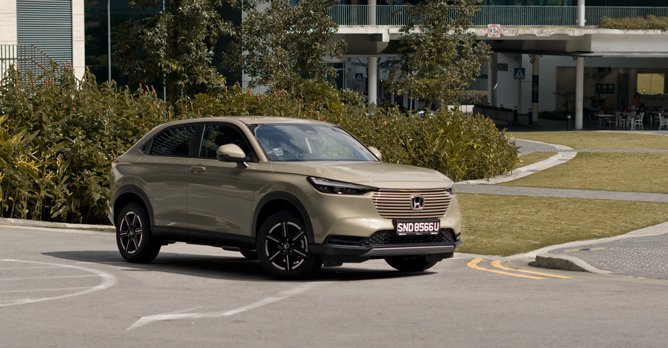 Most cars on Singapore's roads still have conventional ICE powertrains Does this mean that all new conventional ICE models registered in 2029 will have a statutory lifespan of 10 years? Must all existing ICE models be deregistered by 2039?
In 2022, the total car population (based on fuel type) stood at 650,667. Out of this total, only 73,676 cars or 11.3% qualified as cleaner-energy vehicles. Realistically, the percentage of cleaner-energy vehicles must continue growing at least five percent every year to meet the 2040 deadline.
For existing car owners, many questions remain. Will there be enough of these cleaner-energy models to choose from? How can I afford to switch to the 'right' kind of car if COE premiums do not return to saner levels? Will car ownership be restricted to the relatively wealthy?
What we know
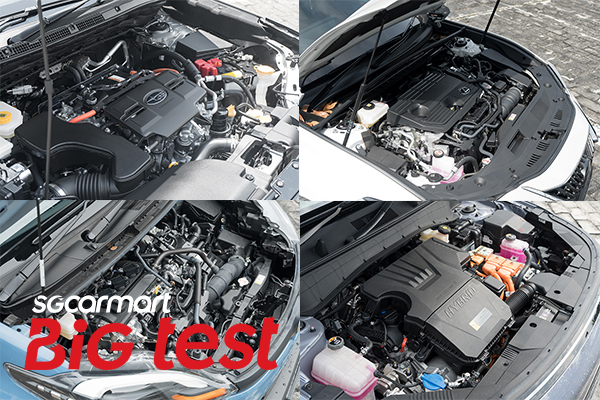
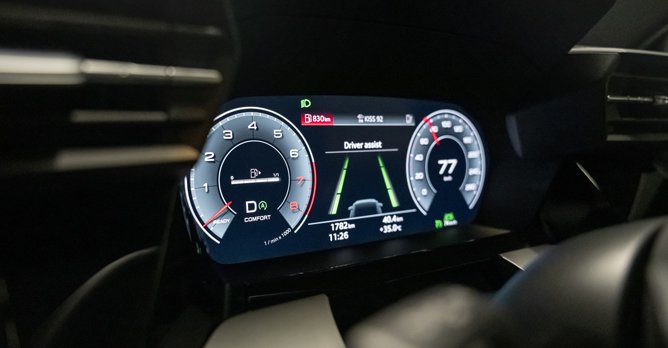 Under the right conditions, cars with 48-volt mild hybrid systems can coast with the engine off, thereby reducing emissions Since the goal of having 100% cleaner-energy vehicles includes petrol-electric hybrids, plug-in hybrids, which have petrol engines working with electric motors, then the internal combustion engine still has some ways to go.
Today, models that have a 12-volt mild hybrid system include the Mazda 3 and Suzuki Swift, while cars with the more powerful 48-volt mild hybrid system include the Skoda Octavia, Volkswagen Golf, and Volvo XC60 B5. And of course, there are the full-hybrid models that brands are increasingly introducing.
Even if some carmakers switch to producing full-electric models only, other brands will continue to make hybrid models. Since not every country is ready to go all-electric, there will still be manufacturers catering to buyers who need other types of powertrains.
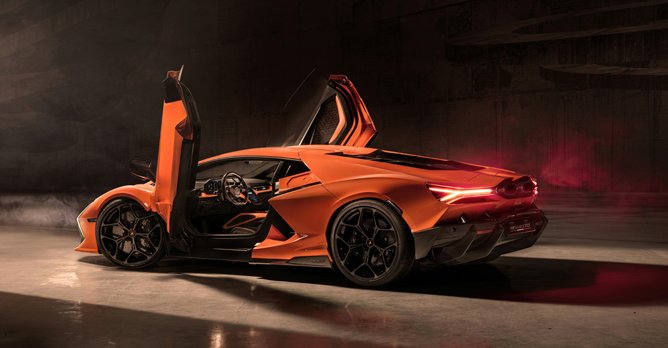 Lamborghini's Revuelto has over 1,000bhp, but it's a plug-in hybrid, so it might still be classified as a 'cleaner-energy' model (or so we hope) BMW has indicated that it will continue to make 'relevant models' for different markets. We can infer that while it makes EVs for European markets, it will continue producing cars with other types of powertrains for the rest of the world.
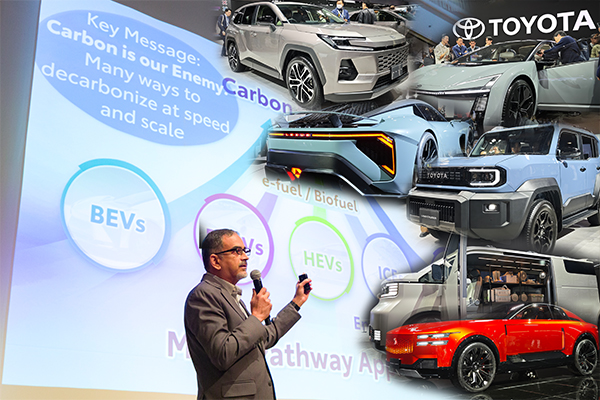
Mercedes-Benz has declared that it will no longer develop non-electric architectures by 2025. But at the same time, it indicated that it will only go fully electric 'where market conditions allow'. Toyota foresees EVs making up 40% of its car sales in 2030. Hyundai is not betting on an all-electric lineup either.
The world must still address questions regarding the resources needed to produce batteries. Is there enough lithium in the world? Doesn't lithium mining cause more environmental damage? How can batteries be re-used and recycled, and will the energy to do this come from clean and sustainable sources?
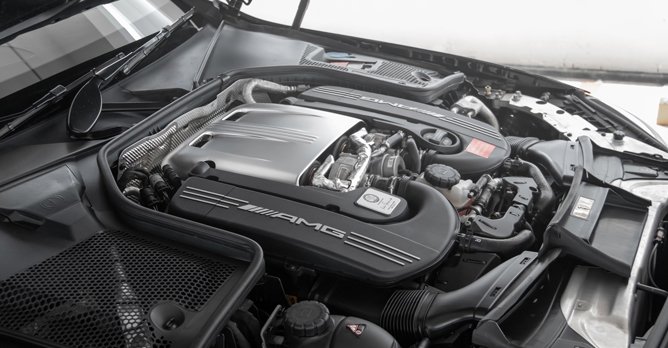 We might still see twin-turbocharged 4.0-litre V8s like these if they are electrified, and if overseas markets still allow them Singapore's approach, which is cleaner-energy models, is realistic and holistic. Cleaner-energy, rather than EV-only, is practical, too. We cannot put all our eggs in one basket.
In addition, this goal gives mechanics and technicians, as well as those working for component suppliers and manufacturers, time to transition to a different industry.
That said, the time of the traditional combustion engine is over. The era of large displacement, non-electrified motors in high-performance cars is gone. AMG won't shoehorn another naturally aspirated 6.2-litre V8 into a C-Class; Jaguar won't cram the supercharged 5.0-litre V8 into another roadster.
Like it or not, we must bid farewell to conventional ICE vehicles. But for those of us with petrol in our veins, it's not all bad. We will still burn petrol, but not like how we used to. Environmentalists will be upset, but the combustion engine, with its organic soundtrack and smelly emissions, isn't going to disappear so soon.
Here are some stories that might interest you
Singapore needs a bolder approach to EVs
More tax incentives down the road to promote electric car usage
Which car brands are going fully electric? Here's everything we know as of Jan 2023
Sports car manufacturer Lotus has declared that the Emira is its last ICE model. Volvo's entire lineup will be fully electric from 2030 onwards.
And from 2035 onwards, all new cars sold in the European Union cannot have any CO2 emissions, so drivers who want to buy petrol and diesel vehicles can only buy used models.
Many unanswered questions
The end goal is that by 2040, Singapore's entire car population will only consist of cleaner-energy vehicles.
Does this mean that classic cars can no longer be driven? Will owners need to deregister them to keep them (if they have the space) as museum pieces? What about owners of conventional ICE cars? Can they still renew their COEs?
If only cleaner-energy models are allowed in from 2040 onwards, new regulations will have to be enacted to ensure that this target is met.
In 2022, the total car population (based on fuel type) stood at 650,667. Out of this total, only 73,676 cars or 11.3% qualified as cleaner-energy vehicles. Realistically, the percentage of cleaner-energy vehicles must continue growing at least five percent every year to meet the 2040 deadline.
For existing car owners, many questions remain. Will there be enough of these cleaner-energy models to choose from? How can I afford to switch to the 'right' kind of car if COE premiums do not return to saner levels? Will car ownership be restricted to the relatively wealthy?
What we know
Today, models that have a 12-volt mild hybrid system include the Mazda 3 and Suzuki Swift, while cars with the more powerful 48-volt mild hybrid system include the Skoda Octavia, Volkswagen Golf, and Volvo XC60 B5. And of course, there are the full-hybrid models that brands are increasingly introducing.
Even if some carmakers switch to producing full-electric models only, other brands will continue to make hybrid models. Since not every country is ready to go all-electric, there will still be manufacturers catering to buyers who need other types of powertrains.
Mercedes-Benz has declared that it will no longer develop non-electric architectures by 2025. But at the same time, it indicated that it will only go fully electric 'where market conditions allow'. Toyota foresees EVs making up 40% of its car sales in 2030. Hyundai is not betting on an all-electric lineup either.
The world must still address questions regarding the resources needed to produce batteries. Is there enough lithium in the world? Doesn't lithium mining cause more environmental damage? How can batteries be re-used and recycled, and will the energy to do this come from clean and sustainable sources?
In addition, this goal gives mechanics and technicians, as well as those working for component suppliers and manufacturers, time to transition to a different industry.
That said, the time of the traditional combustion engine is over. The era of large displacement, non-electrified motors in high-performance cars is gone. AMG won't shoehorn another naturally aspirated 6.2-litre V8 into a C-Class; Jaguar won't cram the supercharged 5.0-litre V8 into another roadster.
Like it or not, we must bid farewell to conventional ICE vehicles. But for those of us with petrol in our veins, it's not all bad. We will still burn petrol, but not like how we used to. Environmentalists will be upset, but the combustion engine, with its organic soundtrack and smelly emissions, isn't going to disappear so soon.
Here are some stories that might interest you
Singapore needs a bolder approach to EVs
More tax incentives down the road to promote electric car usage
Which car brands are going fully electric? Here's everything we know as of Jan 2023