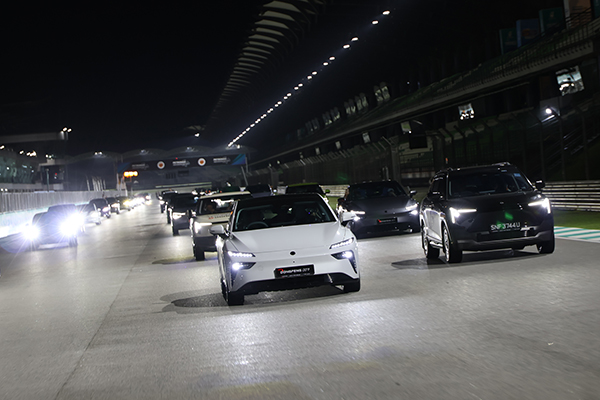
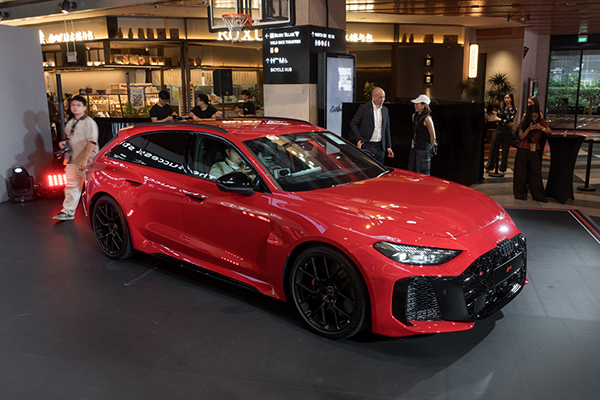
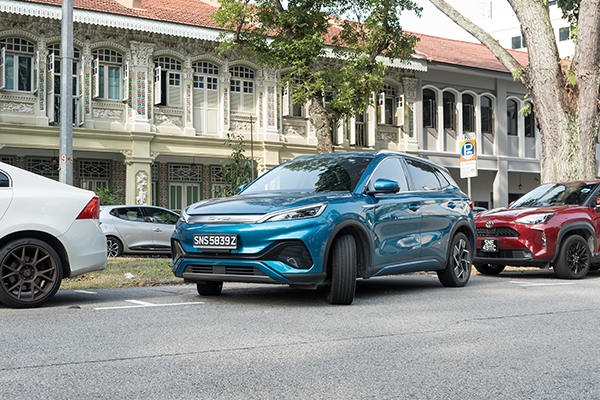
From pure gasoline engines, to hybrid cars, and then now to full EVs - it would appear that the range of drivetrain options available to Singaporean drivers has widened in recent times.
Nonetheless, this supposed diversity may not hold for very long. The auto industry is on the cusp of a major upheaval as the threat of climate change looms, and pressure to cut emissions mounts. As quickly as our options appear to have diversified, they now also seem destined to be quickly cut back down - to just fully electrified cars.
Or is that really so?
A clarification before we dive in: Automotive alliances matter
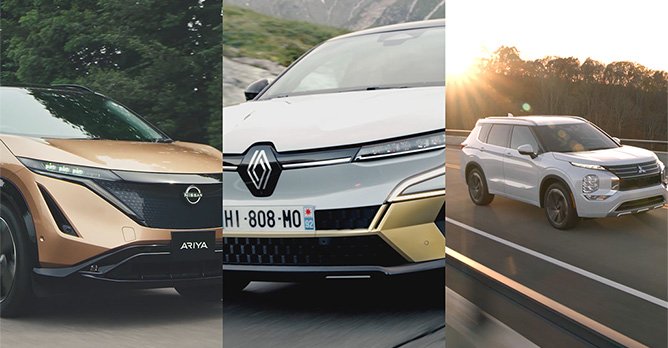
 The two-decade long alliance between Renault and Nissan expanded in 2016 with Mitsubishi's entry Few marques are truly independent in our world today, where general group directives invariably filter down to individual brands, albeit at varying speeds.
As such, understanding deadlines for the combustion engine proposed by our carmakers requires some context first about the automotive alliances and groups that have gradually come together in the market.
In fact, peering closer will reveal that the progress of a particular brand is often tied to that of a related one.
To start off, the BMW Group includes MINI and Rolls-Royce. Kia comes under the wing of Hyundai Motor Group. Renault and Nissan have been in an alliance for nearly 20 years, with Mitsubishi joining in 2016. And of course, Toyota controls Lexus.
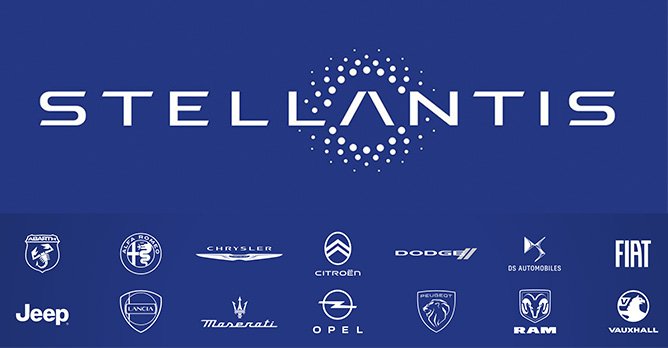 Stellantis Group has the largest number of brands under its belt in the auto industry today (Things get more complicated if we consider specific technical partnerships - engines are sometimes shared across vastly different brands, for instance - so we won't get into that.)
Then there are the truly sprawling corporations.
Volkswagen Group has a hand not just in its own brand, but also Audi, Seat and Skoda, and to a large extent, lower volume luxury brands including Bentley, Lamborghini and Porsche too.
On the other hand, the recently-merged Stellantis now takes charge of brands relevant to us like Alfa Romeo, Citroen, DS, Fiat, Jeep, Maserati, Opel and Peugeot.
But wait - which brands are already fully electric here?
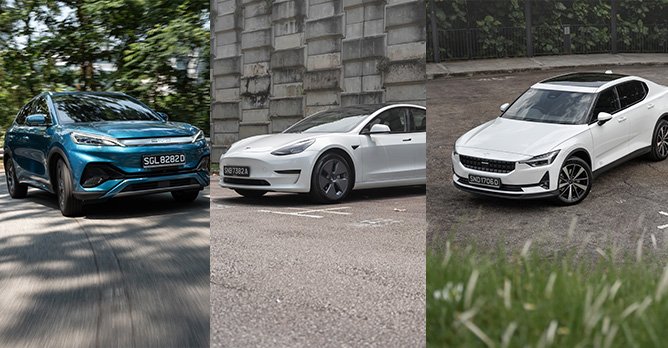 BYD, Tesla and Polestar already have fully-electric lineups in Singapore (although the latter admittedly only has one model for now) While deadlines for the combustion engine loom over with some of our favourite carmakers, some newer players have already formed their identities around full electrification.
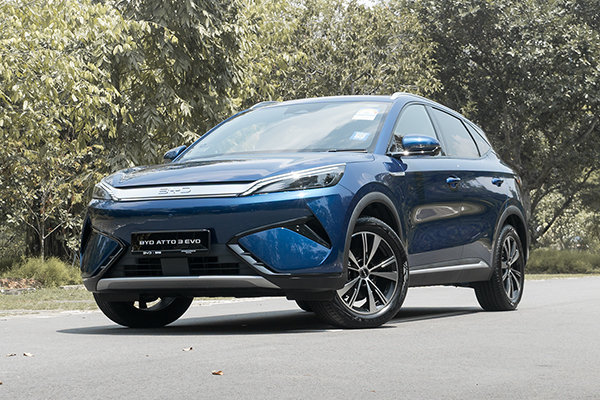
The undisputed pioneer in this space is BYD, who has had a presence here since 2016. Apart from its T3 van, seven-seater M3e, and e6 mini MPV, it also debuted its first bespoke EV, the Atto 3, this year.
Polestar, on the other hand, is a significantly fresher outfit, spun off from Volvo Cars in 2017. Its first car, the Polestar 1, was a plug-in hybrid Singapore never received, but everything moving forward - starting with the delightfully understated Polestar 2 - will be fully electrified.
And how could we forget Tesla, who vaulted into the Top 10 for new car registrations in 2021 purely off the strength of the Model 3, and in its first official year here? The Model Y has since joined the lineup, and registrations remain relatively healthy as a result of the brand's innate buzz, despite the ostensible lack of updates to the lineup in the near future.
Group 1: Hard deadlines for the combustion engine
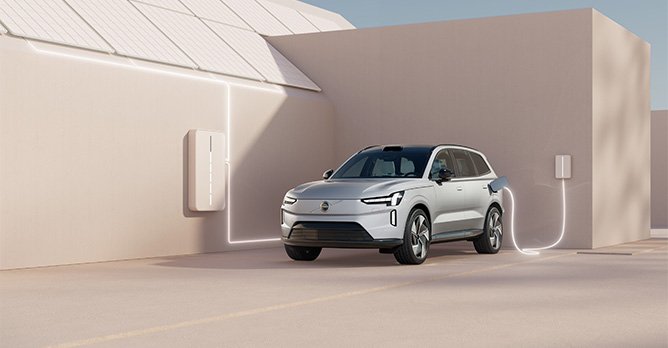 Volvo has committed to a fully-electric lineup from as early as 2030 (Pictured: The new EX90) Returning to our earlier point, the tables provided below single out particular brands where specific deadlines have been confirmed; otherwise, alliances and groups are referred to collectively.
You'll note that this first group among the mix of names with hard deadlines declared comprise carmakers which we'll (unofficially) broadly refer to as 'mass market premium brands', including Audi, MINI and Volvo.
More interestingly, however, ultra-luxury brands including Rolls-Royce and Bentley will also be found in this group, as will the traditionally uproarious Maserati.
*A caveat is that Honda isn't entirely betting on BEVs; its 2040 deadline also includes fuel cell electric vehicles.
**Singapore is an outlier for Renault - the brand made a surprising move announcing that it would go fully-electric as early as 2023 here, while introducing the Megane E-Tech. This is a markedly different timeline from other territories.
Group 2: Towering, but not exclusive plans - Ambitious end-decade targets
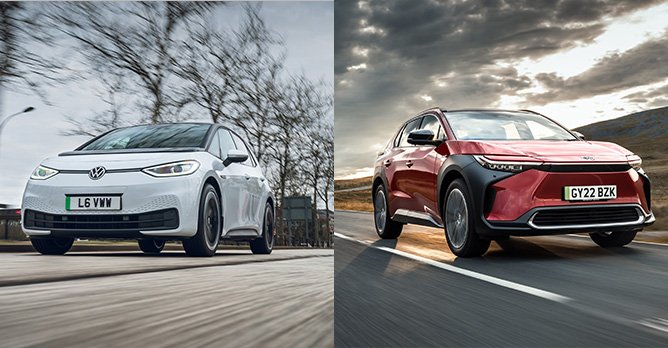 The two largest carmakers today - VW Group and Toyota - have clear EV product strategies without setting a hard deadline for full electrification yet This is perhaps where you'll find the largest names in today's auto industry, spanning the reaches of Europe to Japan and South Korea.
Although an EV strategy has been clearly outlined in firms such as the Volkswagen Group and Daimler, bear in mind that these are also extremely multi-national names who are cognisant that not all of the markets they command may be up to the task of full electrification by 2030.
As such, some wiggle-room (read: persisting ICE variants) has been demarcated.
Contrarily, one will find in this group carmakers who are still not sold on the merits of an all-electric future, including Toyota and Hyundai/Kia.
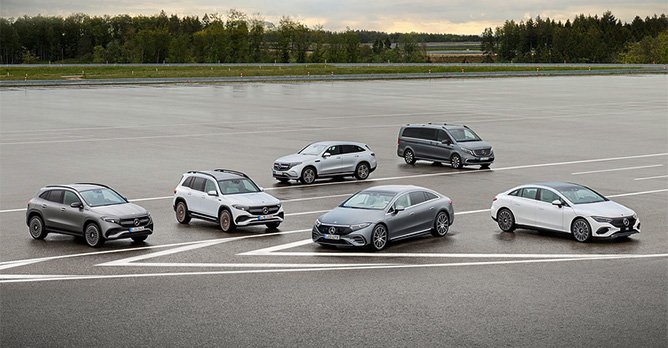 Mercedes-Benz is intending to go fully electric where market conditions allow by 2030 This is where you'll have to pay extra attention to the automotive alliances.
Within them, the 'larger' names already have clearly defined products, but members of the same house won't be too far behind even if nothing appears to have materialised yet.
Case in point: Against its sister brands, Volkswagen has the densest lineup of already-launched, dedicated BEVs globally now, including the ID. Buzz, ID.3 and ID.4. Meanwhile, Skoda only has the Enyaq, while Seat has the Cupra Born.
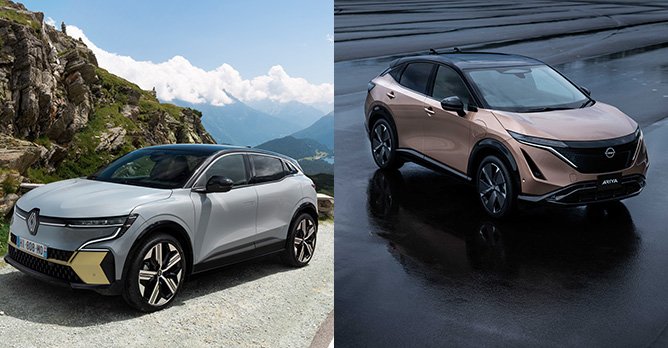 Renault's Megane E-Tech and Nissan's Ariya share a bespoke platform; expect Mitsubishi to use this too But it's not unreasonable to assume that more EVs from the latter two are in the pipeline, especially since no ICE-only platforms will be produced by the Group post-2026.
Likewise, both Renault and Nissan have respectively already launched the Renault Megane E-Tech and Nissan Ariya, and confirmed BEVs in the supermini segment too.
On the other hand, Mitsubishi - the last of the alliance - seems to be lagging with the Outlander PHEV as its only partially-electric model currently. Yet it shouldn't be too far behind since it'll be able to tap on EV platforms shared across the alliance.
Group 3: Those with less ambitious deadlines, or from whom we haven't seen much yet
With the following list as a reference point, one could almost cleanly divide the laggards in the electrification shift into two diametrically opposed groups.
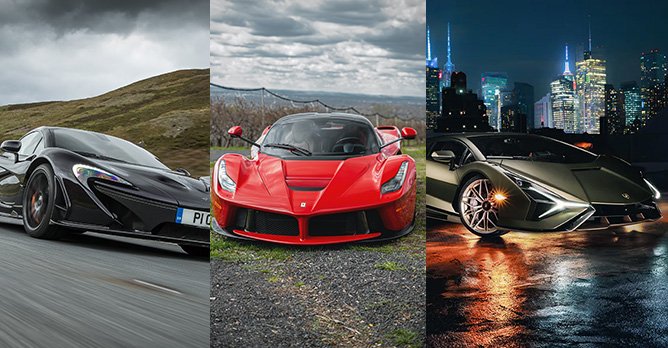 McLaren, Ferrari and Lamborghini have all dabbled in hybrids, though the former two are further along On the one hand, supercar-makers most certainly recognise the combustion engine as the beating heart of their brand legacies, while also admitting the inevitability of electric power.
Ferrari and McLaren are both continuing (at least momentarily) their long-standing relationships with hybrid power, and Lamborghini is set to join them very soon. In fact, Maranello has already confirmed its first fully-electric model will be unveiled in 2025.
On the other hand, one will find more mass market-oriented models here - partially because these firms haven't faced as much regulatory pressure to go all-electric, but also likely because their customer bases won't be on the knife's edge of the switch too.
Key takeaways
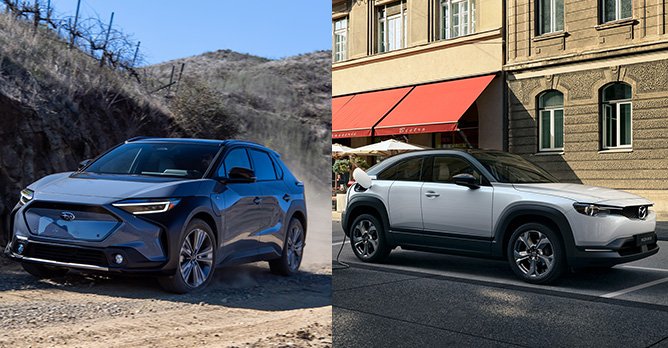 Slightly lagging: Subaru's Solterra (left) and Mazda's MX-30 (right) mark the firms' first production EVs You're not alone if the flurry of dates feels quite overwhelming, but a couple of trends are clear from the data.
While Europe's carmakers have bought more strongly into the idea of full BEVs, it appears that Japan and Korea still believe in availing alternatives to consumers.
Naturally, there's legislative pressure (or the lack thereof) behind this.
A sweeping ban of ICE-car sales is set to take hold in 2035 across the European Union (the U.K.'s cut-off is even earlier, in 2030). Meanwhile - led most prominently by Toyota - Japan is still betting on hybrids and hydrogen power. That's likely also the reason why brands like Mazda and Subaru don't appear to be in a hurry to go all-electric.
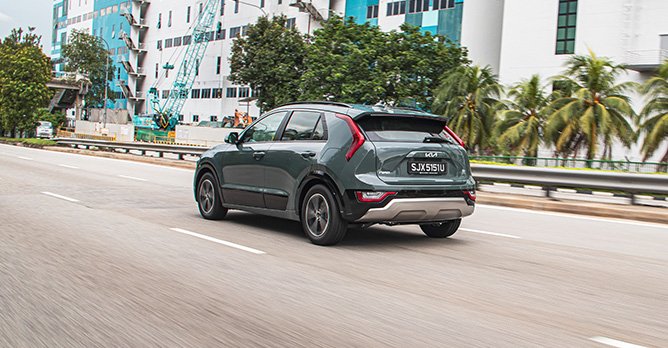 The 2030 plan for 'cleaner-energy models' is likely to include hybrids and mild hybrids Yet what truly matters, of course, is what this means for you, the car buyer in teeny tiny Singapore.
To propel you slightly forward in time, two key years form part of Singapore's greener future. From 2030, the LTA has declared that all new car registrations will have to be of 'cleaner-energy models'. This will build towards its vision of having all vehicles run on cleaner energy by 2040.
We've previously dug deeper into (what we believe is) the intentional ambiguity of 'cleaner energy' as a term, and deduced that hybrids and mild hybrids will continue to feature quite heavily on Singapore's roads for a few years to come.
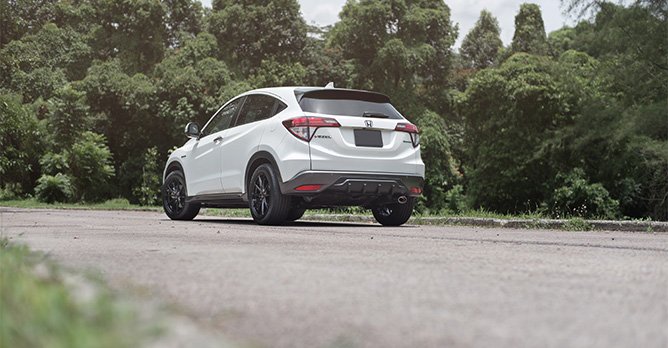 One flip side of holding out more drivetrain options is the likelihood too that we might continue to see older models getting imported As such, while there's no denying that more fully-electric cars are set to flood our roads in the years to come, one can realistically also expect that the combustion engine will not be killed off too quickly as well.
The good news is that this could certainly mean the holding out of more drivetrain choices from a consumer's standpoint.
At the same time, however, it's also highly likely that dealers will see value in continuing to import older and less technologically-advanced models. This will apply especially if infrastructure doesn't catch up quickly enough and Singapore’s taxes remain hostile to the ever-increasing power outputs of EVs.
Here are some other stories that may interest you!
Is it time to consider the switch to EVs?
Is Singapore's Green Plan 2030 not quite what it seems?
Just how much can you save driving an EV? We do the science to find out (2022)
A fixed road tax should apply to all EVs in Singapore
Nonetheless, this supposed diversity may not hold for very long. The auto industry is on the cusp of a major upheaval as the threat of climate change looms, and pressure to cut emissions mounts. As quickly as our options appear to have diversified, they now also seem destined to be quickly cut back down - to just fully electrified cars.
Or is that really so?
A clarification before we dive in: Automotive alliances matter
As such, understanding deadlines for the combustion engine proposed by our carmakers requires some context first about the automotive alliances and groups that have gradually come together in the market.
In fact, peering closer will reveal that the progress of a particular brand is often tied to that of a related one.
To start off, the BMW Group includes MINI and Rolls-Royce. Kia comes under the wing of Hyundai Motor Group. Renault and Nissan have been in an alliance for nearly 20 years, with Mitsubishi joining in 2016. And of course, Toyota controls Lexus.
Then there are the truly sprawling corporations.
Volkswagen Group has a hand not just in its own brand, but also Audi, Seat and Skoda, and to a large extent, lower volume luxury brands including Bentley, Lamborghini and Porsche too.
On the other hand, the recently-merged Stellantis now takes charge of brands relevant to us like Alfa Romeo, Citroen, DS, Fiat, Jeep, Maserati, Opel and Peugeot.
But wait - which brands are already fully electric here?
The undisputed pioneer in this space is BYD, who has had a presence here since 2016. Apart from its T3 van, seven-seater M3e, and e6 mini MPV, it also debuted its first bespoke EV, the Atto 3, this year.
Polestar, on the other hand, is a significantly fresher outfit, spun off from Volvo Cars in 2017. Its first car, the Polestar 1, was a plug-in hybrid Singapore never received, but everything moving forward - starting with the delightfully understated Polestar 2 - will be fully electrified.
And how could we forget Tesla, who vaulted into the Top 10 for new car registrations in 2021 purely off the strength of the Model 3, and in its first official year here? The Model Y has since joined the lineup, and registrations remain relatively healthy as a result of the brand's innate buzz, despite the ostensible lack of updates to the lineup in the near future.
Group 1: Hard deadlines for the combustion engine
You'll note that this first group among the mix of names with hard deadlines declared comprise carmakers which we'll (unofficially) broadly refer to as 'mass market premium brands', including Audi, MINI and Volvo.
More interestingly, however, ultra-luxury brands including Rolls-Royce and Bentley will also be found in this group, as will the traditionally uproarious Maserati.
Brand | Official full-electrification target | No. of full EV models in Singapore currently | Other notes |
| Alfa Romeo | 2027 | 0 | Tonale SUV marks first hybrid from firm; firm working towards all-electric lineup under its 'zero to zero' strategy |
| Audi | 2033 | 5: - e-tron SUV - e-tron Sportback - e-tron S Sportback - e-tron GT - RS e-tron GT | By 2026, all new models launched will be fully-electric |
| Bentley | 2030 | 0 | Beyond100 Strategy; first full-EV to come out by 2025, has already released the Bentayga Hybrid (international) and the Flying Spur Plug-in Hybrid (Singapore) |
| Honda* | 2040 | 1: - Honda e (parallel imported) | (More notes continued in the section below) |
| Jaguar | 2025 | 1: - I-PACE | To be launched under the larger Reimagine Strategy for Jaguar Land Rover |
| Lexus | 2035 | 1: - UX300e | The electrified line-up is being spearheaded by the Lexus RZ; an electric LFA successor has also been confirmed |
| Lotus | Mid to late 2020s | 0 | The V6-powered Emira is still in production, but marks the last car from the firm to have a combustion engine; fully-electric Eletre SUV already confirmed |
| Maserati | 2030 | 0 | Fully electric variants to be offered for all models by 2025; Folgore variant of the latest GranTurismo marks firm’s first full EV |
| MINI | Early 2030s | 1: - MINI Electric | An all-new electric crossover for the small car segment and a compact crossover model have been confirmed as next in line for launch |
| Opel | 2028 | 4: - Mokka-e - Zafira-e Life - Combo-e - Vivaro-e | Opel Crossland and Insignia successors to be fully-electric |
| Renault | 2023** | Renault previously released the Fluence Z.E. and Zoe here | Renault recently also launched an EV business named Ampere, which will help produce six new EVs for the French firm by 2030 |
| Rolls-Royce | Early 2030s | 0 | First full EV, the Spectre, already unveiled, to be launched to markets in Q4 2023 |
| Volvo | 2030 | 2: - XC40 Recharge - C40 Recharge | Follow up to the flagship XC90, the EX90 has already been revealed, to be launched to markets in 2024 |
*A caveat is that Honda isn't entirely betting on BEVs; its 2040 deadline also includes fuel cell electric vehicles.
**Singapore is an outlier for Renault - the brand made a surprising move announcing that it would go fully-electric as early as 2023 here, while introducing the Megane E-Tech. This is a markedly different timeline from other territories.
Group 2: Towering, but not exclusive plans - Ambitious end-decade targets
Although an EV strategy has been clearly outlined in firms such as the Volkswagen Group and Daimler, bear in mind that these are also extremely multi-national names who are cognisant that not all of the markets they command may be up to the task of full electrification by 2030.
As such, some wiggle-room (read: persisting ICE variants) has been demarcated.
Contrarily, one will find in this group carmakers who are still not sold on the merits of an all-electric future, including Toyota and Hyundai/Kia.
Brand | 2030 Target | No. of full EV models in Singapore currently | Other notes |
| Aston Martin | "Core portfolio to be fully electrified" | 0 | First full-BEV to be released in 2025; Valkyrie marked first hybrid hypercar, and will be followed up by the PHEV Valhalla in 2023 |
| BMW Group | BEVs to comprise 50% of Group sales globally (including MINI and Rolls-Royce) | 5: - iX3 - i4 - i4 M50 - iX - i7 Previously also released the i3 | Proprietary Neue Klasse architecture for EVs to be unveiled in 2025 |
| Honda* (continued) | BEVs to comprise 40% of sales globally (i.e. two million units annually) | 1: - Honda e | 30 EV models by 2030; Five trillion yen (S$5 billion) allocated to investments in electrification over next 10 years Honda has also announced a landmark partnership with tech giant Sony, named Sony Honda Mobility. Three concepts have been jointly unveiled thus far. |
| Hyundai Motor Group (including Kia, Genesis internationally) | Global Group sales of 3.07 million units | Hyundai: 3 - Kona Electric - Ioniq Electric - Ioniq 5* Kia: 1 - EV6 | 11 BEVs by 2030 under Hyundai, 14 BEVs by 2027 under Kia |
| Land Rover | To become 'electric-first' brand as part of Jaguar Land Rover | 0 | Six fully-electric variants to be launched by 2027 |
| Mercedes-Benz | To go fully electric where market conditions allow | 6: - EQA - EQB - EQC - EQE - EQS - EQV | Fully-electrified variants to be offered across 90% of its market segments by 2023; development of non-electric architectures to cease by 2025 |
| Renault-Nissan-Mitsubishi Alliance | 35 new EV models by 2030 | Nissan: 1 - Leaf | Specifically, Nissan has stated that it will release 15 new EVs under its Ambition 2030 plan; Ariya marks first bespoke EV from the firm after the Leaf |
| Porsche | BEVs to comprise 80% of sales | 1: - Taycan | 718 Cayman/Boxster to go fully-electric in the future; BEV Macan SUV has already been confirmed |
| Stellantis Group (Citroen, Fiat, Jeep, Peugeot) | BEVs to comprise 100% of sales in Europe, 50% in U.S.A. | Citroen: 2 - e-Berlingo - e-Dispatch Peugeot: 1 - e-2008 | Dare Forward 2030 Plan |
| Toyota | BEVs to comprise up to 40% of annual sales (i.e. 3.5 million units to be sold) | 1*: - bZ4X (limited release) | 30 BEV models to be offered by 2030 (shared with Lexus) |
| Volkswagen Group (including Seat & Skoda) | BEVs to comprise 70% of all sales in Europe, 50% in U.S.A. | Volkswagen: 2 - ID. 3 - ID. 4 (both only offered via parallel importers) | Last purely combustion engine driven platform to be developed in 2026 |
Within them, the 'larger' names already have clearly defined products, but members of the same house won't be too far behind even if nothing appears to have materialised yet.
Case in point: Against its sister brands, Volkswagen has the densest lineup of already-launched, dedicated BEVs globally now, including the ID. Buzz, ID.3 and ID.4. Meanwhile, Skoda only has the Enyaq, while Seat has the Cupra Born.
Likewise, both Renault and Nissan have respectively already launched the Renault Megane E-Tech and Nissan Ariya, and confirmed BEVs in the supermini segment too.
On the other hand, Mitsubishi - the last of the alliance - seems to be lagging with the Outlander PHEV as its only partially-electric model currently. Yet it shouldn't be too far behind since it'll be able to tap on EV platforms shared across the alliance.
Group 3: Those with less ambitious deadlines, or from whom we haven't seen much yet
With the following list as a reference point, one could almost cleanly divide the laggards in the electrification shift into two diametrically opposed groups.
Brand | What we know in terms of plans | No. of full EV models in Singapore currently? | Other significant milestones |
| Ferrari | First fully-electric model to be unveiled in 2025; 40% of sales to be fully-electric by 2030 | 0 | LaFerrari hybrid hypercar debuted in 2013; firm has since launched two production PHEV supercars - the 296 GTB and SF90 Stradale |
| Lamborghini | Entire range to be partially electrified by 2024; first fully-electric model to be unveiled in 2028 | 0 | Sian FKP 37 marked first hybrid hypercar from the firm |
| Mazda | 40% of sales to be EVs by 2030 | 1: - MX-30 | Proprietary 'Skyactiv EV Scalable Architecture' to be unveiled in 2025; more progress to be made under 'Sustainable Zoom-Zoom 2030' plan |
| McLaren | Current series production model, McLaren Artura, is a plug-in hybrid | 0 | P1, PHEV hypercar, launched in 2013; followed up by limited production Speedtail hybrid in 2020 |
| Subaru | 40% of sales to be hybrids and full EVs by 2030 | 0 | First BEV, the Solterra, was developed in conjunction with Toyota bZ4X, to be released 2023; Around $2.7 billion pledged to investments in EV battery capacity over next five years, including EV production line; production to commence from 2027 |
| Suzuki | 2025 launch for Maruti Suzuki's first EV (Indian market); nothing official announced for international markets yet | 0 | Suzuki entered a technical partnership with Toyota in 2021, and is likely to leverage on its expertise to put together its EV portfolio |
Ferrari and McLaren are both continuing (at least momentarily) their long-standing relationships with hybrid power, and Lamborghini is set to join them very soon. In fact, Maranello has already confirmed its first fully-electric model will be unveiled in 2025.
On the other hand, one will find more mass market-oriented models here - partially because these firms haven't faced as much regulatory pressure to go all-electric, but also likely because their customer bases won't be on the knife's edge of the switch too.
Key takeaways
While Europe's carmakers have bought more strongly into the idea of full BEVs, it appears that Japan and Korea still believe in availing alternatives to consumers.
Naturally, there's legislative pressure (or the lack thereof) behind this.
A sweeping ban of ICE-car sales is set to take hold in 2035 across the European Union (the U.K.'s cut-off is even earlier, in 2030). Meanwhile - led most prominently by Toyota - Japan is still betting on hybrids and hydrogen power. That's likely also the reason why brands like Mazda and Subaru don't appear to be in a hurry to go all-electric.
To propel you slightly forward in time, two key years form part of Singapore's greener future. From 2030, the LTA has declared that all new car registrations will have to be of 'cleaner-energy models'. This will build towards its vision of having all vehicles run on cleaner energy by 2040.
We've previously dug deeper into (what we believe is) the intentional ambiguity of 'cleaner energy' as a term, and deduced that hybrids and mild hybrids will continue to feature quite heavily on Singapore's roads for a few years to come.
The good news is that this could certainly mean the holding out of more drivetrain choices from a consumer's standpoint.
At the same time, however, it's also highly likely that dealers will see value in continuing to import older and less technologically-advanced models. This will apply especially if infrastructure doesn't catch up quickly enough and Singapore’s taxes remain hostile to the ever-increasing power outputs of EVs.
Here are some other stories that may interest you!
Is it time to consider the switch to EVs?
Is Singapore's Green Plan 2030 not quite what it seems?
Just how much can you save driving an EV? We do the science to find out (2022)
A fixed road tax should apply to all EVs in Singapore