Challenges in building the Downtown Line
21 Dec 2013|4,053 views
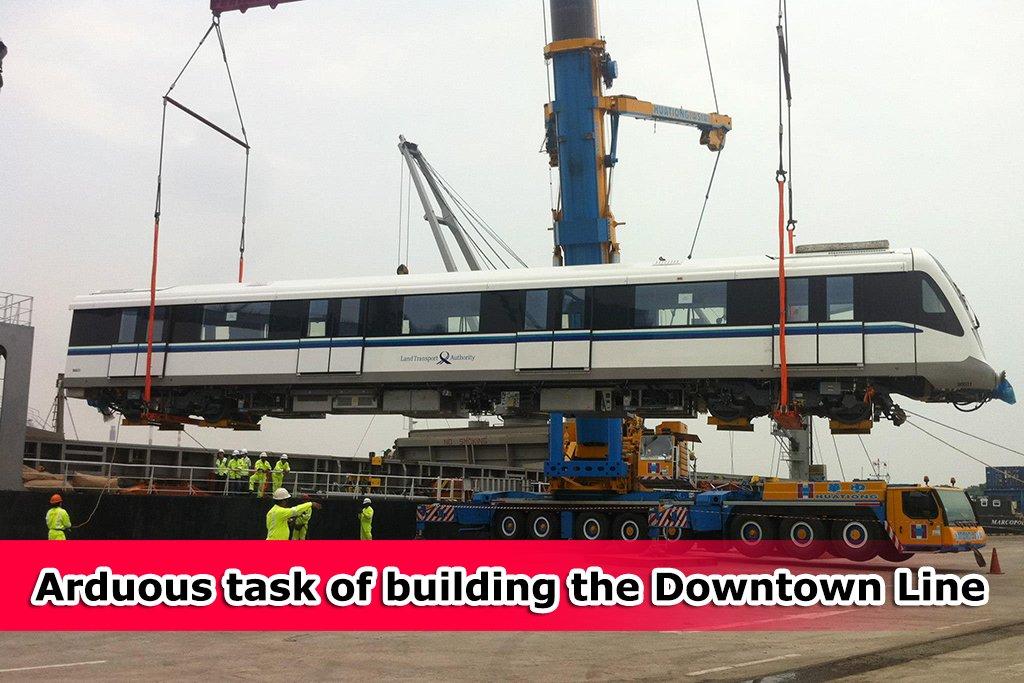
With an increasing amount of infrastructure and tunnelling works on our land-scarce island, it is no surprise that every new project faces more challenges. This was the case for the six-station Downtown Line 1 (DTL1), which will open this Sunday.
The new MRT line passes through the Central Business District and Marina Financial District, connecting Chinatown to Bugis with a 4.3km route. To do this, contractors had to dig a tunnel, which at a point was a mere 70cm away from an existing MRT line - one with running trains filled with passengers. As such, there is no margin for error, and engineers had to take special care not to damage any existing structure.
Another challenge was unlike other projects, tunnel-boring machines could not be used in many areas as there wasn't sufficient space to build the entry and exit shafts needed. The lack of space was a common issue experienced throughout the project. For instance, construction took place just 1.5-metre from pre-war shophouses.
Deputy Director for DTL1, Mr. Tan Kok Jin, shared one of his experiences with The Straits Times. He told the local papers that workers had to help a store owner selling porcelain to shift his products to the floor, as the shelves would vibrate during the pounding works.
The challenge, however, will be heighten during the DTL3 project. The final stage of the DTL will involve a re-route of part of the Singapore River in order to bore two train tunnels under it. The 42km, $21 billion DTL is expected to be ready in 2017.
With an increasing amount of infrastructure and tunnelling works on our land-scarce island, it is no surprise that every new project faces more challenges. This was the case for the six-station Downtown Line 1 (DTL1), which will open this Sunday.
The new MRT line passes through the Central Business District and Marina Financial District, connecting Chinatown to Bugis with a 4.3km route. To do this, contractors had to dig a tunnel, which at a point was a mere 70cm away from an existing MRT line - one with running trains filled with passengers. As such, there is no margin for error, and engineers had to take special care not to damage any existing structure.
Another challenge was unlike other projects, tunnel-boring machines could not be used in many areas as there wasn't sufficient space to build the entry and exit shafts needed. The lack of space was a common issue experienced throughout the project. For instance, construction took place just 1.5-metre from pre-war shophouses.
Deputy Director for DTL1, Mr. Tan Kok Jin, shared one of his experiences with The Straits Times. He told the local papers that workers had to help a store owner selling porcelain to shift his products to the floor, as the shelves would vibrate during the pounding works.
The challenge, however, will be heighten during the DTL3 project. The final stage of the DTL will involve a re-route of part of the Singapore River in order to bore two train tunnels under it. The 42km, $21 billion DTL is expected to be ready in 2017.


Latest COE Prices
June 2026 | 1st BIDDING
NEXT TENDER: 17 Jun 2026
CAT A$126,009
CAT B$126,989
CAT C$94,000
CAT E$129,000
View Full Results 
Thank You For Your Subscription.








Tags
Products & Services

For Owners
Quick Links
About Sgcarmart