"Most extensive model update": New BMW 7 Series unveiled
22 Apr 2026|7,456 views
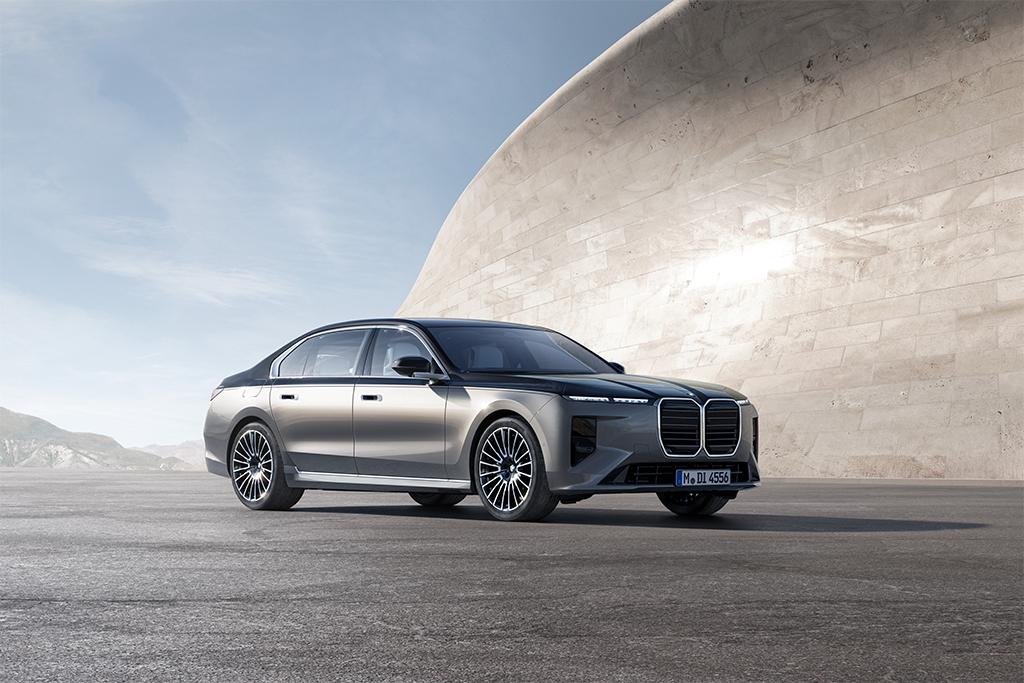
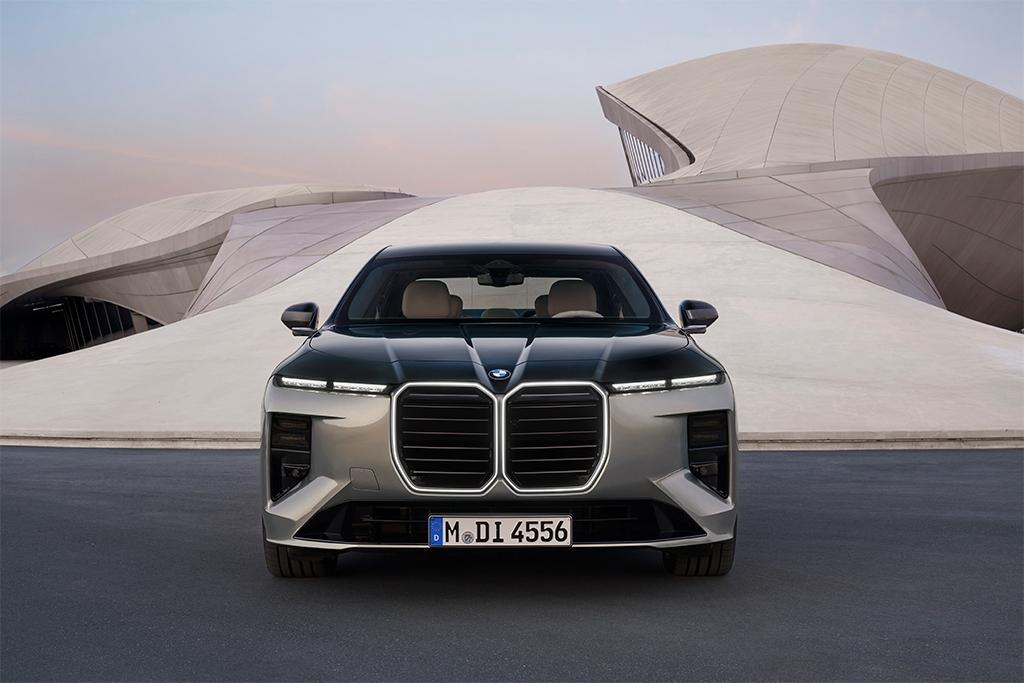
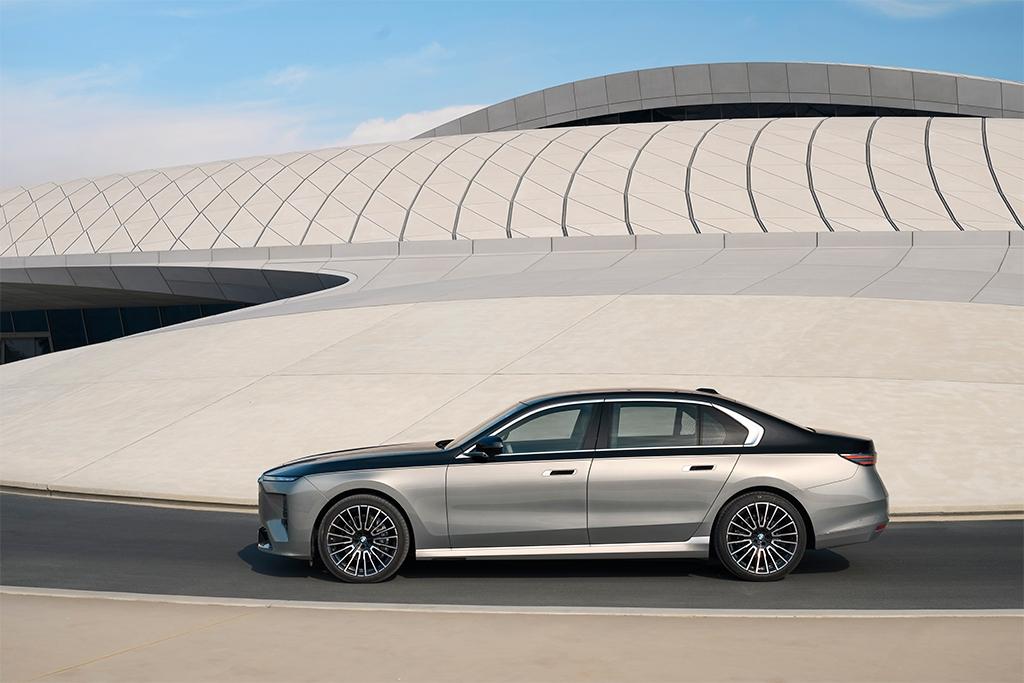
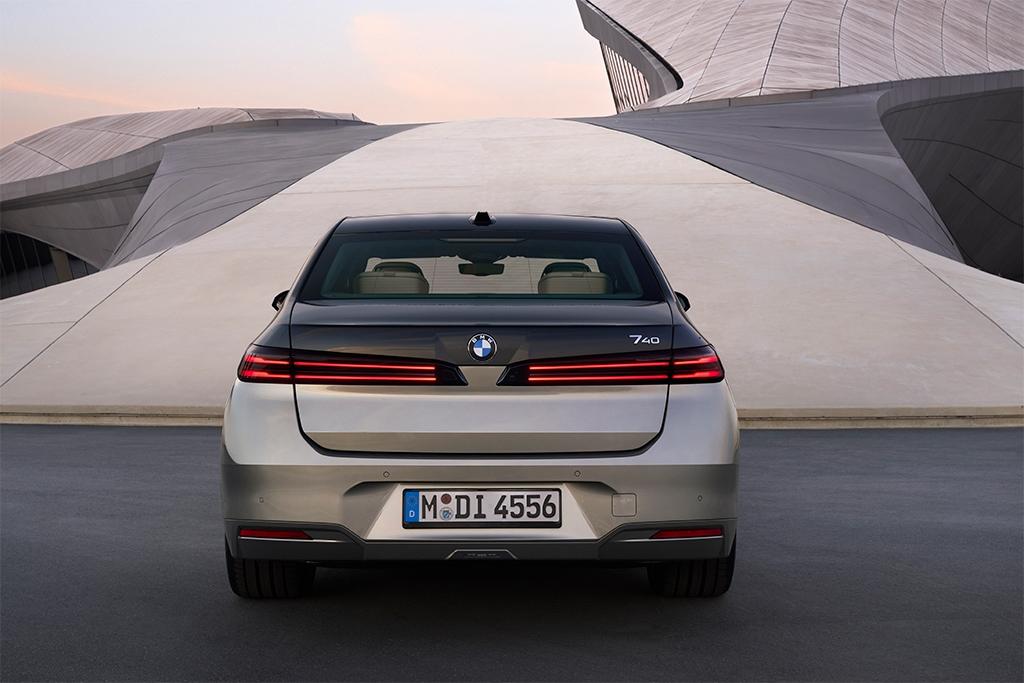
BMW has pulled the covers of the updated 7 Series, and boy is it returning with a vengeance as it strives to reclaim and future-proof its position as the top-dog luxury sedan in the business.
In fact, so vast are the updates this time that this could have passed off as a new-generation car in the past. Except that it's not; again, this is part of the 7 Series' mid-life refresh.
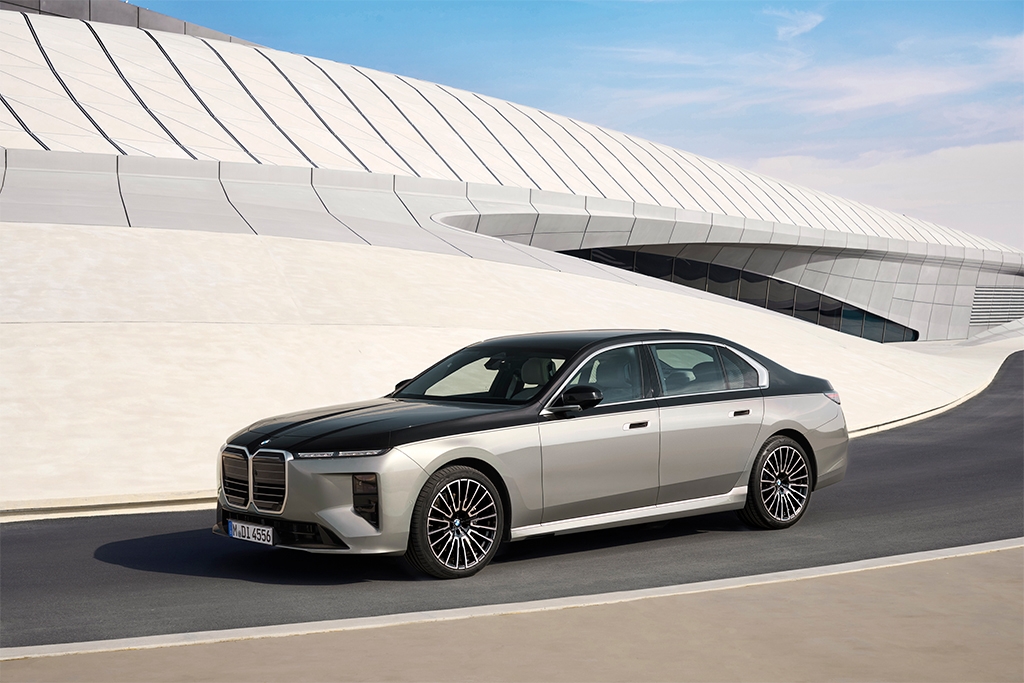
The updated 7 Series is said to be the most extensive model update BMW has undertaken yet, and reinforces the current generation's transformation into a full-fledged luxury limo
Divisive styling aside, the current-generation car was notable for a few things when it first debuted. It was the first 7 Series to be available fully electric, therefore also making it one of the first electric limos to debut among its luxury peers.
But perhaps more notably, it marked the most significant shift yet we had seen for the 7 Series from sporty full-sized sedan to proper luxe barge. One where the backseat experience arguably took even higher priority than the front seat's. Now, BMW has promised that its flagship sedan is benefitting from the most extensive model update undertaken in the brand's history.
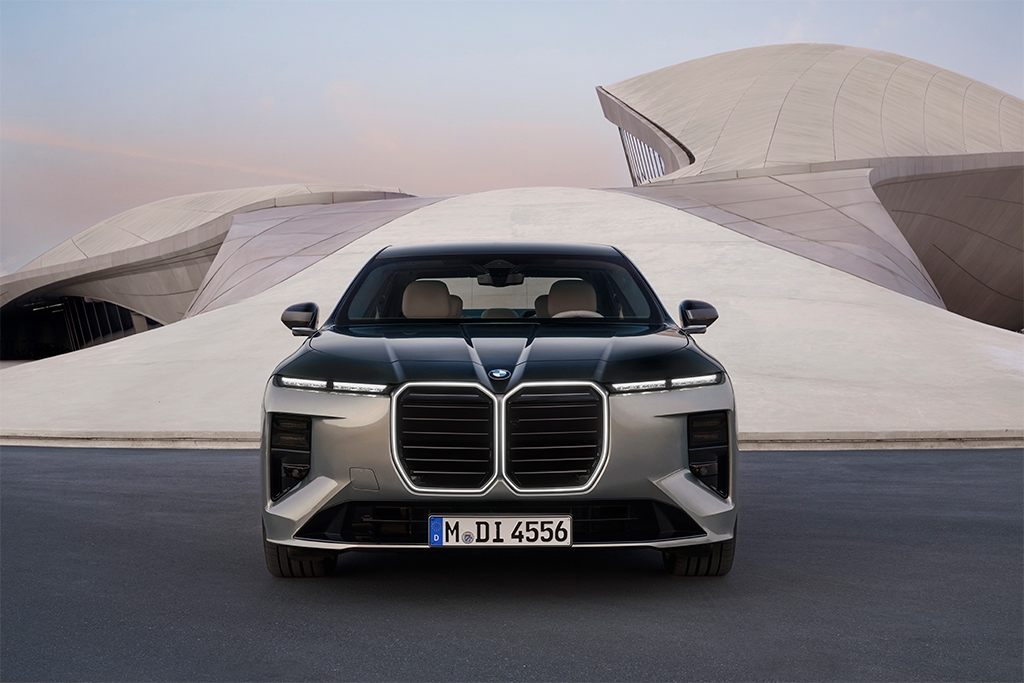
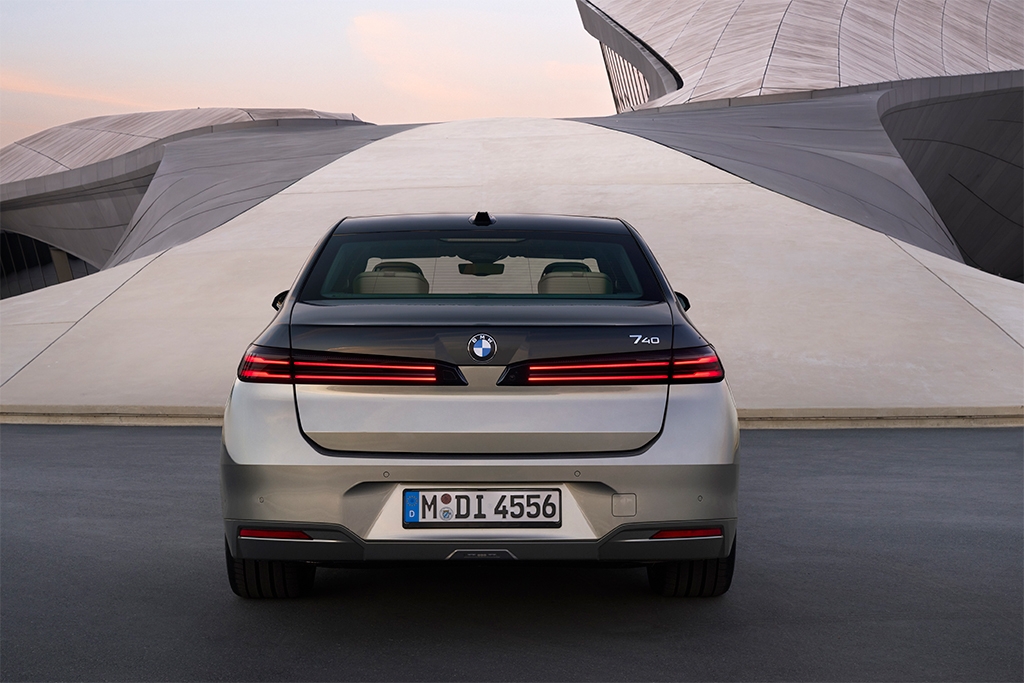
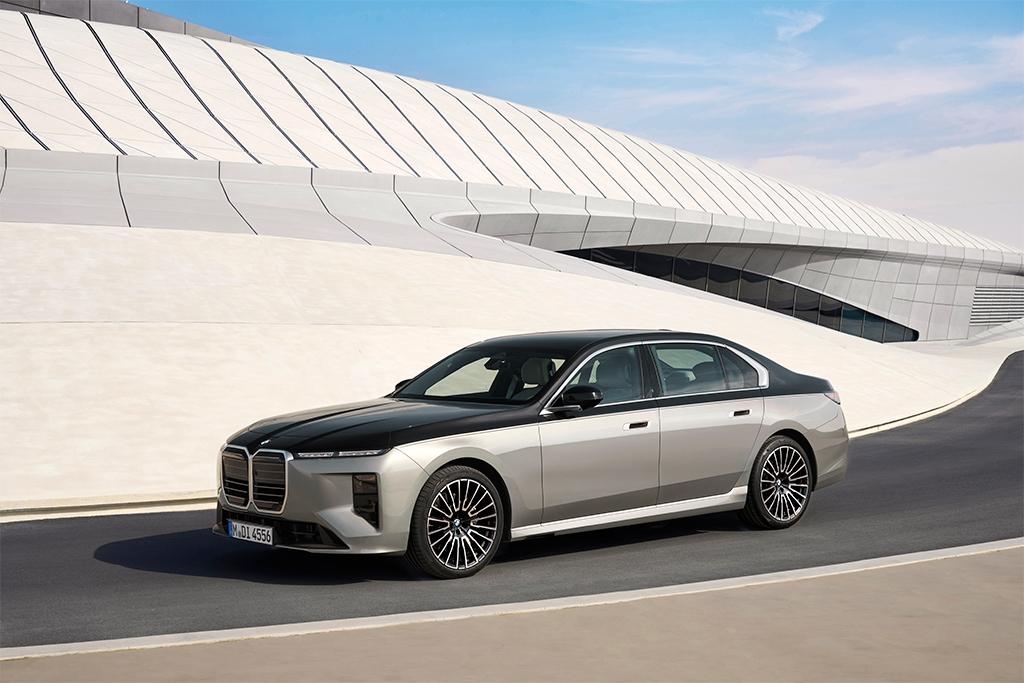
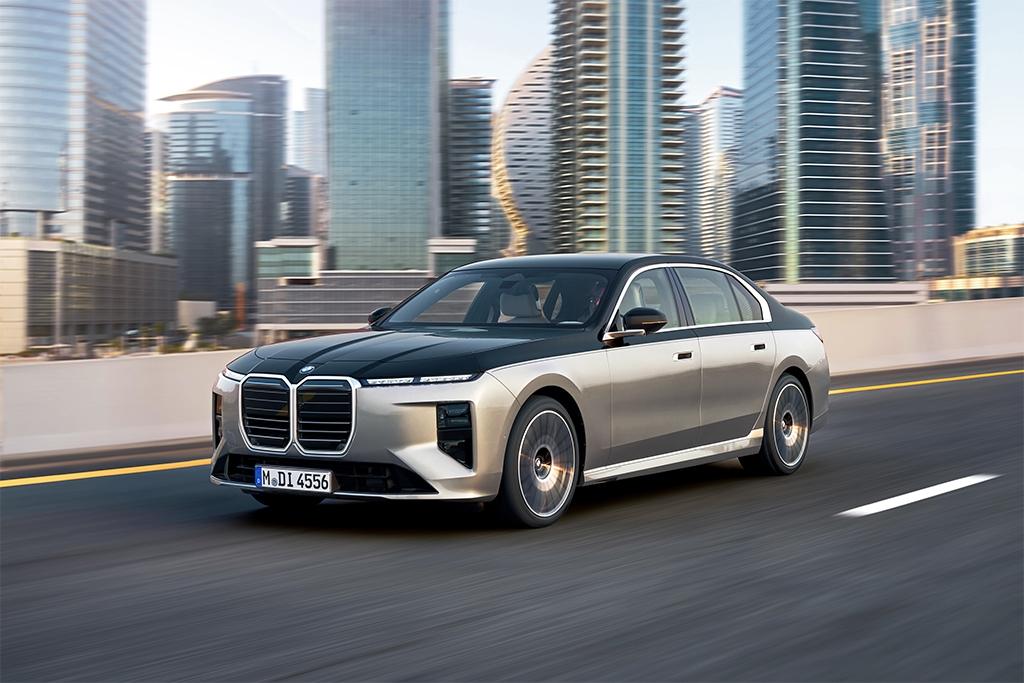
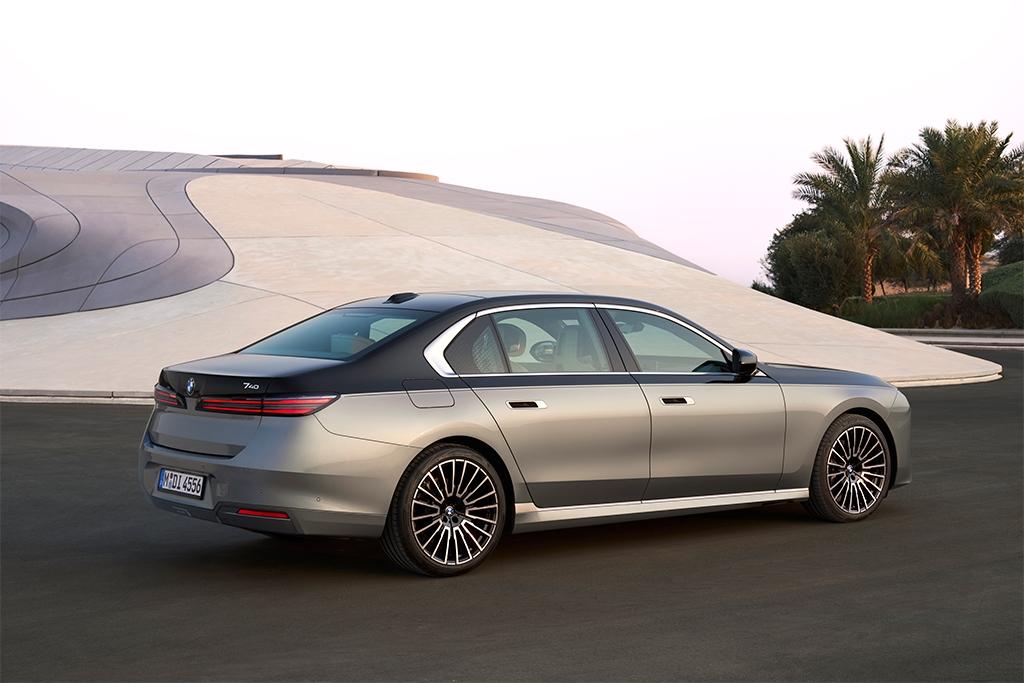
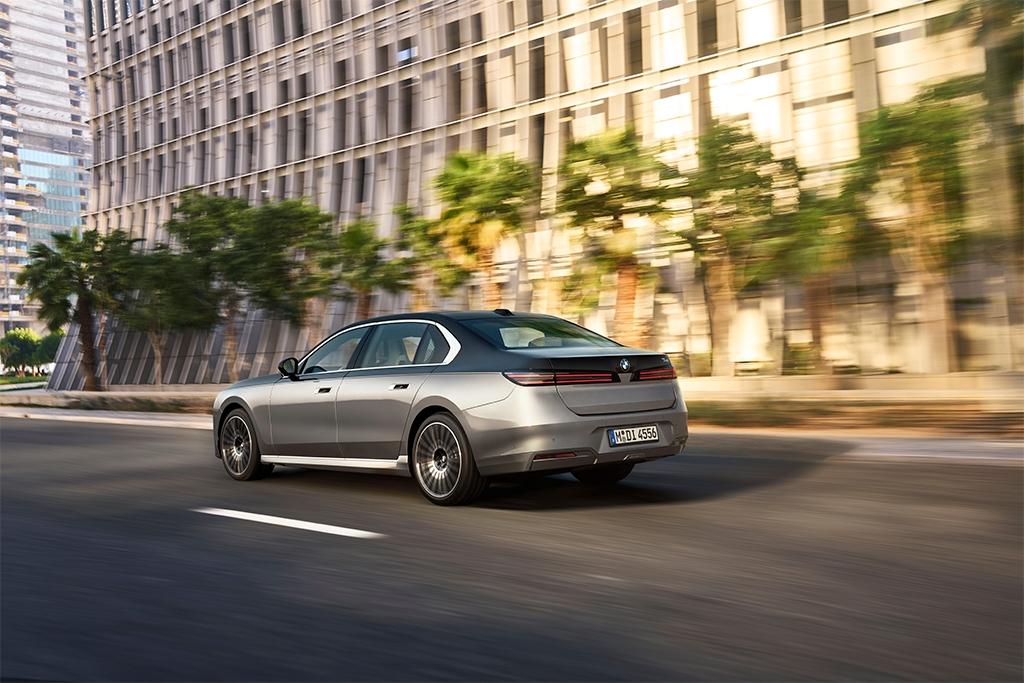
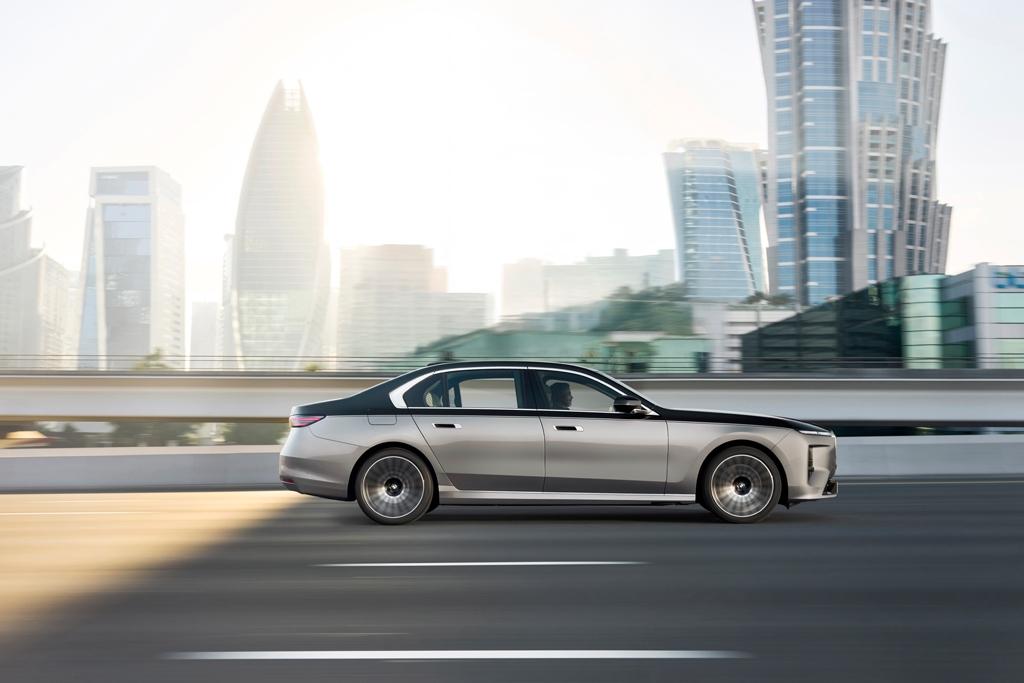
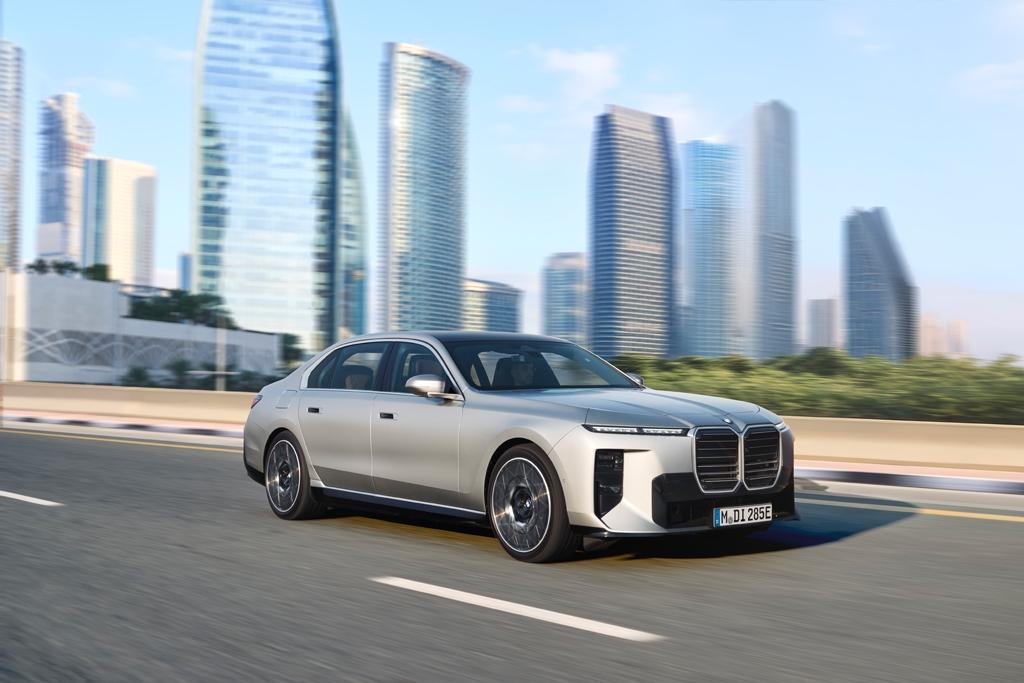
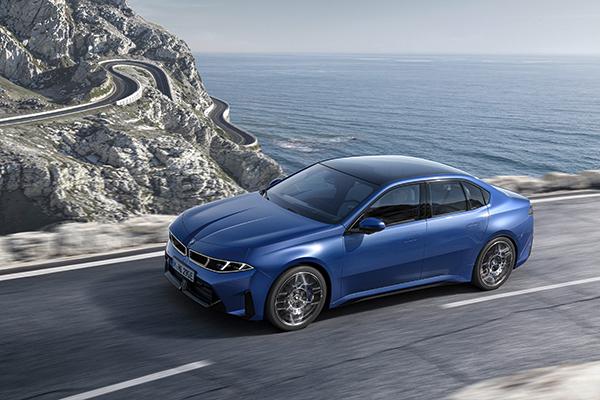
While keeping to the slab-sided monolithic exterior of the original car, the updated 7 Series relies more on horizontal lines for added presence
As hyperbolic as that may sound, BMW hasn't spared any expense with the 7 Series' update. Even the exterior, which is arguably where the changes feel the least minute on the surface, looks sufficiently different.
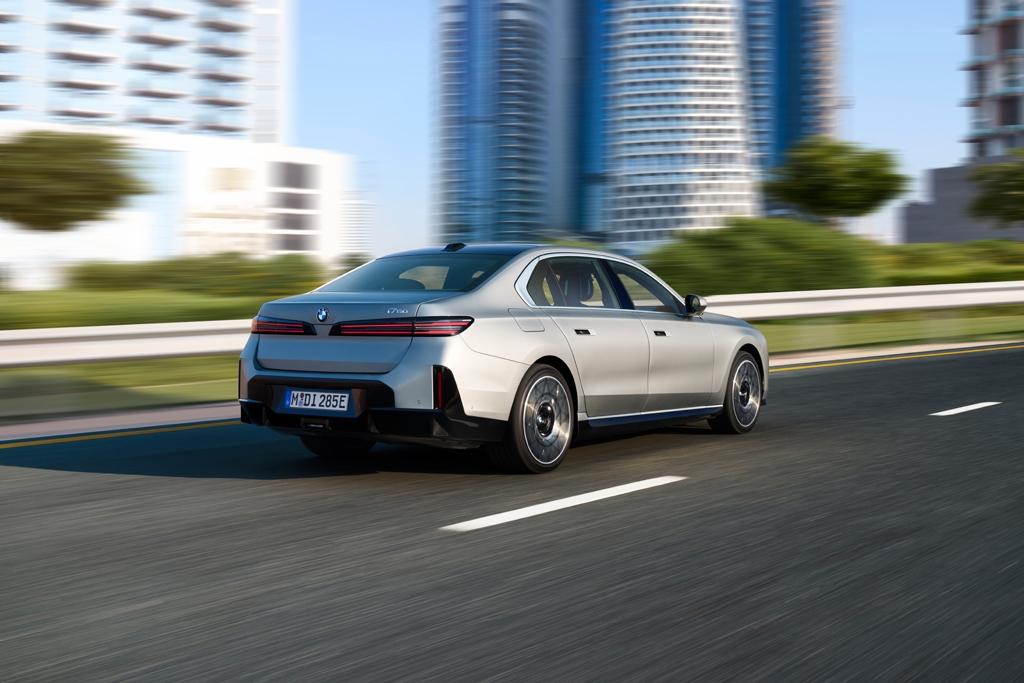
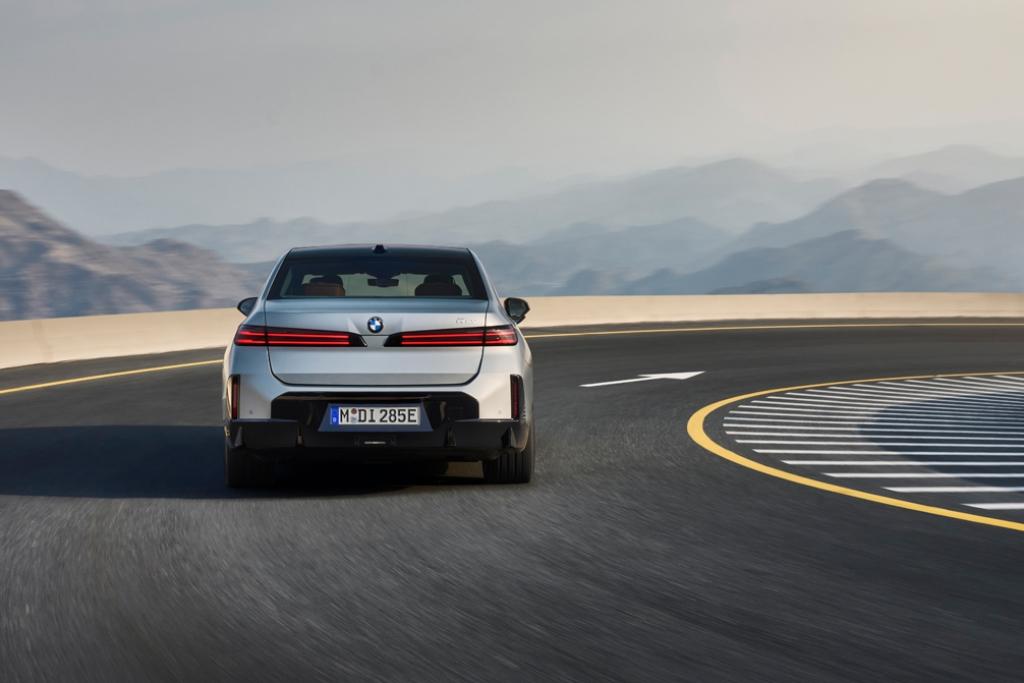
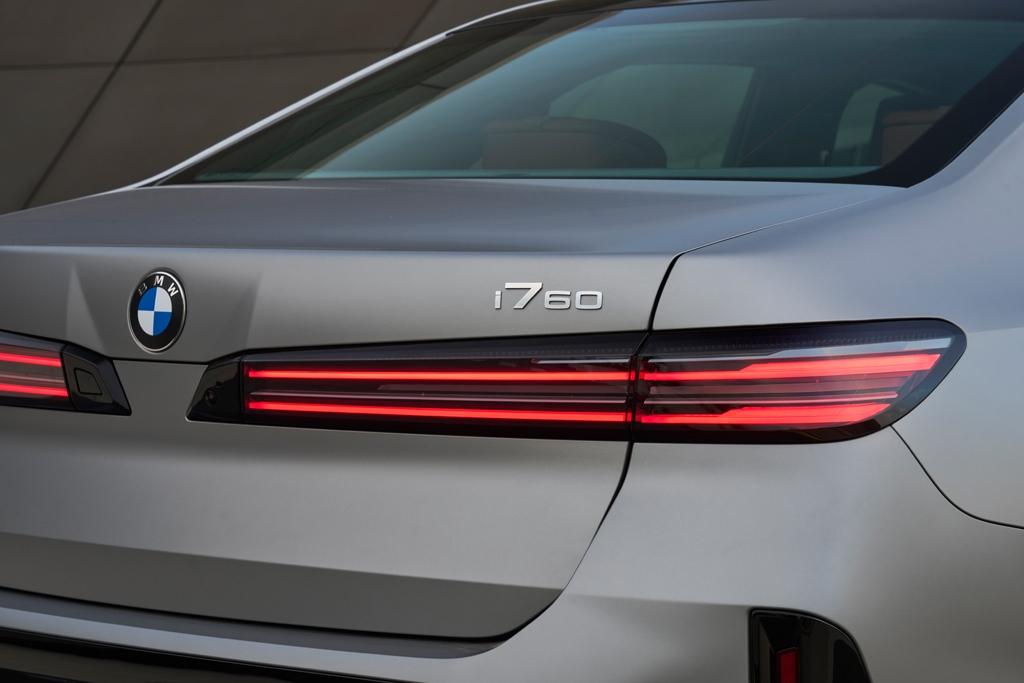
BMW hasn't backed down from the split head lights that drew controversy on the outgoing car, instead leaning more heavily into it, and the result is surprisingly effective. There's a heavier emphasis on horizontal lines both at the rear and up front, which gets a squarer aesthetic and more upright nose.
BMW also states that it has improved the car's iconic automatic doors (the outgoing car was one of the first to debut them in the mainstream). They're now apparently more intuitive to operate, have better sensors, and also come with an improved soft-closing mechanism. If you wanted to roll up in a limo that showed you meant business, the new 7 should do the job even better than before.
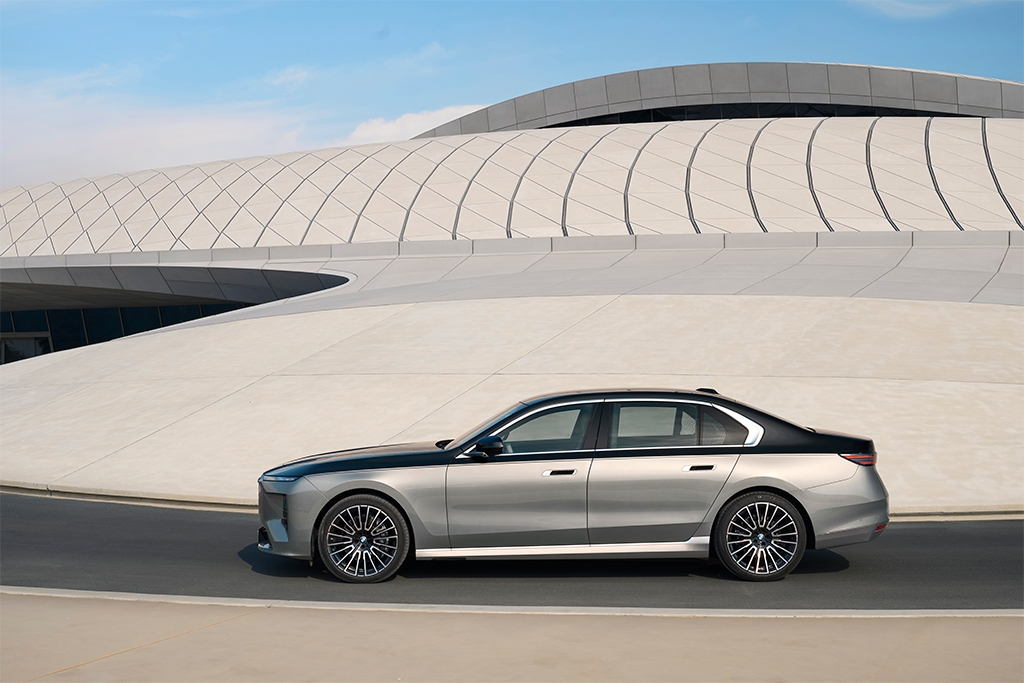
A whopping total of 500 paint and colour combinations are available from the factory now; BMW Individual Paint Finish has also landed, allowing you to truly tailor your 7 Series to your own tastes
That's not where things end. In likely response to the stronger competition in the luxury field, BMW has widened the field of personalisation options for customers. As a first for the model, over 500 paint and colour combinations are available now from the factory, with a heavier emphasis on two-tone paintcoats.
There's even a new BMW Individual Paint Finish, which will see those who can afford it have their car sit in the Paint Shop for a good 75 hours as it gets attended to by more than 20 'master painters'. All that may sound a bit excessive - yet this is also sort of the point when you're forking out more than half a million Singapore dollars for a luxury car. You don't want your 7 Series looking like your neighbour's.
But BMW's promise to infuse Neue Klasse technologies truly starts to come alive on the inside.
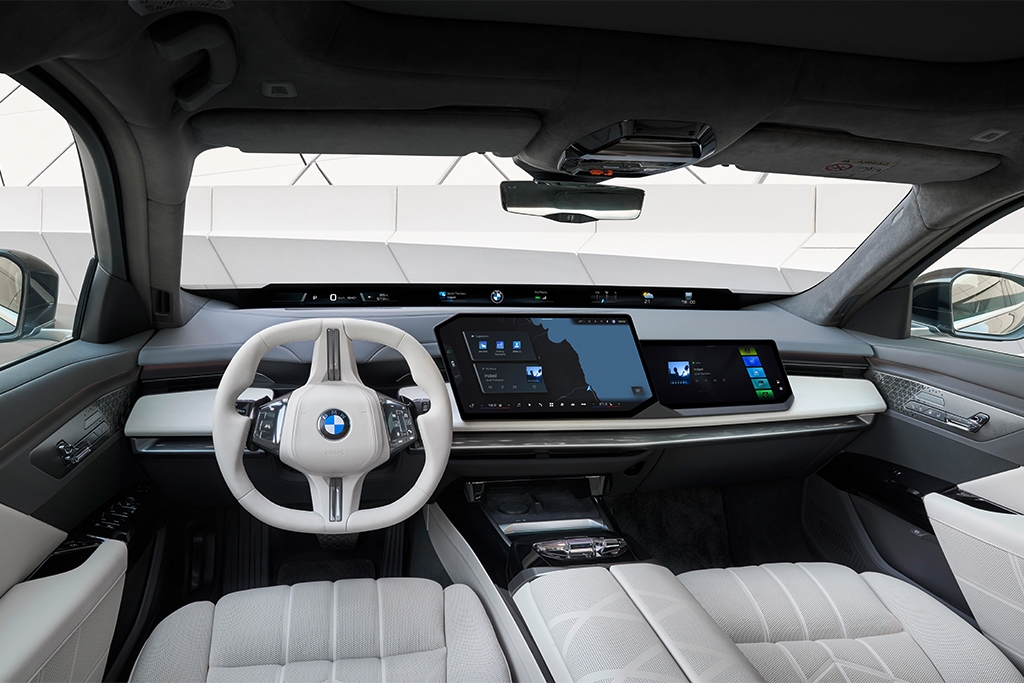
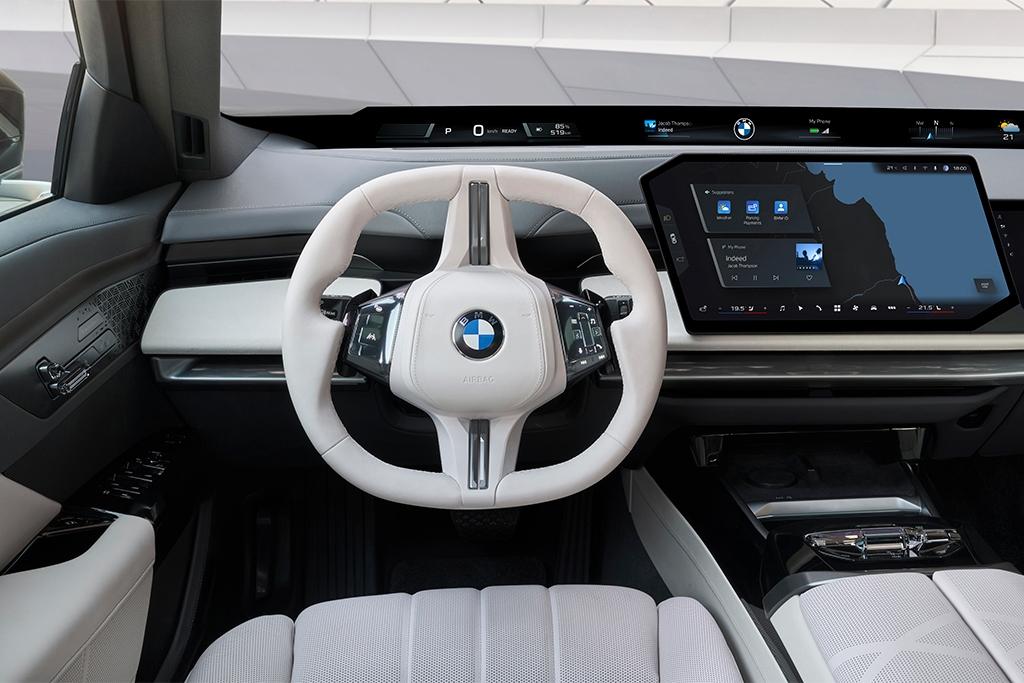
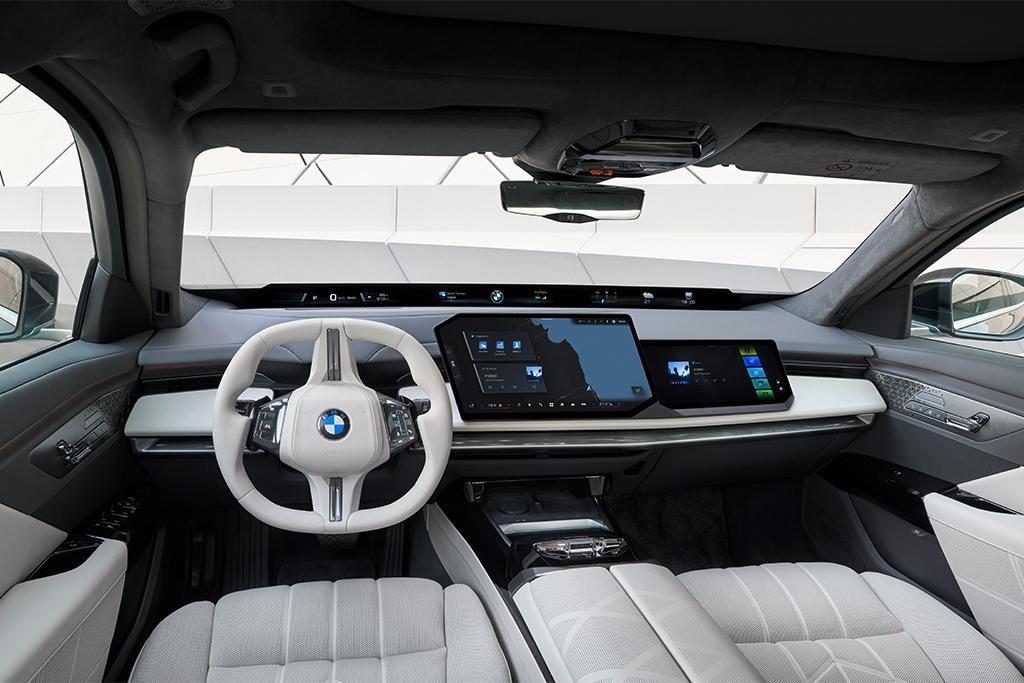
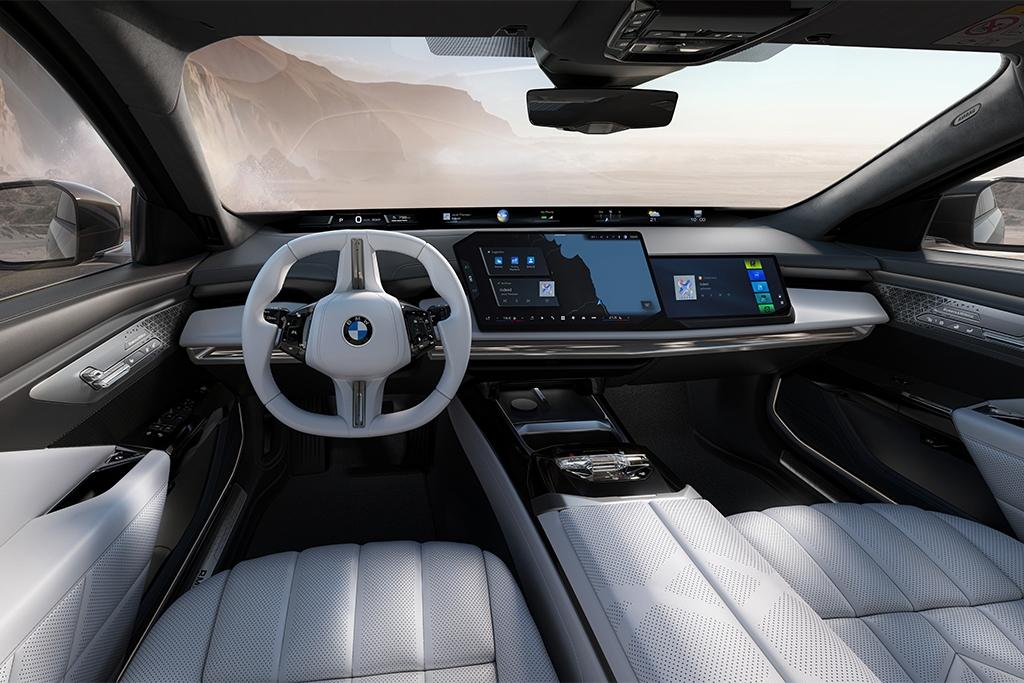
The interior is where the 7 Series has taken a drastic leap forward, now incorporating the Panoramic iDrive system seen on the iX3 and i3
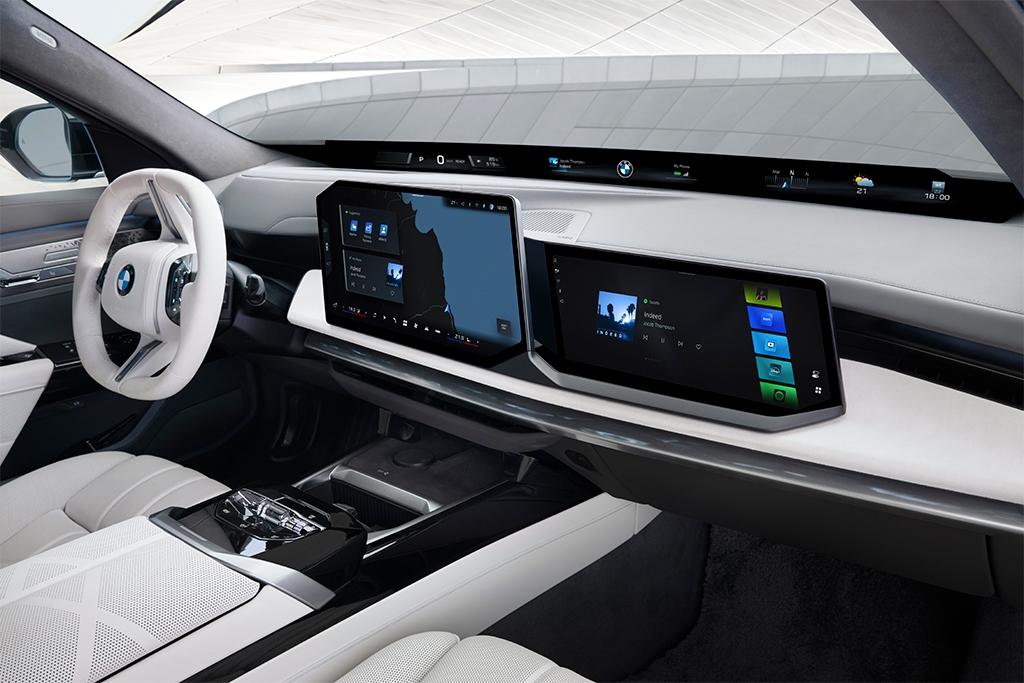
Most notably, there's the new pillar-to-pillar Panoramic Display we first saw on the iX3 and i3. In tandem are a new free-cut 17.9-inch central touch display and new steering wheel - whose plush padding and upholstery again serve as a first look for how BMW's new steering wheel concept could trickle over to other of its luxury-class cars in the future. The arrival of BMW OS X also brings in the brand's latest ADAS suite, which includes BMW Symbiotic Drive.
Interestingly, the new dashboard layout means that the 7 Series has dropped its fancy Interaction Bar of old.
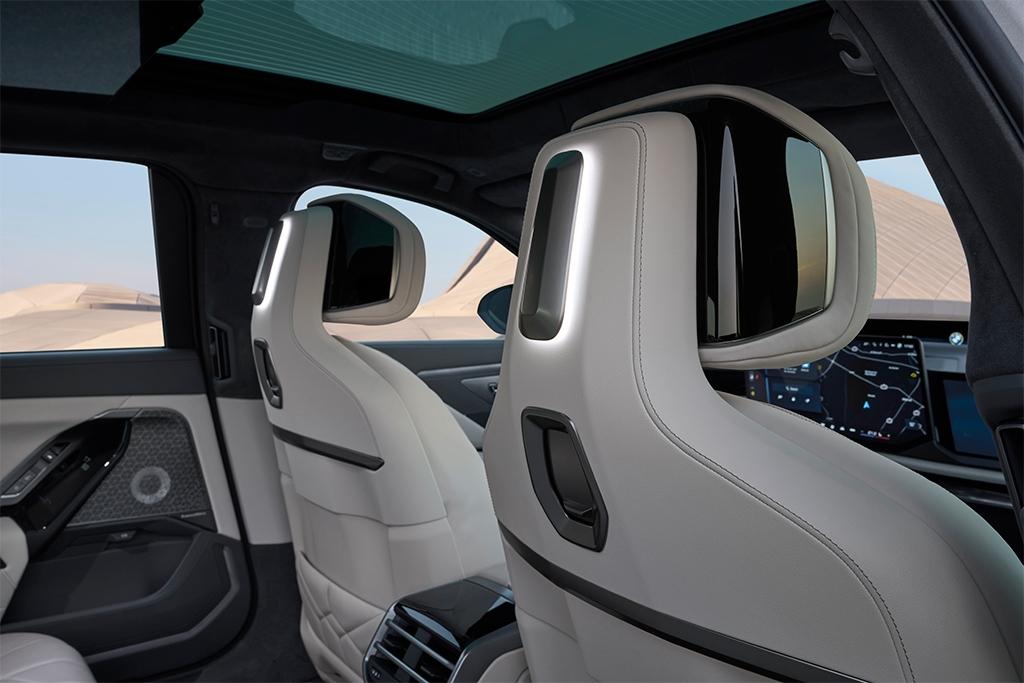
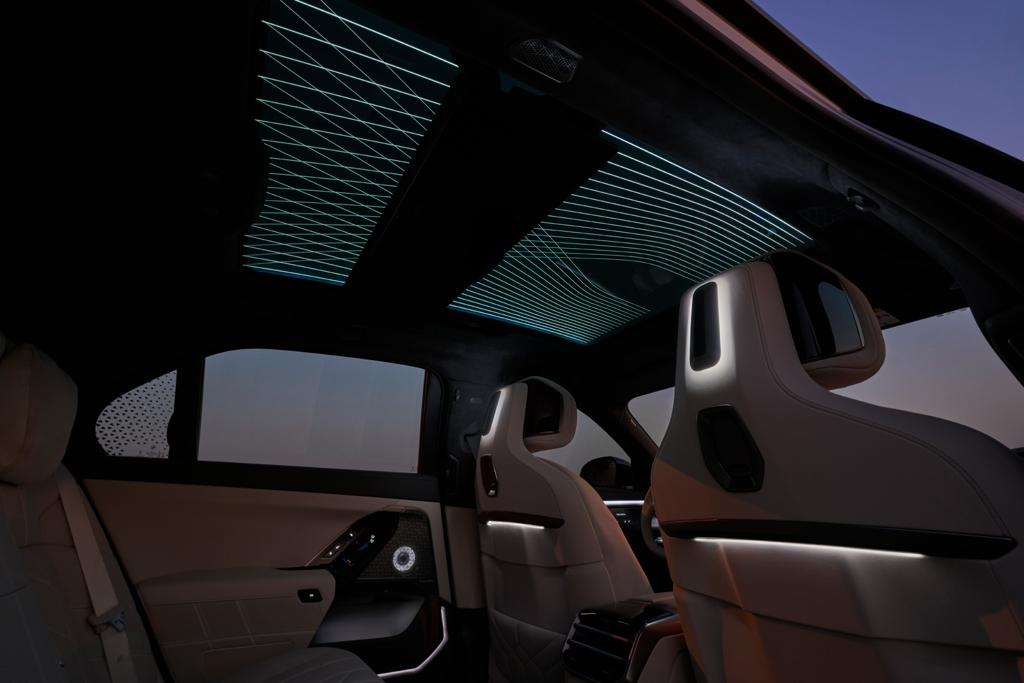
In its place stands a more intricate 'alabaster structure' that seems to emit a soft glow in the day, and then appears to dance delicately at night. Alongside this, BMW has updated the ambient lighting in the rear too (more on that in a bit) with contoured vertical structures at the back of the head rests. All that is part of BMW's new 'immersive light experience'. Fancy.
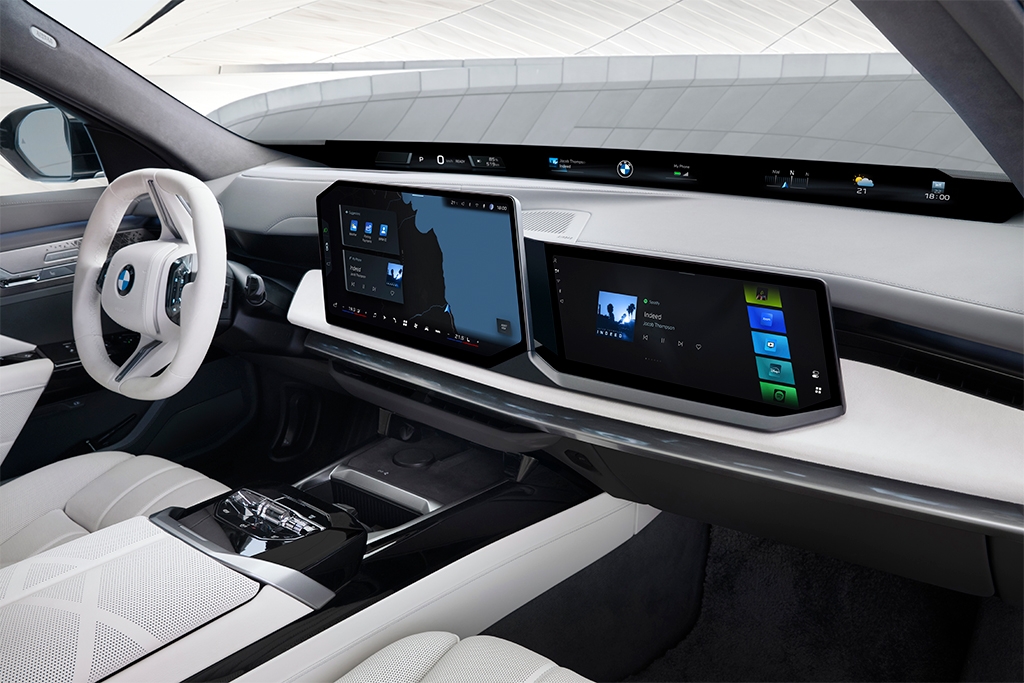
This is the first car we've seen from BMW to incorporate a front passenger display into the Panoramic iDrive system and BMW's first model to ever get a front passenger display
But here's where the real kicker lies: The updated 7 Series marks the first BMW ever to come with a front passenger display.
While these have become quite common among BMW's peers, the one here feels unique for the way it's integrated so seamlessly with the rest of the Panoramic iDrive cockpit. When Sgcarmart got to try the screen on a prototype car back in Munich, the 14.6-inch item also impressed with its range of apps, and for its responsiveness and crispness. In other words, this didn't feel like an afterthought.
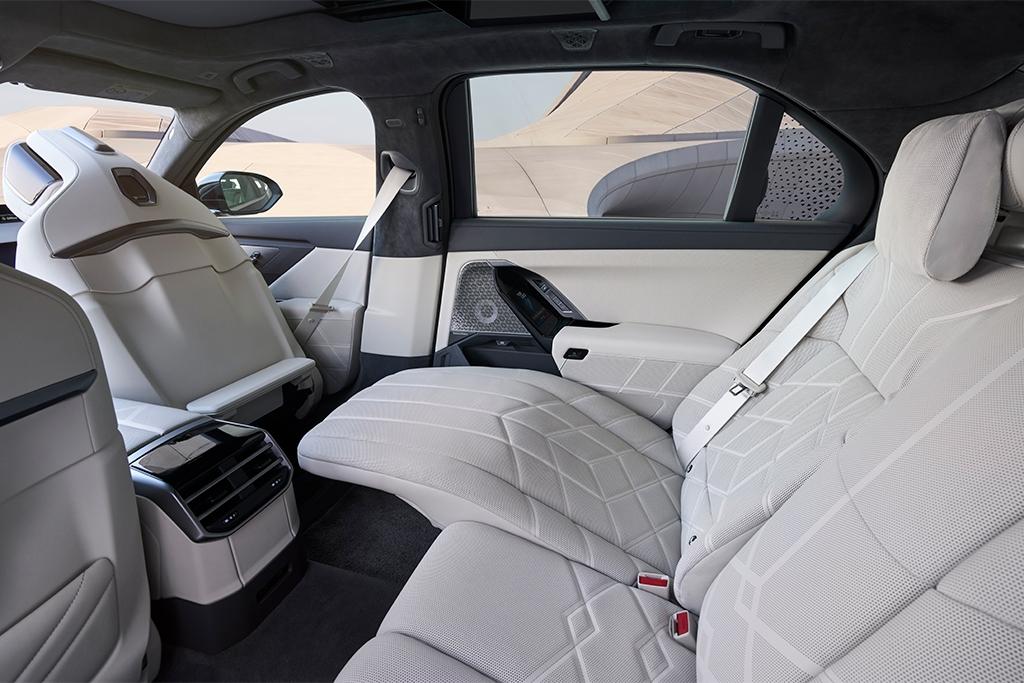
While the rest of the rear may feel rather familiar all over again, it's worth noting how much BMW had already infused into the 7 Series from the outset of this current generation.
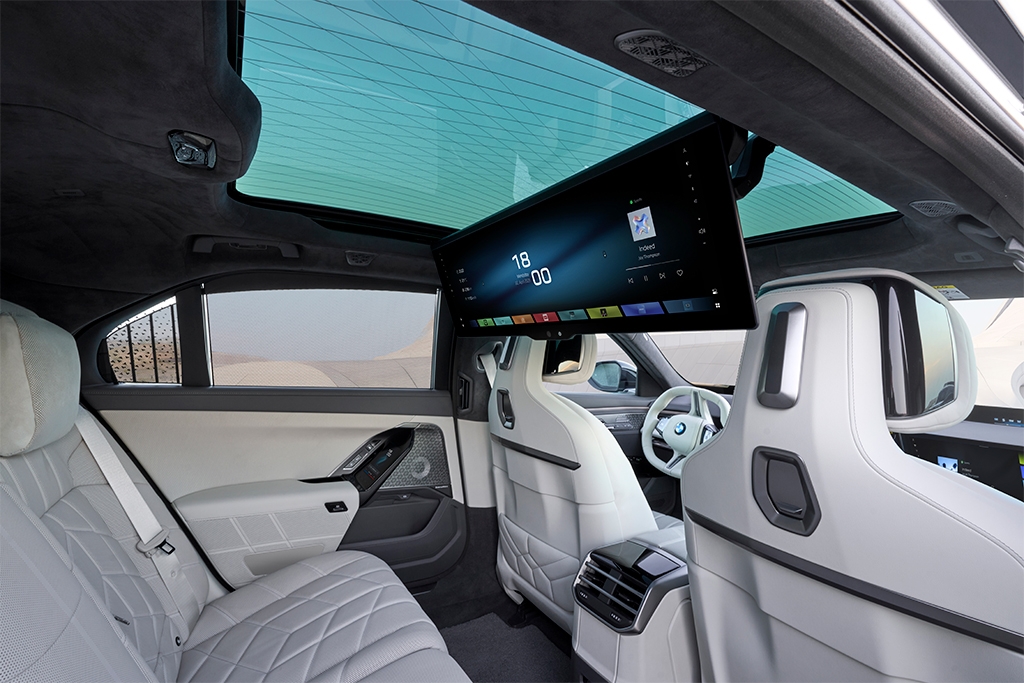
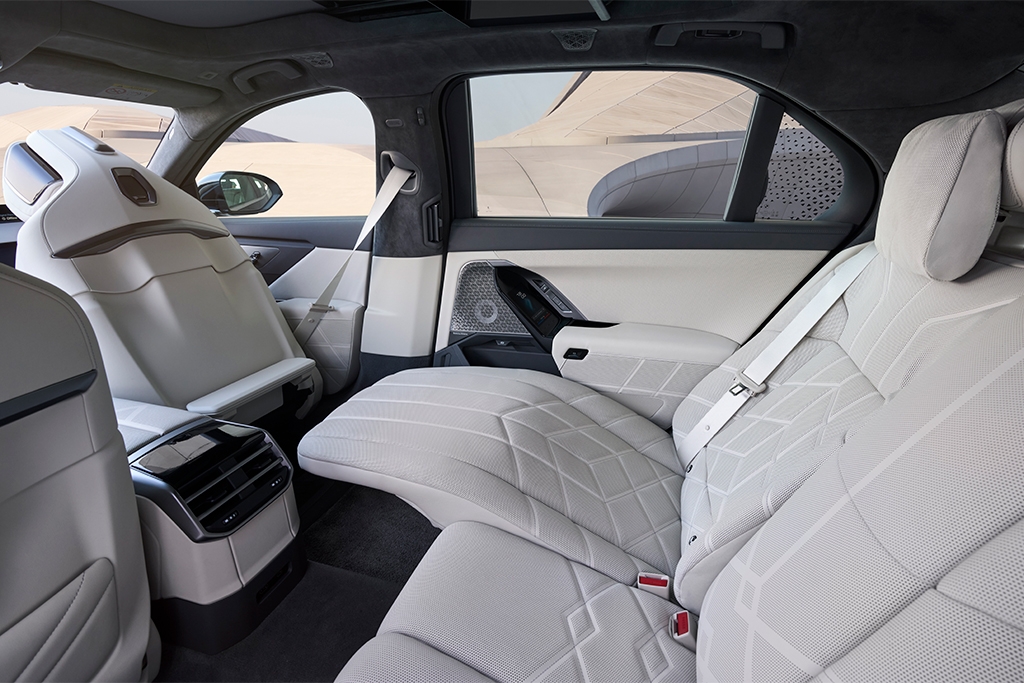
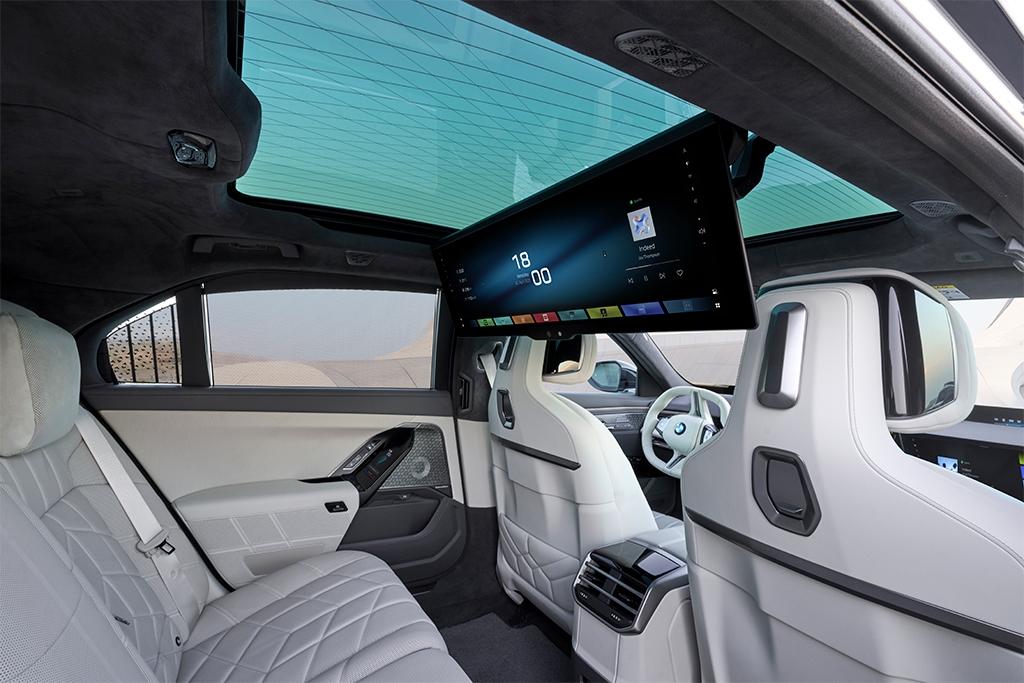
The BMW Theatre Screen now comes with a new camera for conference calls on the go, while a variety of new materials and colours means you're offered around 700 interior combinations on the updated 7
You still get standard goodies like four-zone automatic climate control, as well as the options of Executive Lounge rear seats and the still-stunning BMW Theatre Screen in its full 31.3-inch, 8K glory. The latter, however, sports a crucial update: It's now equipped with a front camera so business folks can take calls on the go.
What's more, BMW seems keen (again) on giving its own ultra-luxe brand Rolls-Royce a run for its money with yet more individualisation options on the inside. Between the likes of open-pored wood, alcantara, carbon fibre, crystal glass and metal in various colours, the brand is claiming a whopping 700 different interior combinations available for customers.
And things are set to be even more impressive on the move.
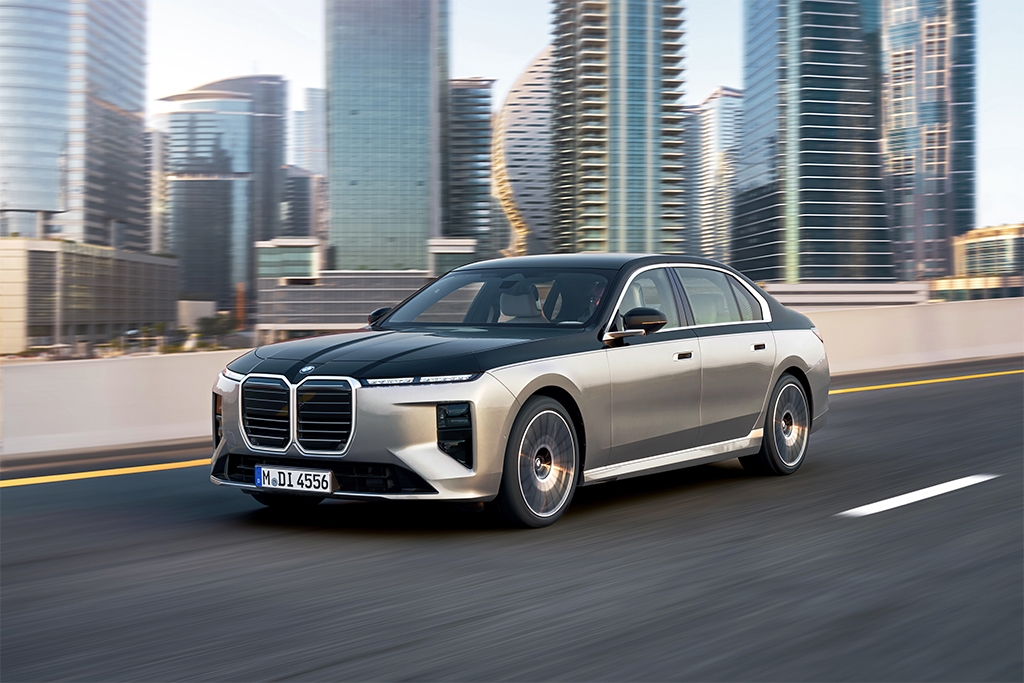
The 7 Series will continue to be available across all powertrain types, including mild hybrid petrol and diesel engines, as a plug-in hybrid, and in fully-electric i7 guise
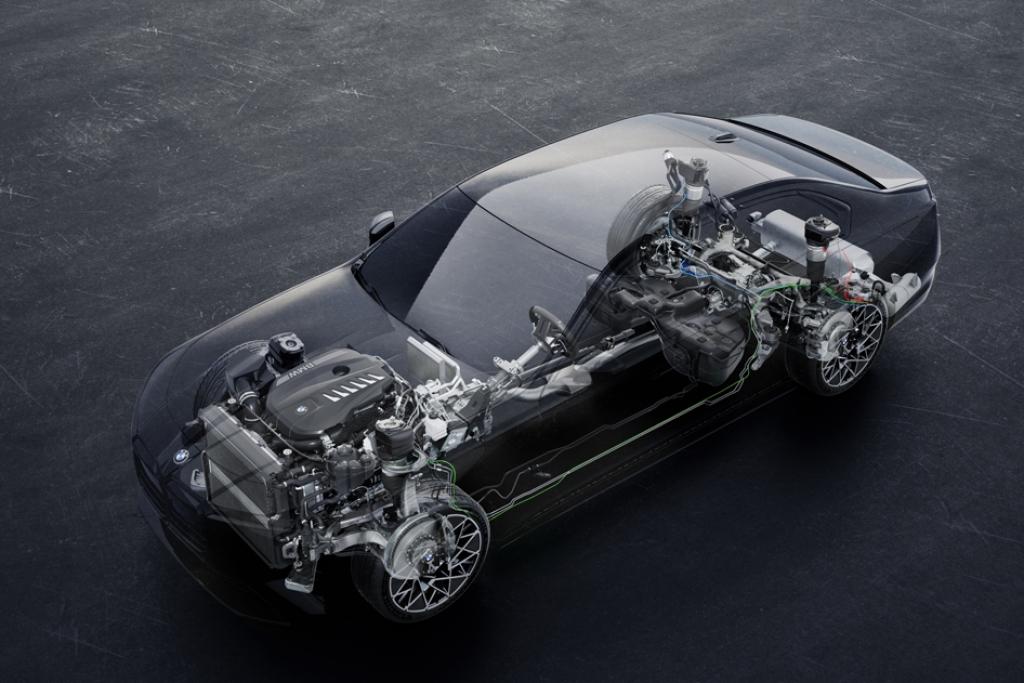
As mentioned earlier, the current-generation 7 Series made waves for being the first legacy nameplate to offer drivers all sorts of powertrain types. True to BMW's technology-open approach, the updated 7 Series will continue to be offered internationally either with inline-six petrol or diesel engines (both with mild hybridisation), as a plug-in hybrid, or again as the fully-electric i7.
A host of updates including a new turbocharger has seen output from the petrol straight-six on the 740 variant rise to 394bhp and 520Nm - a bump of 19bhp and 20Nm respectively.
Meanwhile, the 3.0-litre diesel engine on the 740d now boasts 308bhp (a rise of 13bhp) and 670Nm of torque, while benefitting from enhanced engine acoustics for added refinement. For now, it seems that BMW has axed what would have been the successor of the previous entry-point 735i.
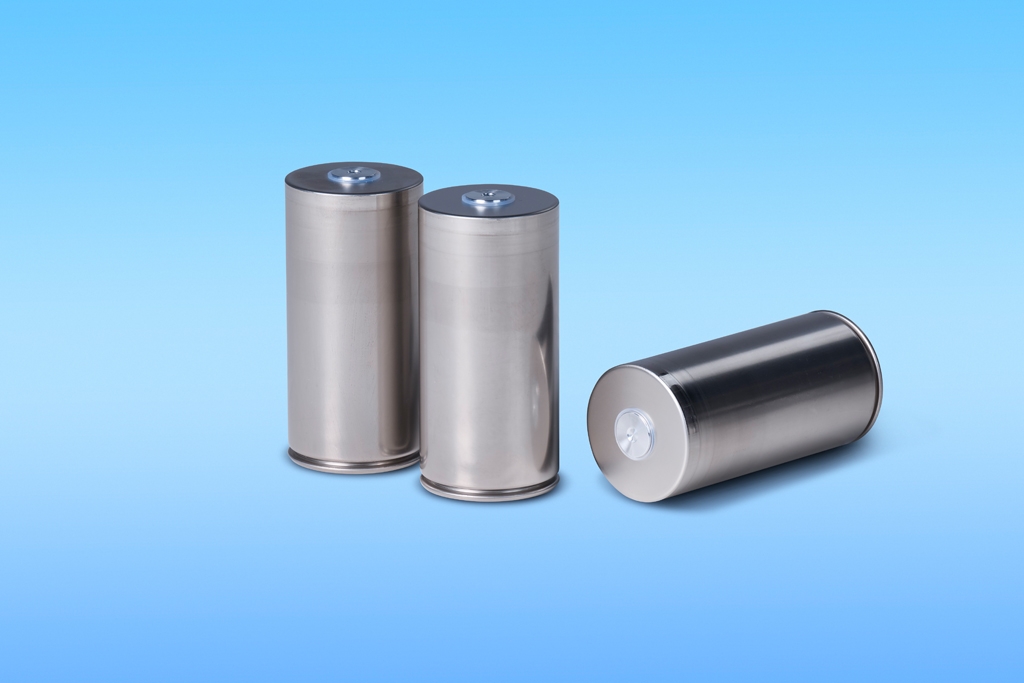
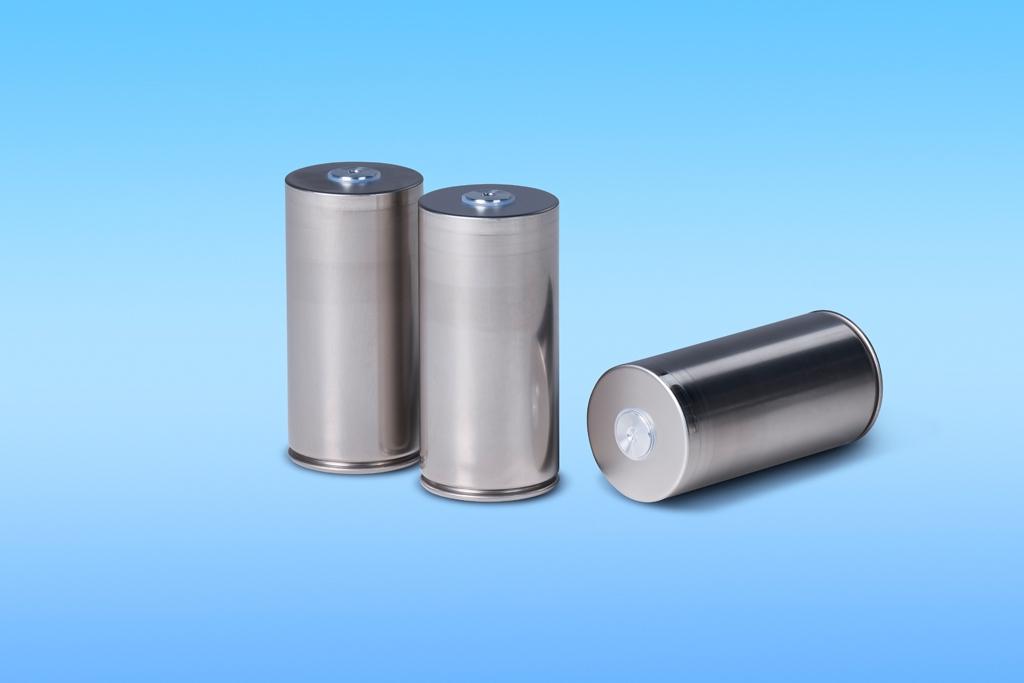
The updated i7 gets a serious upgrade with the Gen6 eDrive cylindrical cells also used in the Neue Klasse i3 and iX3, which give it more range and faster charging
But it's the i7 where BMW has expended most of its efforts, and where the infusion of Neue Klasse technologies will again be brought to bear most clearly.
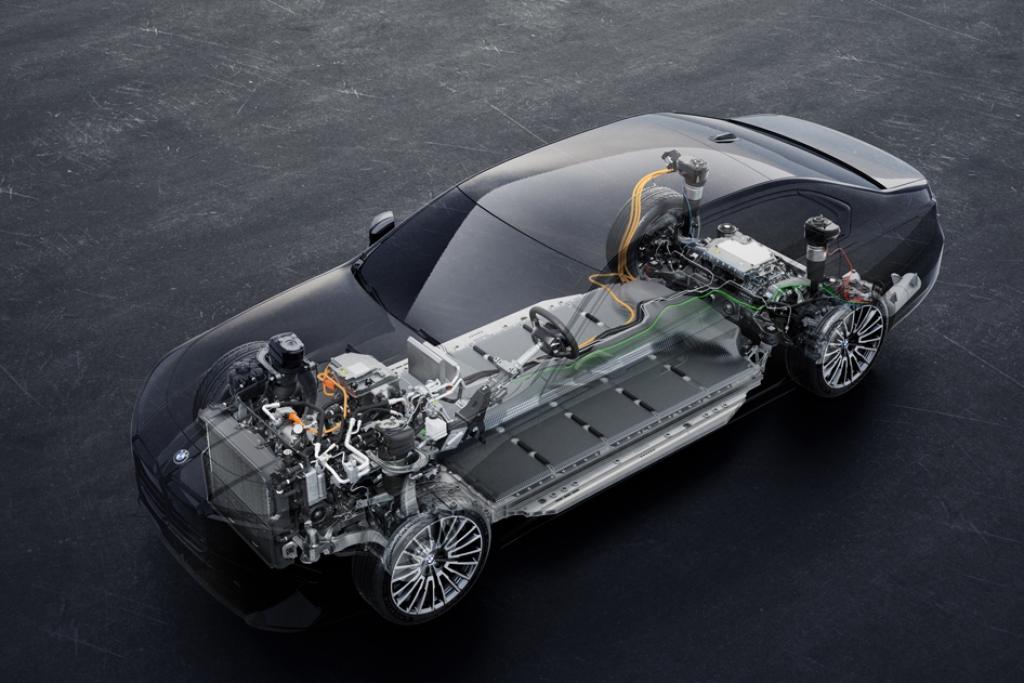
While the i7 continues to be built atop the same CLAR platform, it's now traded BMW's old Gen5 eDrive prismatic battery cells for the Gen6 cylindrical ones used in the iX3 and i3. That's increased the net energy density of its battery pack to 112.5kWh (from a usable total of 101.7kWh previously), thus also pushing its WLTP-rated range over 700km for the first time - or close to 730km, to be more exact.
Internationally, the lineup starts with i7 50 xDrive, whose twin motors put out 335kW and 660Nm. Meanwhile, those who want more power can also opt for the i7 60 xDrive, which gets a total of 400kW and 745Nm. Peak charging speed has risen to 250kW too, meaning you could return 235km of range into the car in just 10 minutes.
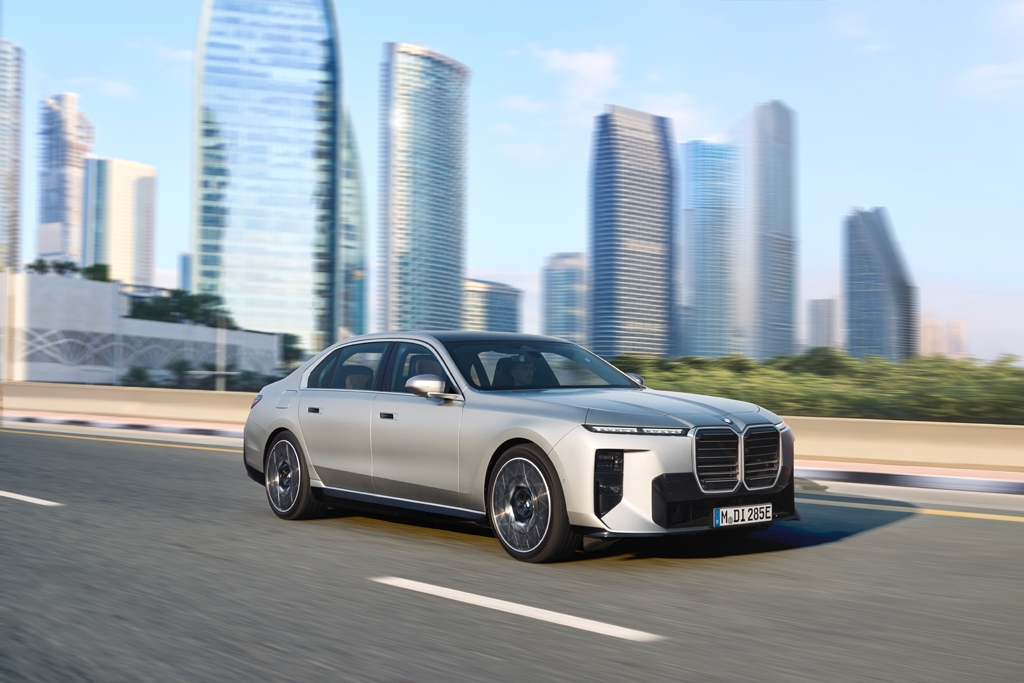
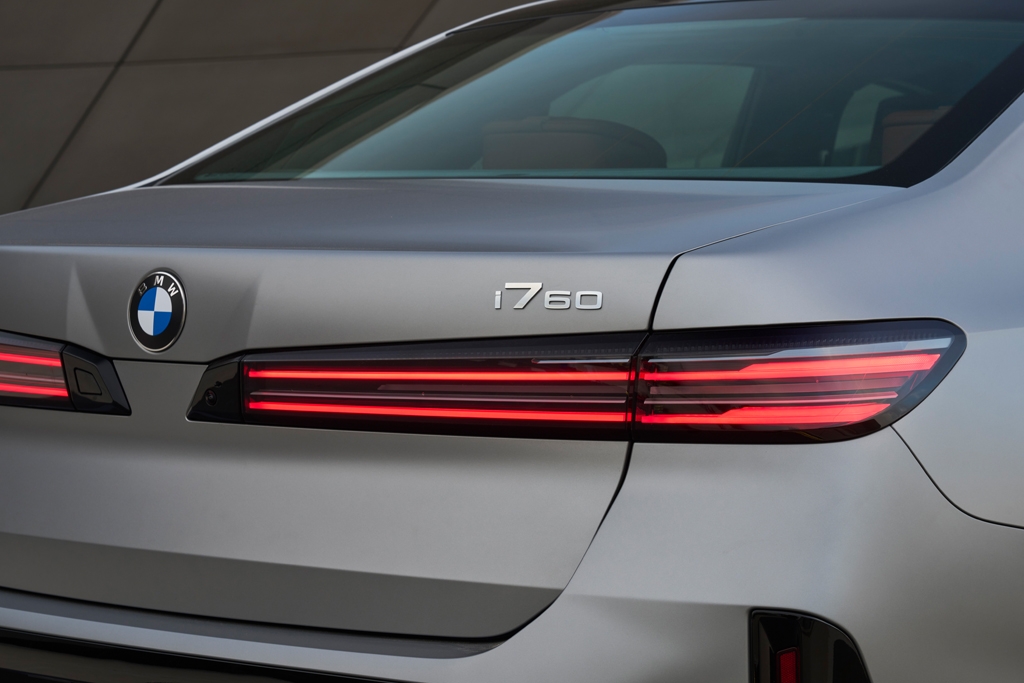
As a result of those Neue Klasse innovations, i7 now gets up to 729km of range - crossing the 700km mark for the first time
You might note that these range and charging numbers are some way off what arch-rival Mercedes-Benz revealed mere days ago with the facelifted EQS. Still, it's worth remembering again that the i7 shares its platform with the combustion-powered 7 Series. The EQS, on the other hand, benefits from an entirely bespoke electric platform.
What's more, BMW is even setting the stage for three range-topping M Performance variants - each with a varying drivetrain type - though it remains unclear where in the world these will be individually available.
Those fully committed to electric power, for starters, will first have the i7 M70 xDrive. To be available from the new 7 Series' launch, the electric super-limo gets a system output of 500kW and a whopping 1,100Nm of torque with Launch Control activated, enabling it to smash the century sprint in a supercar-rivalling 3.8 seconds.
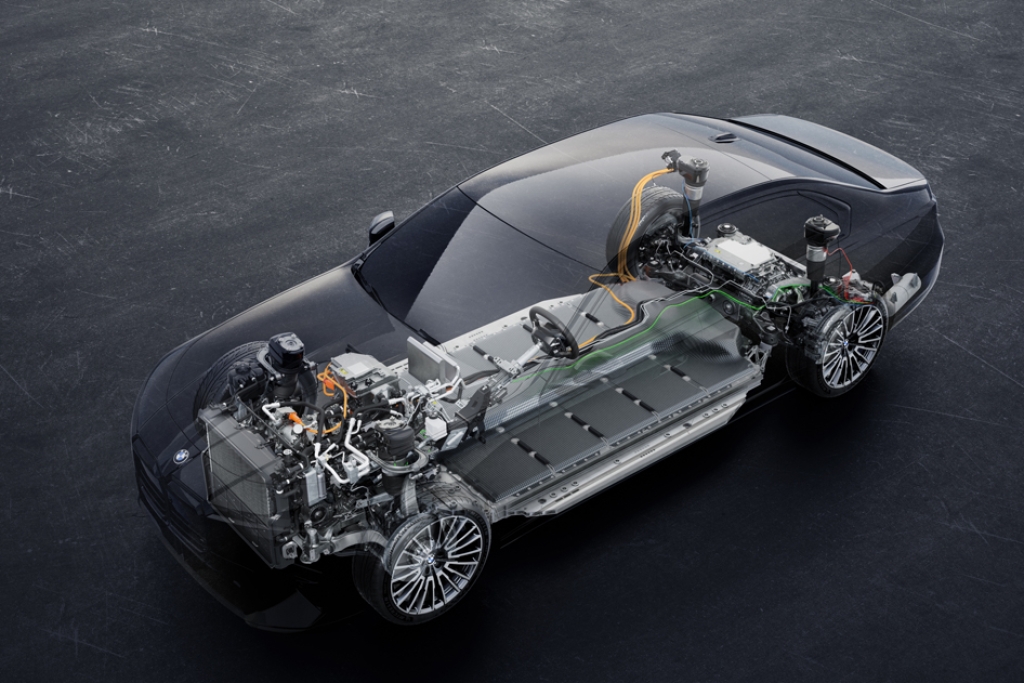
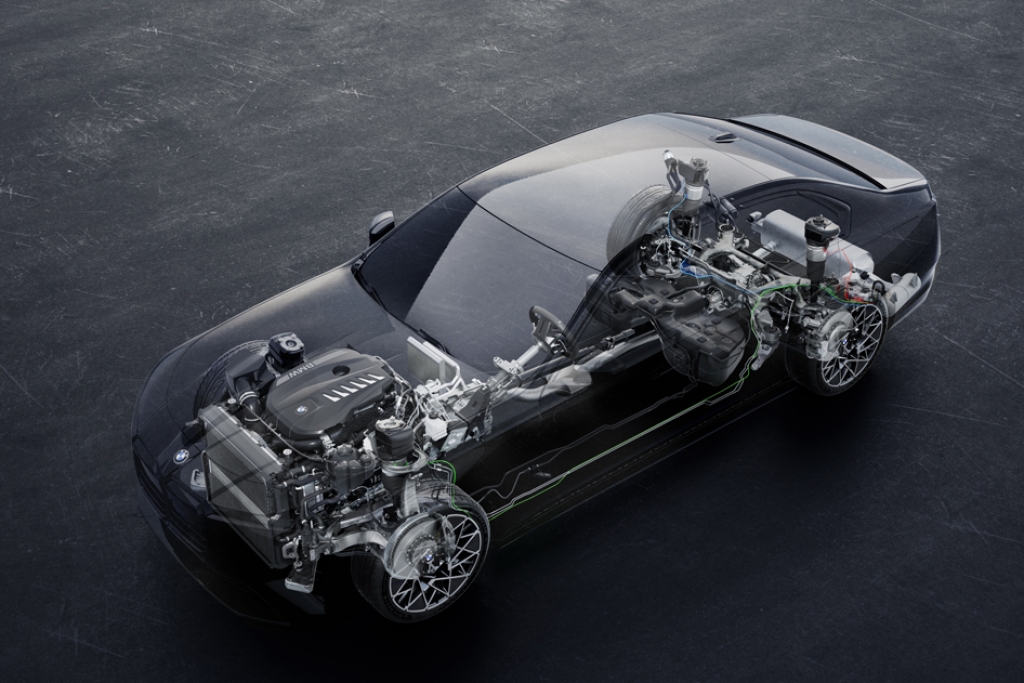
BMW's technology-open philosophy is also evident with its three M Performance models of the 7 Series - the fully-electric i7 M70 xDrive, the plug-in hybrid M760e xDrive, and an as-yet unnamed V8-powered variant
From November 2026, those keen on straddling both worlds will then have the plug-in hybrid M760e xDrive to choose. Mating a 145kW electric motor with a 3.0-litre straight-six petrol engine, the M760e xDrive gets a not-shabby 450kW and 800Nm of torque too.
Most exciting for the bonafide petrolheads, however, is BMW's revelation that it will be releasing a third M Performance model with a "conventional V8 engine" in 2027.
BMW will commence production of the updated BMW 7 Series in July 2026, with all models and powertrain types to be built on a single production line at Plant Dingolfing. The brand states that with its rollout of Neue Klasse technologies, the site will "once again [assume] the role of lead plant for the new BMW luxury-class models".
BMW has pulled the covers of the updated 7 Series, and boy is it returning with a vengeance as it strives to reclaim and future-proof its position as the top-dog luxury sedan in the business.
In fact, so vast are the updates this time that this could have passed off as a new-generation car in the past. Except that it's not; again, this is part of the 7 Series' mid-life refresh.
The updated 7 Series is said to be the most extensive model update BMW has undertaken yet, and reinforces the current generation's transformation into a full-fledged luxury limo
Divisive styling aside, the current-generation car was notable for a few things when it first debuted. It was the first 7 Series to be available fully electric, therefore also making it one of the first electric limos to debut among its luxury peers.
But perhaps more notably, it marked the most significant shift yet we had seen for the 7 Series from sporty full-sized sedan to proper luxe barge. One where the backseat experience arguably took even higher priority than the front seat's. Now, BMW has promised that its flagship sedan is benefitting from the most extensive model update undertaken in the brand's history.
While keeping to the slab-sided monolithic exterior of the original car, the updated 7 Series relies more on horizontal lines for added presence
As hyperbolic as that may sound, BMW hasn't spared any expense with the 7 Series' update. Even the exterior, which is arguably where the changes feel the least minute on the surface, looks sufficiently different.
BMW hasn't backed down from the split head lights that drew controversy on the outgoing car, instead leaning more heavily into it, and the result is surprisingly effective. There's a heavier emphasis on horizontal lines both at the rear and up front, which gets a squarer aesthetic and more upright nose.
BMW also states that it has improved the car's iconic automatic doors (the outgoing car was one of the first to debut them in the mainstream). They're now apparently more intuitive to operate, have better sensors, and also come with an improved soft-closing mechanism. If you wanted to roll up in a limo that showed you meant business, the new 7 should do the job even better than before.
A whopping total of 500 paint and colour combinations are available from the factory now; BMW Individual Paint Finish has also landed, allowing you to truly tailor your 7 Series to your own tastes
That's not where things end. In likely response to the stronger competition in the luxury field, BMW has widened the field of personalisation options for customers. As a first for the model, over 500 paint and colour combinations are available now from the factory, with a heavier emphasis on two-tone paintcoats.
There's even a new BMW Individual Paint Finish, which will see those who can afford it have their car sit in the Paint Shop for a good 75 hours as it gets attended to by more than 20 'master painters'. All that may sound a bit excessive - yet this is also sort of the point when you're forking out more than half a million Singapore dollars for a luxury car. You don't want your 7 Series looking like your neighbour's.
But BMW's promise to infuse Neue Klasse technologies truly starts to come alive on the inside.
The interior is where the 7 Series has taken a drastic leap forward, now incorporating the Panoramic iDrive system seen on the iX3 and i3
Most notably, there's the new pillar-to-pillar Panoramic Display we first saw on the iX3 and i3. In tandem are a new free-cut 17.9-inch central touch display and new steering wheel - whose plush padding and upholstery again serve as a first look for how BMW's new steering wheel concept could trickle over to other of its luxury-class cars in the future. The arrival of BMW OS X also brings in the brand's latest ADAS suite, which includes BMW Symbiotic Drive.
Interestingly, the new dashboard layout means that the 7 Series has dropped its fancy Interaction Bar of old.
In its place stands a more intricate 'alabaster structure' that seems to emit a soft glow in the day, and then appears to dance delicately at night. Alongside this, BMW has updated the ambient lighting in the rear too (more on that in a bit) with contoured vertical structures at the back of the head rests. All that is part of BMW's new 'immersive light experience'. Fancy.
This is the first car we've seen from BMW to incorporate a front passenger display into the Panoramic iDrive system and BMW's first model to ever get a front passenger display
But here's where the real kicker lies: The updated 7 Series marks the first BMW ever to come with a front passenger display.
While these have become quite common among BMW's peers, the one here feels unique for the way it's integrated so seamlessly with the rest of the Panoramic iDrive cockpit. When Sgcarmart got to try the screen on a prototype car back in Munich, the 14.6-inch item also impressed with its range of apps, and for its responsiveness and crispness. In other words, this didn't feel like an afterthought.
While the rest of the rear may feel rather familiar all over again, it's worth noting how much BMW had already infused into the 7 Series from the outset of this current generation.
The BMW Theatre Screen now comes with a new camera for conference calls on the go, while a variety of new materials and colours means you're offered around 700 interior combinations on the updated 7
You still get standard goodies like four-zone automatic climate control, as well as the options of Executive Lounge rear seats and the still-stunning BMW Theatre Screen in its full 31.3-inch, 8K glory. The latter, however, sports a crucial update: It's now equipped with a front camera so business folks can take calls on the go.
What's more, BMW seems keen (again) on giving its own ultra-luxe brand Rolls-Royce a run for its money with yet more individualisation options on the inside. Between the likes of open-pored wood, alcantara, carbon fibre, crystal glass and metal in various colours, the brand is claiming a whopping 700 different interior combinations available for customers.
And things are set to be even more impressive on the move.
The 7 Series will continue to be available across all powertrain types, including mild hybrid petrol and diesel engines, as a plug-in hybrid, and in fully-electric i7 guise
As mentioned earlier, the current-generation 7 Series made waves for being the first legacy nameplate to offer drivers all sorts of powertrain types. True to BMW's technology-open approach, the updated 7 Series will continue to be offered internationally either with inline-six petrol or diesel engines (both with mild hybridisation), as a plug-in hybrid, or again as the fully-electric i7.
A host of updates including a new turbocharger has seen output from the petrol straight-six on the 740 variant rise to 394bhp and 520Nm - a bump of 19bhp and 20Nm respectively.
Meanwhile, the 3.0-litre diesel engine on the 740d now boasts 308bhp (a rise of 13bhp) and 670Nm of torque, while benefitting from enhanced engine acoustics for added refinement. For now, it seems that BMW has axed what would have been the successor of the previous entry-point 735i.
The updated i7 gets a serious upgrade with the Gen6 eDrive cylindrical cells also used in the Neue Klasse i3 and iX3, which give it more range and faster charging
But it's the i7 where BMW has expended most of its efforts, and where the infusion of Neue Klasse technologies will again be brought to bear most clearly.
While the i7 continues to be built atop the same CLAR platform, it's now traded BMW's old Gen5 eDrive prismatic battery cells for the Gen6 cylindrical ones used in the iX3 and i3. That's increased the net energy density of its battery pack to 112.5kWh (from a usable total of 101.7kWh previously), thus also pushing its WLTP-rated range over 700km for the first time - or close to 730km, to be more exact.
Internationally, the lineup starts with i7 50 xDrive, whose twin motors put out 335kW and 660Nm. Meanwhile, those who want more power can also opt for the i7 60 xDrive, which gets a total of 400kW and 745Nm. Peak charging speed has risen to 250kW too, meaning you could return 235km of range into the car in just 10 minutes.
As a result of those Neue Klasse innovations, i7 now gets up to 729km of range - crossing the 700km mark for the first time
You might note that these range and charging numbers are some way off what arch-rival Mercedes-Benz revealed mere days ago with the facelifted EQS. Still, it's worth remembering again that the i7 shares its platform with the combustion-powered 7 Series. The EQS, on the other hand, benefits from an entirely bespoke electric platform.
What's more, BMW is even setting the stage for three range-topping M Performance variants - each with a varying drivetrain type - though it remains unclear where in the world these will be individually available.
Those fully committed to electric power, for starters, will first have the i7 M70 xDrive. To be available from the new 7 Series' launch, the electric super-limo gets a system output of 500kW and a whopping 1,100Nm of torque with Launch Control activated, enabling it to smash the century sprint in a supercar-rivalling 3.8 seconds.
BMW's technology-open philosophy is also evident with its three M Performance models of the 7 Series - the fully-electric i7 M70 xDrive, the plug-in hybrid M760e xDrive, and an as-yet unnamed V8-powered variant
From November 2026, those keen on straddling both worlds will then have the plug-in hybrid M760e xDrive to choose. Mating a 145kW electric motor with a 3.0-litre straight-six petrol engine, the M760e xDrive gets a not-shabby 450kW and 800Nm of torque too.
Most exciting for the bonafide petrolheads, however, is BMW's revelation that it will be releasing a third M Performance model with a "conventional V8 engine" in 2027.
BMW will commence production of the updated BMW 7 Series in July 2026, with all models and powertrain types to be built on a single production line at Plant Dingolfing. The brand states that with its rollout of Neue Klasse technologies, the site will "once again [assume] the role of lead plant for the new BMW luxury-class models".



Latest COE Prices
April 2026 | 2nd BIDDING
NEXT TENDER: 06 May 2026
CAT A$123,010
CAT B$121,001
CAT C$83,501
CAT E$125,002
View Full Results 
Thank You For Your Subscription.




Tags
Products & Services

For Owners
Quick Links
About Sgcarmart