New equipment introduced at one-north to support driverless trials
19 Oct 2016|895 views
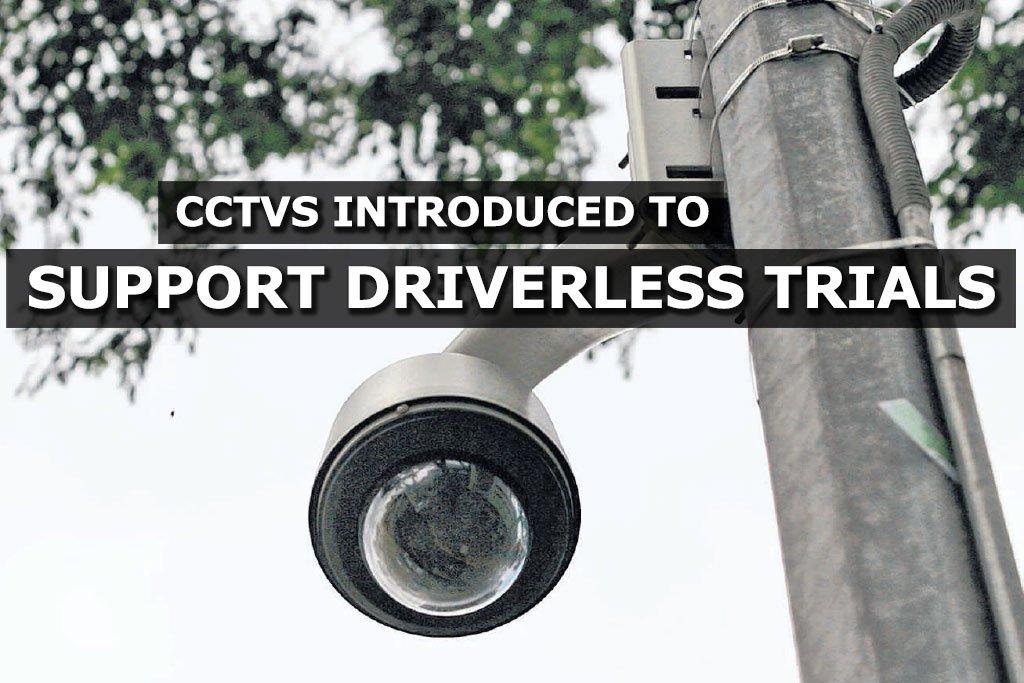
Last year, one-north was identified by the authorities as a test bed for Autonomous Vehicles (AV). The equipment used for monitoring and support includes a network of 20 CCTV cameras and 10 'dedicated short-range communication' beacons, which broadcast information such as traffic light signals and traffic conditions to the vehicles to assist them in negotiating the road. They were progressively installed in several phases since July this year.
A backend system, introduced earlier this month at Land Transport Authority's (LTA) Intelligent Transport Systems Centre, monitors the vehicles and evaluates their performance based on footage from the CCTV cameras as well as data from the vehicles themselves. "The purpose of the data is to allow us to evaluate the performance of the AVs during the trials and allow us to see whether we should further enhance our infrastructure to support the trials in the future," said Ms. Joanna Cheong, Manager at the LTA's Intelligent Transport Systems Development Division.
Last month, the LTA, together with JTC, expanded the route on which these vehicles can be tested, doubling it from 6km to 12km. The area now includes the one-north MRT station, residential properties and office buildings, including Fusionopolis and Lucasfilm's Sandcrawler headquarters. There are currently four agencies testing autonomous vehicles at the one-north test bed: the Singapore-MIT Alliance for Research and Technology (Smart), nuTonomy, Delphi and A*Star.
Scott Pendleton, a research fellow with Smart, said the new infrastructure would help supplement their vehicle's own sensors and cameras, allowing them to better navigate and negotiate traffic conditions. He added the expanded area would allow them to test their vehicles in a wider range of environments. "We can prove our algorithms over a wider range of scenarios," he said.
Last year, one-north was identified by the authorities as a test bed for Autonomous Vehicles (AV). The equipment used for monitoring and support includes a network of 20 CCTV cameras and 10 'dedicated short-range communication' beacons, which broadcast information such as traffic light signals and traffic conditions to the vehicles to assist them in negotiating the road. They were progressively installed in several phases since July this year.
A backend system, introduced earlier this month at Land Transport Authority's (LTA) Intelligent Transport Systems Centre, monitors the vehicles and evaluates their performance based on footage from the CCTV cameras as well as data from the vehicles themselves. "The purpose of the data is to allow us to evaluate the performance of the AVs during the trials and allow us to see whether we should further enhance our infrastructure to support the trials in the future," said Ms. Joanna Cheong, Manager at the LTA's Intelligent Transport Systems Development Division.
Last month, the LTA, together with JTC, expanded the route on which these vehicles can be tested, doubling it from 6km to 12km. The area now includes the one-north MRT station, residential properties and office buildings, including Fusionopolis and Lucasfilm's Sandcrawler headquarters. There are currently four agencies testing autonomous vehicles at the one-north test bed: the Singapore-MIT Alliance for Research and Technology (Smart), nuTonomy, Delphi and A*Star.
Scott Pendleton, a research fellow with Smart, said the new infrastructure would help supplement their vehicle's own sensors and cameras, allowing them to better navigate and negotiate traffic conditions. He added the expanded area would allow them to test their vehicles in a wider range of environments. "We can prove our algorithms over a wider range of scenarios," he said.


Latest COE Prices
May 2026 | 2nd BIDDING
NEXT TENDER: 04 Jun 2026
CAT A$124,229
CAT B$129,501
CAT C$92,223
CAT E$130,000
View Full Results 
Thank You For Your Subscription.







Tags
Products & Services

For Owners
Quick Links
About Sgcarmart