Toyota's answer to the Segway - the "winglet" personal robot
07 Aug 2008|3,782 views
The Winglet consists of a body (with a projected area the size of an A3 sheet of paper) that houses an electric motor, two wheels and internal sensors that constantly monitor the user's position and make adjustments in power to ensure stability.
A unique parallel link mechanism allows the rider to go forward, backward and turn simply by shifting body weight, making the vehicle safe and useful even in tight spaces or crowded environments.
Toyota has created three models, the "L", "M" and "S", each having different handling features that allow consumers to select a model appropriate to their needs - from "practical" to "hands-free sporty".
Toyota plans various technical and consumer trials to gain feedback during the Winglet's lead-up to practical use.
The Winglet is one of Toyota's people-assisting Partner Robots.
Toyota is pursuing sustainability in research and development, manufacturing and social contribution as part of its concept to accomplish "sustainability in three areas" and to help contribute to the health and comfort of future society.
The Toyota Partner Robot development is being carried out with this in mind and applies the company's approach to monozukuri ("making things"), which includes its mobility, production and other technologies.
Toyota aims to have its Partner Robots in practical use in the early 2010s by furthering its robotic development and strengthening collaboration between industry, government and academia.
A unique parallel link mechanism allows the rider to go forward, backward and turn simply by shifting body weight, making the vehicle safe and useful even in tight spaces or crowded environments.
Toyota has created three models, the "L", "M" and "S", each having different handling features that allow consumers to select a model appropriate to their needs - from "practical" to "hands-free sporty".
Toyota plans various technical and consumer trials to gain feedback during the Winglet's lead-up to practical use.
The Winglet is one of Toyota's people-assisting Partner Robots.
Toyota is pursuing sustainability in research and development, manufacturing and social contribution as part of its concept to accomplish "sustainability in three areas" and to help contribute to the health and comfort of future society.
The Toyota Partner Robot development is being carried out with this in mind and applies the company's approach to monozukuri ("making things"), which includes its mobility, production and other technologies.
Toyota aims to have its Partner Robots in practical use in the early 2010s by furthering its robotic development and strengthening collaboration between industry, government and academia.
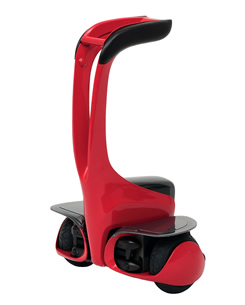 | 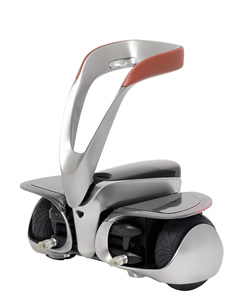 | 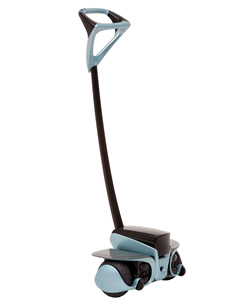 |
The Winglet consists of a body (with a projected area the size of an A3 sheet of paper) that houses an electric motor, two wheels and internal sensors that constantly monitor the user's position and make adjustments in power to ensure stability.
A unique parallel link mechanism allows the rider to go forward, backward and turn simply by shifting body weight, making the vehicle safe and useful even in tight spaces or crowded environments.
Toyota has created three models, the "L", "M" and "S", each having different handling features that allow consumers to select a model appropriate to their needs - from "practical" to "hands-free sporty".
Toyota plans various technical and consumer trials to gain feedback during the Winglet's lead-up to practical use.
The Winglet is one of Toyota's people-assisting Partner Robots.
Toyota is pursuing sustainability in research and development, manufacturing and social contribution as part of its concept to accomplish "sustainability in three areas" and to help contribute to the health and comfort of future society.
The Toyota Partner Robot development is being carried out with this in mind and applies the company's approach to monozukuri ("making things"), which includes its mobility, production and other technologies.
Toyota aims to have its Partner Robots in practical use in the early 2010s by furthering its robotic development and strengthening collaboration between industry, government and academia.
A unique parallel link mechanism allows the rider to go forward, backward and turn simply by shifting body weight, making the vehicle safe and useful even in tight spaces or crowded environments.
Toyota has created three models, the "L", "M" and "S", each having different handling features that allow consumers to select a model appropriate to their needs - from "practical" to "hands-free sporty".
Toyota plans various technical and consumer trials to gain feedback during the Winglet's lead-up to practical use.
The Winglet is one of Toyota's people-assisting Partner Robots.
Toyota is pursuing sustainability in research and development, manufacturing and social contribution as part of its concept to accomplish "sustainability in three areas" and to help contribute to the health and comfort of future society.
The Toyota Partner Robot development is being carried out with this in mind and applies the company's approach to monozukuri ("making things"), which includes its mobility, production and other technologies.
Toyota aims to have its Partner Robots in practical use in the early 2010s by furthering its robotic development and strengthening collaboration between industry, government and academia.
| | |


Latest COE Prices
May 2026 | 1st BIDDING
NEXT TENDER: 20 May 2026
CAT A$124,790
CAT B$126,236
CAT C$87,479
CAT E$127,700
View Full Results 
Thank You For Your Subscription.



Tags
Products & Services

For Owners
Quick Links
About Sgcarmart