For internal combustion to take place, fuel needs oxygen, the source of which is atmospheric air. During the intake stroke (as the piston descends within the cylinder), the mass of air inducted is strictly at ambient pressure.
Cylinder volume is a physical constant, but the mass of air that fills any space is a function of pressure. Hence, the higher the pressure, the greater the mass of air that can occupy any given volume, simply because air is compressible.
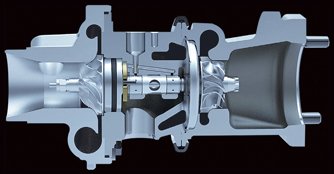
 Exhaust-driven turbine wheel spins its 'attached' compressor wheel to turbocharge the engine's output
A device that 'blows' air into the cylinder would enable more air-mass to be squeezed inside said cylinder than by natural aspiration alone. This concept of forcing air into the cylinder to achieve greater than 100 percent volumetric efficiency at a given ambient pressure is termed 'supercharging'.
The device mentioned in the previous paragraph is called a compressor. It can be driven by an electric motor, or mechanically by a belt off the crankshaft.
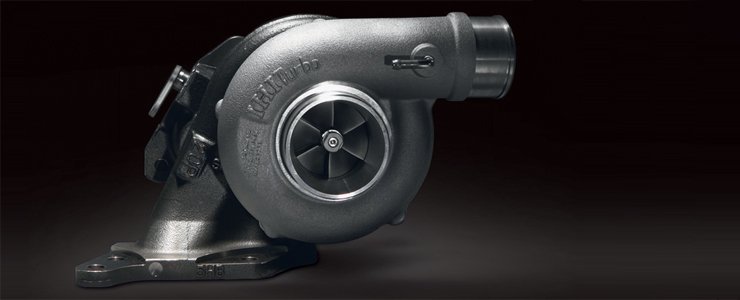
The turbocharger, however, relies neither on a motor nor a belt. Instead, a turbo compressor is driven by a shaft-connected turbine, which is made to spin by the hot, fast-flowing exhaust gases of combustion.
Cylinder volume is a physical constant, but the mass of air that fills any space is a function of pressure. Hence, the higher the pressure, the greater the mass of air that can occupy any given volume, simply because air is compressible.
A device that 'blows' air into the cylinder would enable more air-mass to be squeezed inside said cylinder than by natural aspiration alone. This concept of forcing air into the cylinder to achieve greater than 100 percent volumetric efficiency at a given ambient pressure is termed 'supercharging'.
The device mentioned in the previous paragraph is called a compressor. It can be driven by an electric motor, or mechanically by a belt off the crankshaft.
The turbocharger, however, relies neither on a motor nor a belt. Instead, a turbo compressor is driven by a shaft-connected turbine, which is made to spin by the hot, fast-flowing exhaust gases of combustion.
In theory, then, turbo-supercharging (to use the 'correct' technical term) consumes no energy on its own since exhaust gases are waste products of the internal combustion process.
Hot and bothered
Turbocharging, though highly effective, isn't as simple as it sounds. Heat is turbocharging's biggest complication.
Compressed air, especially if it flows from an exhaust gas-driven
device, experiences a significant rise in temperature. Not only does this mean a drop in the density of said air, it also causes pre-ignition of the air-fuel mixture in the combustion chamber - a phenomenon that frequently leads to stress failure in the cylinder head (and sometimes even the engine block).
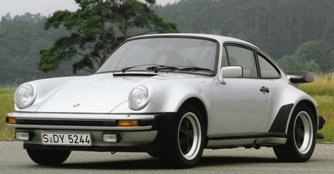 Porsche is one of the first automakers to adopt turbocharging in their series production road cars, such as the 930 Turbo
Hot and bothered
Turbocharging, though highly effective, isn't as simple as it sounds. Heat is turbocharging's biggest complication.
Compressed air, especially if it flows from an exhaust gas-driven
device, experiences a significant rise in temperature. Not only does this mean a drop in the density of said air, it also causes pre-ignition of the air-fuel mixture in the combustion chamber - a phenomenon that frequently leads to stress failure in the cylinder head (and sometimes even the engine block).
It was essentially for this reason that the grand-daddies of turbo engines were designed with ridiculously low compression ratios - 6.5:1 in the case of Porsche's 930 Turbo. This alleviated the pre-ignition problems, but the downside was lethargic pre-boost performance, better known as turbo lag.
The turbo motor would be relatively lethargic till about 3,000rpm, but the surge that came thereafter more than made up for lost time.
Porsche later incorporated something called an intercooler into the 930's engine plumbing. It is basically a heat exchanger,
which works like a radiator to cool the compressed air as it flows into the intake manifold. This allows the engine to run a slightly higher compression ratio and increases the density of intake air.
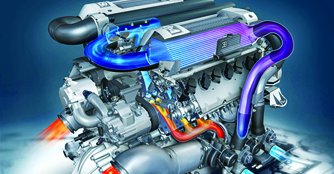 The Bugatti Veyron, one of the most powerful cars ever made, has a dizzying 1,184bhp and 1,500Nm of torque thanks to its quad-turbocharged 16-cylinder 8.0-litre engine
The turbo today
While performance continues to be a major incentive to force-feed engines using a turbocharger, tremendous progress in the capabilities of both hardware and software has realised huge gains in fuel consumption and exhaust emissions, too. Arguably the greatest effect the turbo has had on the automotive industry is 'downsizing', or the reduction of engine cubic capacity.
The turbo motor would be relatively lethargic till about 3,000rpm, but the surge that came thereafter more than made up for lost time.
Porsche later incorporated something called an intercooler into the 930's engine plumbing. It is basically a heat exchanger,
which works like a radiator to cool the compressed air as it flows into the intake manifold. This allows the engine to run a slightly higher compression ratio and increases the density of intake air.
The turbo today
While performance continues to be a major incentive to force-feed engines using a turbocharger, tremendous progress in the capabilities of both hardware and software has realised huge gains in fuel consumption and exhaust emissions, too. Arguably the greatest effect the turbo has had on the automotive industry is 'downsizing', or the reduction of engine cubic capacity.
Volkswagen's 1.4-litre TSI engine is a perfect example of the modern, small capacity turbocharged engine. There's no turbo lag or overheating, just plenty of smooth torquey performance that belies the quoted 122bhp, thanks to a full 200Nm of torque available between 1,500rpm and 4,000rpm.
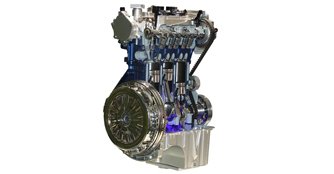 Ford's 1.0-litre EcoBoost unit is so compact that it can fit on a piece of A4-sized paperSince then, other carmakers have been playing 'catch-up' to the downsizing trend. One of the most notable effort is from Ford. The 1.0-litre EcoBoost engine has won multiple awards, including an unprecedented International Engine of the Year award for three times in a row.
BMW has also introduced not twin, but tri-turbocharged engines, which are fitted to its M Performance vehicles. The diesel engine is the first of its kind, and boast up to 351 horses and 740Nm of torque, which makes it the most powerful straight-six diesel engine in the world.
The turbo tomorrow
Today's state-of-the-art turbo engines deliver performance, economy and driveability that their naturally aspirated cousins of a similar capacity cannot match. With turbo technology continuing to improve, future turbocharged engines are likely to be even better than the ones we have right now.
Here are some related articles that might interest you
What makes cars so expensive in Singapore?
Top 20 cars you can buy now with the lowest dealer mark-up (2020 edition)
These are the 10 cheapest brand new cars you can buy in 2020
Using your year-end bonus to get a new ride? Here's some tips to be savvy
Top 5 Parallel Importers in Central Singapore
BMW has also introduced not twin, but tri-turbocharged engines, which are fitted to its M Performance vehicles. The diesel engine is the first of its kind, and boast up to 351 horses and 740Nm of torque, which makes it the most powerful straight-six diesel engine in the world.
The turbo tomorrow
Today's state-of-the-art turbo engines deliver performance, economy and driveability that their naturally aspirated cousins of a similar capacity cannot match. With turbo technology continuing to improve, future turbocharged engines are likely to be even better than the ones we have right now.
Here are some related articles that might interest you
What makes cars so expensive in Singapore?
Top 20 cars you can buy now with the lowest dealer mark-up (2020 edition)
These are the 10 cheapest brand new cars you can buy in 2020
Using your year-end bonus to get a new ride? Here's some tips to be savvy
Top 5 Parallel Importers in Central Singapore