Highlights of the new Toyota Prius
01 May 2009|4,628 views
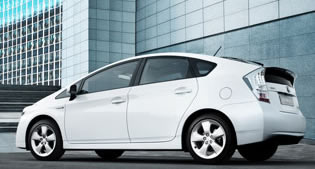 |
System power output has been increased by 22 percent, from 109 to 134 bhp and, with performance to match a conventional 2.0-litre petrol vehicle, new Prius will accelerate from 0-100 km/h 10.4 seconds.
At the same time overall fuel economy has been improved by 10 per cent, new Prius returning 30.78 km/l in combined cycle driving. The adoption of a larger, 1.8-litre engine reduces the rpm during high-speed driving to give a 10 per cent gain in long-haul cruising fuel efficiency. And with more torque produced at lower engine speeds, new Prius offers more relaxed cruising performance, too.
Prius easily exceeds the Euro 5 emissions standards, producing 89 g/km of CO2. And when operating in EV mode at speeds up to 50 km/h, it uses no fuel and produces zero exhaust emissions.
Hybrid Synergy Drive System Components
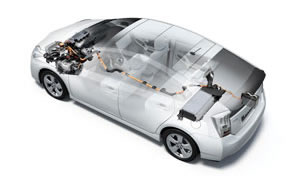
The system comprises a 1.8-litre VVT-i petrol engine, a powerful electric motor, a generator, a high-performance battery, a power control unit and a power split device, which uses a planetary gear set to combine and re-allocate power from the engine, electric motor and generator as required.
The key to the successful installation of Hybrid Synergy Drive within Prius's front-engine platform is the housing of the electric motor, generator and power split device on a single, lightweight and highly compact transmission casing that is little bigger than a conventional gearbox. The new transaxle itself is smaller, 20 kg lighter and benefits from a 10 to 20 percent reduction in driveshaft energy losses compared to the current system.
1.8-litre VVT-i Atkinson Cycle Engine
A new four-cylinder, 1.8-litre VVT-i Atkinson cycle petrol engine replaces the 1.5-litre unit in current Prius. Generating 97 bhp at 5,200rpm and 142 Nm of torque at 4,000 rpm, it delivers higher torque at lower revs - a reduction of 300 rpm at 75 mph - and combines quieter running with a 10 per cent improvement in long distance cruising fuel economy.
Adopting the Atkinson cycle and a new, cooled exhaust gas recirculation system brings significant gains in fuel efficiency and emissions reduction.
Because the intake valves close late in an Atkinson cycle engine, compression is delayed. This creates a high expansion ratio for less compression, reducing intake and exhaust energy losses and converting combustion energy to engine power more effectively. As a result the exhaust temperature is lower than that of conventional engines. Cooled Exhaust Gas Recirculation reintroduces the cooled gas into the intake system, further reducing engine operating temperatures.
Together, these technologies reduce the likelihood of fuel enrichment being needed for cooling to protect the catalytic converter from overheating damage, thus improving fuel economy and emissions.
Prius has a new engine heat management system that improves fuel economy in cold weather and cabin comfort, using a heat recovery system and an electric water pump. Using an electric system in place of the water pump drive belt reduces mechanical losses and, as a result, the coolant flow rate can be controlled with greater precision, achieving better fuel efficiency.
 |
New Prius has a 80 bhp electric motor that works in tandem with the petrol engine to improve acceleration, and which powers the driven wheels alone when the vehicle is operating in EV mode. Compared to the motor used in the current Prius, it is 20 percent more powerful, yet 33 percent smaller.
During deceleration and under braking, the electric motor acts as a high-output generator to produce regenerative braking. This optimises energy management in the Hybrid Synergy Drive system by recovering kinetic energy that would normally be lost as heat as electrical energy for storage in the high-performance battery.
Power Control Unit
The Power Control Unit (PCU) consists of a voltage boost converter, an inverter and a DC/DC converter, controlled by a motor control ECU that receives commands from the hybrid vehicle control ECU.
The new inverter, 36 percent lighter and 37 percent more compact than before has faster switching for improved efficiency. It can convert the battery's direct current into a higher, 650V (+150V) alternating current to drive the electric motor and, on occasion, the generator, giving significantly improved PCU performance.
High Output Battery
Output from the nickel-metalhydride Hybrid Synergy Drive battery, a proven reliable battery technology, has been increased to a maximum 27kW (+2kW), allowing new Prius to be driven in EV (electric vehicle) mode, using electric motor power alone.
The battery has been positioned to minimise impact on cabin space. The efficiency of its cooling system has been improved with a significant increase in fan capacity.
Three On-demand Driving Modes
New Prius's seamless transmission has three 'on-demand' driving modes: EV, ECO and POWER to increase fuel economy, driving efficiency and performance according to driving conditions.
From start-up and at speeds of less than 50km/h, new Prius automatically operates in EV mode. The driver can also select EV mode manually, with the car's driving range determined by the level of battery charge.
In ECO mode, throttle response to aggressive accelerator pedal inputs is reduced and the air conditioning control is adjusted for improved fuel economy. Depending on driving conditions, ECO mode can help drivers achieve a 10 to 15 per cent reduction in fuel consumption.
Finally POWER mode modifies response to throttle inputs, boosting power to improve acceleration and give greater driving pleasure.
|
System power output has been increased by 22 percent, from 109 to 134 bhp and, with performance to match a conventional 2.0-litre petrol vehicle, new Prius will accelerate from 0-100 km/h 10.4 seconds.
At the same time overall fuel economy has been improved by 10 per cent, new Prius returning 30.78 km/l in combined cycle driving. The adoption of a larger, 1.8-litre engine reduces the rpm during high-speed driving to give a 10 per cent gain in long-haul cruising fuel efficiency. And with more torque produced at lower engine speeds, new Prius offers more relaxed cruising performance, too.
Prius easily exceeds the Euro 5 emissions standards, producing 89 g/km of CO2. And when operating in EV mode at speeds up to 50 km/h, it uses no fuel and produces zero exhaust emissions.
Hybrid Synergy Drive System Components
The system comprises a 1.8-litre VVT-i petrol engine, a powerful electric motor, a generator, a high-performance battery, a power control unit and a power split device, which uses a planetary gear set to combine and re-allocate power from the engine, electric motor and generator as required.
The key to the successful installation of Hybrid Synergy Drive within Prius's front-engine platform is the housing of the electric motor, generator and power split device on a single, lightweight and highly compact transmission casing that is little bigger than a conventional gearbox. The new transaxle itself is smaller, 20 kg lighter and benefits from a 10 to 20 percent reduction in driveshaft energy losses compared to the current system.
1.8-litre VVT-i Atkinson Cycle Engine
A new four-cylinder, 1.8-litre VVT-i Atkinson cycle petrol engine replaces the 1.5-litre unit in current Prius. Generating 97 bhp at 5,200rpm and 142 Nm of torque at 4,000 rpm, it delivers higher torque at lower revs - a reduction of 300 rpm at 75 mph - and combines quieter running with a 10 per cent improvement in long distance cruising fuel economy.
Adopting the Atkinson cycle and a new, cooled exhaust gas recirculation system brings significant gains in fuel efficiency and emissions reduction.
Because the intake valves close late in an Atkinson cycle engine, compression is delayed. This creates a high expansion ratio for less compression, reducing intake and exhaust energy losses and converting combustion energy to engine power more effectively. As a result the exhaust temperature is lower than that of conventional engines. Cooled Exhaust Gas Recirculation reintroduces the cooled gas into the intake system, further reducing engine operating temperatures.
Together, these technologies reduce the likelihood of fuel enrichment being needed for cooling to protect the catalytic converter from overheating damage, thus improving fuel economy and emissions.
Prius has a new engine heat management system that improves fuel economy in cold weather and cabin comfort, using a heat recovery system and an electric water pump. Using an electric system in place of the water pump drive belt reduces mechanical losses and, as a result, the coolant flow rate can be controlled with greater precision, achieving better fuel efficiency.
|
New Prius has a 80 bhp electric motor that works in tandem with the petrol engine to improve acceleration, and which powers the driven wheels alone when the vehicle is operating in EV mode. Compared to the motor used in the current Prius, it is 20 percent more powerful, yet 33 percent smaller.
During deceleration and under braking, the electric motor acts as a high-output generator to produce regenerative braking. This optimises energy management in the Hybrid Synergy Drive system by recovering kinetic energy that would normally be lost as heat as electrical energy for storage in the high-performance battery.
Power Control Unit
The Power Control Unit (PCU) consists of a voltage boost converter, an inverter and a DC/DC converter, controlled by a motor control ECU that receives commands from the hybrid vehicle control ECU.
The new inverter, 36 percent lighter and 37 percent more compact than before has faster switching for improved efficiency. It can convert the battery's direct current into a higher, 650V (+150V) alternating current to drive the electric motor and, on occasion, the generator, giving significantly improved PCU performance.
High Output Battery
Output from the nickel-metalhydride Hybrid Synergy Drive battery, a proven reliable battery technology, has been increased to a maximum 27kW (+2kW), allowing new Prius to be driven in EV (electric vehicle) mode, using electric motor power alone.
The battery has been positioned to minimise impact on cabin space. The efficiency of its cooling system has been improved with a significant increase in fan capacity.
Three On-demand Driving Modes
New Prius's seamless transmission has three 'on-demand' driving modes: EV, ECO and POWER to increase fuel economy, driving efficiency and performance according to driving conditions.
From start-up and at speeds of less than 50km/h, new Prius automatically operates in EV mode. The driver can also select EV mode manually, with the car's driving range determined by the level of battery charge.
In ECO mode, throttle response to aggressive accelerator pedal inputs is reduced and the air conditioning control is adjusted for improved fuel economy. Depending on driving conditions, ECO mode can help drivers achieve a 10 to 15 per cent reduction in fuel consumption.
Finally POWER mode modifies response to throttle inputs, boosting power to improve acceleration and give greater driving pleasure.


Latest COE Prices
May 2026 | 2nd BIDDING
NEXT TENDER: 04 Jun 2026
CAT A$124,229
CAT B$129,501
CAT C$92,223
CAT E$130,000
View Full Results 
Thank You For Your Subscription.





Tags
Products & Services

For Owners
Quick Links
About Sgcarmart