Lexus Asia Pacific's future with David Nordstrom
25 Jan 2017|30,187 views
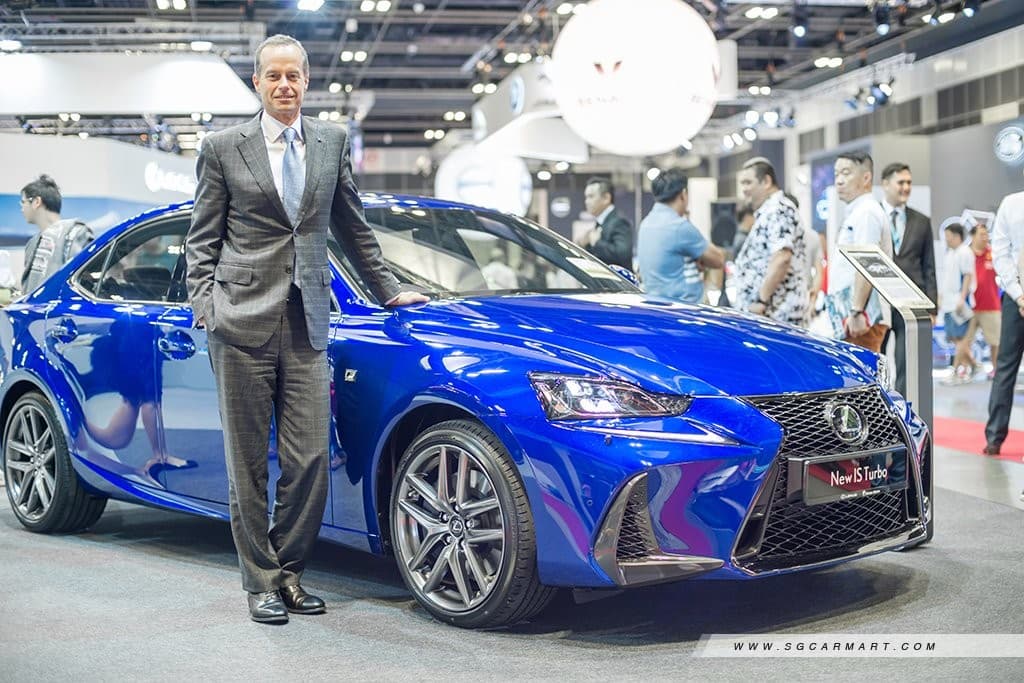
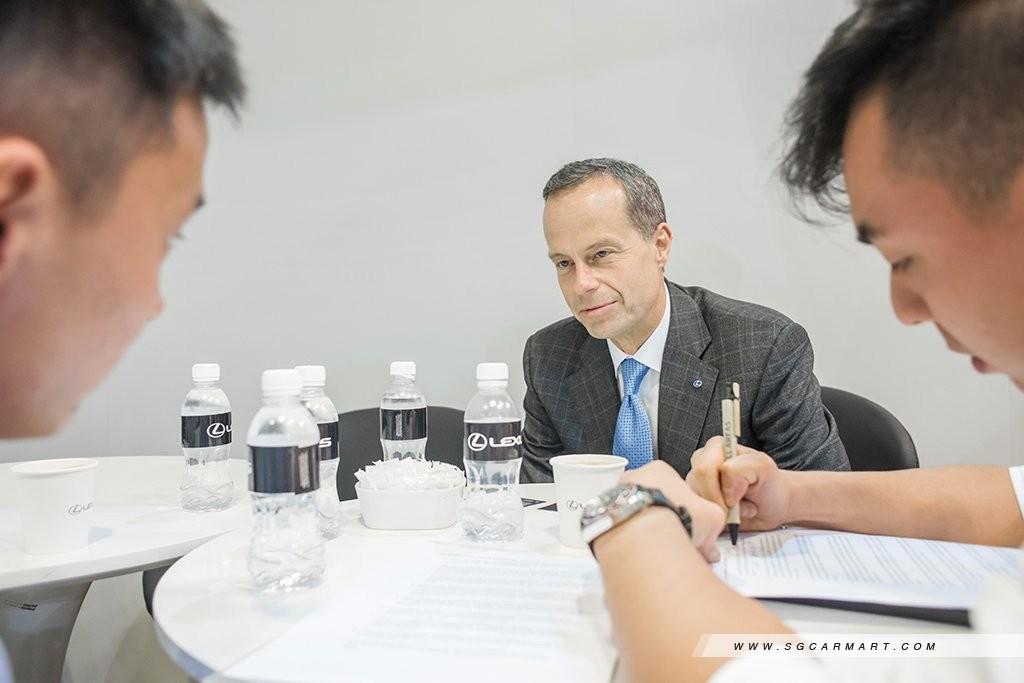

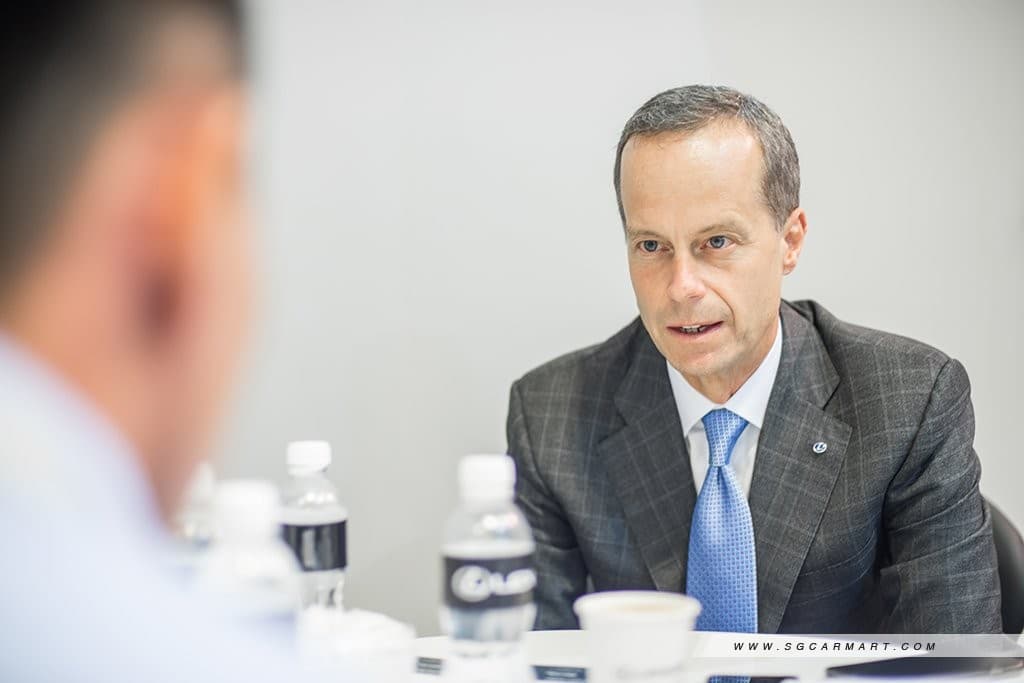

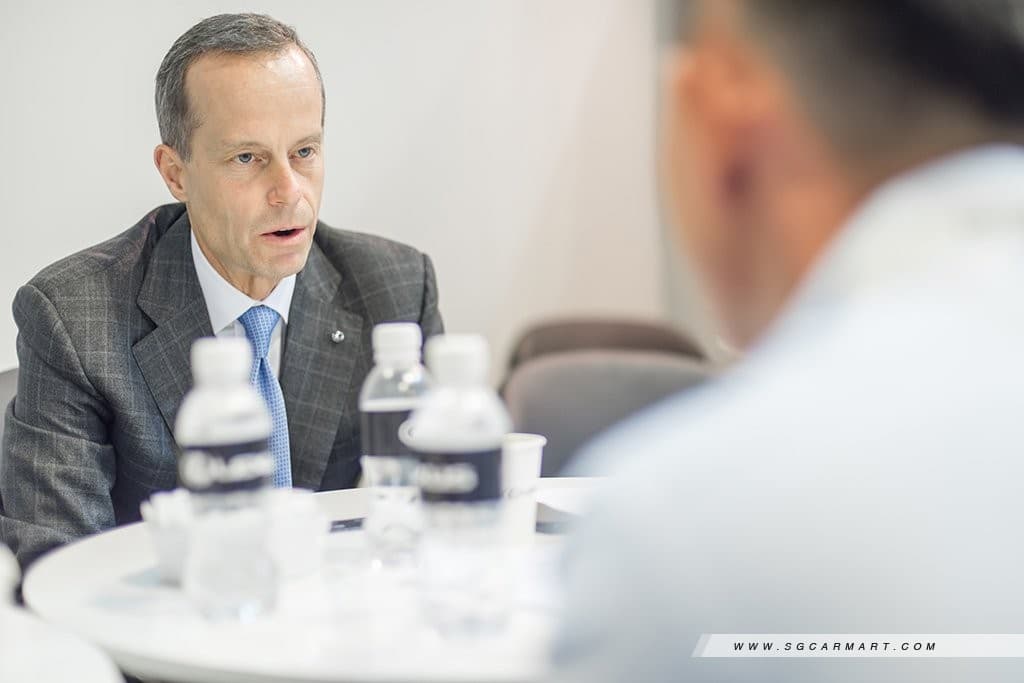
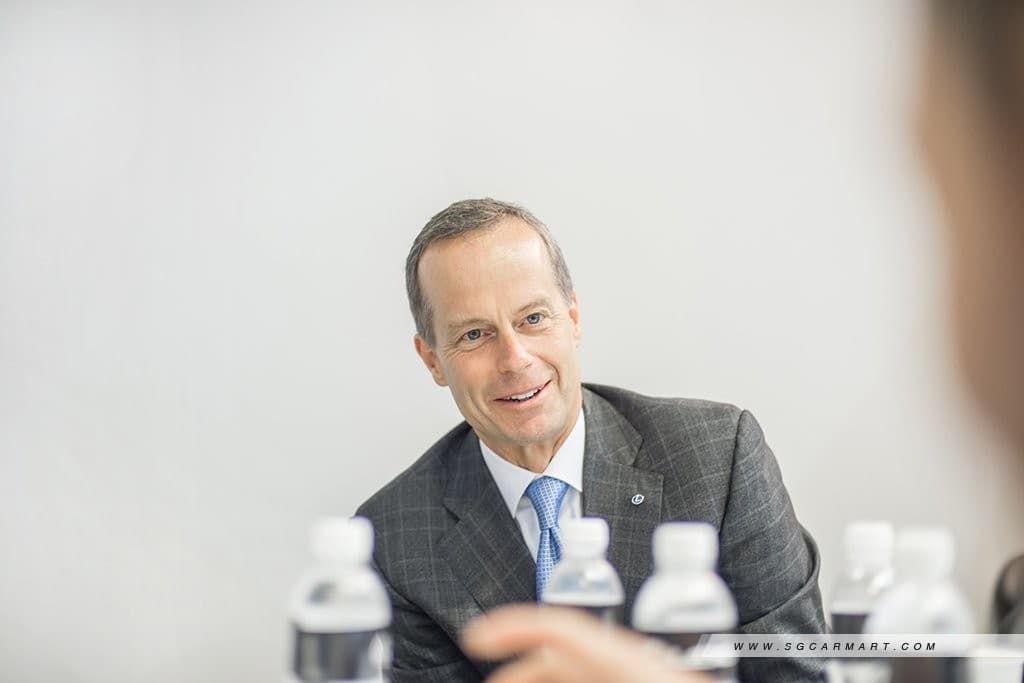

David Nordstrom (DN) is a long-serving member of the Toyota Motor Corporation. Prior to his current role as Vice President, Lexus Asia Pacific Division (AP), Mr. Nordstrom was Global Branding Department General Manager for Lexus International in Tokyo, Japan. He also served as Marketing Planning Department General Manager for Lexus International, Vice President Digital Marketing for Toyota Motor Sales, U.S.A, Vice President of Lexus Marketing and Vice President of Product and Marketing for Toyota Financial Services.
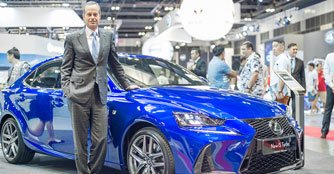

SGCM: Since you're the Vice President of Lexus AP. You must get to pick any Lexus you fancy. Out of curiousity, what car are you driving at the moment?
DN: I'm now driving a Lexus ES250. Back in U.S.A, I drove the GX and if given a choice, I'd love to have the tech-crazy LFA.
SGCM: For buyers who want to get a luxury car, it's cheaper to purchase a German entry-level model such as an Audi A3, or a BMW 1 Series, as compared to a Lexus CT Hybrid. These entry-level luxury models make up for a large amount of sales. Does Lexus have any plans for a more 'economical' entry-level luxury car?
DN: Right now, there are no plans for anything south of the CT. The UX Concept might be something we'd explore in the future but for now, the CT remains our entry-level car.

DN: Unfortunately, I haven't driven the new 2.0-litre turbo variants but what stands out for me is the design. If you study Lexus' designs in the last few years, you'd realise a big change in our design language today.
When people stare at our cars, we don't want them to just think that it's a nice car. We want to evoke more emotion into our cars and I think we have achieved that. Driving dynamics are also hugely improved for a nicer driving experience.
Even though the RC has gone turbo, I don't think it's lost any of its magic because a large part of its charm comes from its dynamics and design.
 |
Mr. Nordstrom began his career in Toyota 27 years ago and has held several management positions. He is now responsible for marketing support, product planning, training (brand, product and sales) and guest experience strategy in Lexus markets across Asia Pacific.

SGCM: Lexus is also known as a leading manufacturer of luxury hybrid cars. While hybrids are popular in the U.S.A and Europe, Singaporeans aren't so open to owning a hybrid. In your opinion, what initiatives can Lexus take from its experience overseas to promote the mindset and sales of hybrid cars here?
DN: Hybrid acceptance is very different in every market. Some markets like Singapore have lower than 10 percent hybrid car population and in the U.S.A, figures hover around 20 percent, largely depending on petrol prices.
For Singapore, we just want our customers to enjoy the hybrid experience. If hybrid cars are what they want, then great. If they don't want a hybrid and pick our turbocharged petrol variants, that's fine by us too. Ultimately, we want to serve and satisfy our customer's tastes.

DN: Lexus, for the last four years, has grown thanks to the introduction of the new NX, RX, RC and the coming LC and LS. On top of that, the superb ownership experience our retailers continue to deliver to customers helps drive sales up. So, we do plan to have continual growth even in 2017 and 2018. In Singapore last year, Lexus' sales was up 30 percent and we want to continue growing.
SGCM: When we spoke to Giri last year, he mentioned that fuel cells are going to be a big part of the future car industry. Is fuel cell technology something Lexus is continuing to develop? Are we closer to seeing the LF-FC go from a concept to reality?
DN: I can't reveal any plans as of now, but all I can say is Lexus is committed to new technologies and it'll be exciting to see what the company comes up with in the near future. However, our developments are very dependent on market, regulations and infrastracture, all of which are ever-changing.
SGCM: Last but not least, the CT seems to be the most 'outdated' model from Lexus at the moment, can we expect an updated version anytime in the coming future?
DN: Updates to the CT are in the works and you'd find out what's new and coming in time.
David Nordstrom (DN) is a long-serving member of the Toyota Motor Corporation. Prior to his current role as Vice President, Lexus Asia Pacific Division (AP), Mr. Nordstrom was Global Branding Department General Manager for Lexus International in Tokyo, Japan. He also served as Marketing Planning Department General Manager for Lexus International, Vice President Digital Marketing for Toyota Motor Sales, U.S.A, Vice President of Lexus Marketing and Vice President of Product and Marketing for Toyota Financial Services.
SGCM: Since you're the Vice President of Lexus AP. You must get to pick any Lexus you fancy. Out of curiousity, what car are you driving at the moment?
DN: I'm now driving a Lexus ES250. Back in U.S.A, I drove the GX and if given a choice, I'd love to have the tech-crazy LFA.
SGCM: For buyers who want to get a luxury car, it's cheaper to purchase a German entry-level model such as an Audi A3, or a BMW 1 Series, as compared to a Lexus CT Hybrid. These entry-level luxury models make up for a large amount of sales. Does Lexus have any plans for a more 'economical' entry-level luxury car?
DN: Right now, there are no plans for anything south of the CT. The UX Concept might be something we'd explore in the future but for now, the CT remains our entry-level car.
SGCM: You've probably already driven the new IS and the RC. In your opinion, what are the best improvements Lexus has made? Also, do you think that by adopting a 2.0-litre turbocharged engine, the RC has lost some of its magic?
DN: Unfortunately, I haven't driven the new 2.0-litre turbo variants but what stands out for me is the design. If you study Lexus' designs in the last few years, you'd realise a big change in our design language today.
When people stare at our cars, we don't want them to just think that it's a nice car. We want to evoke more emotion into our cars and I think we have achieved that. Driving dynamics are also hugely improved for a nicer driving experience.
Even though the RC has gone turbo, I don't think it's lost any of its magic because a large part of its charm comes from its dynamics and design.
SGCM: Lexus is also known as a leading manufacturer of luxury hybrid cars. While hybrids are popular in the U.S.A and Europe, Singaporeans aren't so open to owning a hybrid. In your opinion, what initiatives can Lexus take from its experience overseas to promote the mindset and sales of hybrid cars here?
DN: Hybrid acceptance is very different in every market. Some markets like Singapore have lower than 10 percent hybrid car population and in the U.S.A, figures hover around 20 percent, largely depending on petrol prices.
For Singapore, we just want our customers to enjoy the hybrid experience. If hybrid cars are what they want, then great. If they don't want a hybrid and pick our turbocharged petrol variants, that's fine by us too. Ultimately, we want to serve and satisfy our customer's tastes.
SGCM: Speaking of markets, with the predicted economic downturn in 2017 and 2018, what plans does Lexus have to sustain profitability?
DN: Lexus, for the last four years, has grown thanks to the introduction of the new NX, RX, RC and the coming LC and LS. On top of that, the superb ownership experience our retailers continue to deliver to customers helps drive sales up. So, we do plan to have continual growth even in 2017 and 2018. In Singapore last year, Lexus' sales was up 30 percent and we want to continue growing.
SGCM: When we spoke to Giri last year, he mentioned that fuel cells are going to be a big part of the future car industry. Is fuel cell technology something Lexus is continuing to develop? Are we closer to seeing the LF-FC go from a concept to reality?
DN: I can't reveal any plans as of now, but all I can say is Lexus is committed to new technologies and it'll be exciting to see what the company comes up with in the near future. However, our developments are very dependent on market, regulations and infrastracture, all of which are ever-changing.
SGCM: Last but not least, the CT seems to be the most 'outdated' model from Lexus at the moment, can we expect an updated version anytime in the coming future?
DN: Updates to the CT are in the works and you'd find out what's new and coming in time.

Photos by Low Fai Ming


Thank You For Your Subscription.






Tags
Products & Services

For Owners
Quick Links
About Sgcarmart