View page in desktop
|
Report error
  •   Apple app store icon
  • Google play store icon
Terms of Service
|
Privacy Policy
|
PDPA
|
Site Map
©2004-2026 Sgcarmart, Singapore. All rights reserved.
  • Home
  • Car Articles
  • features
  • features Listings
  • Features
  • The German, Japanese and Korean cars are fine, but China-made should not be dismissed

    25 May 2021

    |

    26,138 views

    Dismissing China-made cars may not bode well for buyers and competitors. Not only are they technologically advanced, their massive growth make them inevitable.


    Just early this month, news broke about Shanghai-based electric car start-up NIO starting its overseas foray, with plans to sell its car in Norway from the third quarter of this year.

    This sparked a debate between some friends and I about China-made cars and whether or not we should be quick to dismiss them.

    They're manufacturing and buying over almost everything
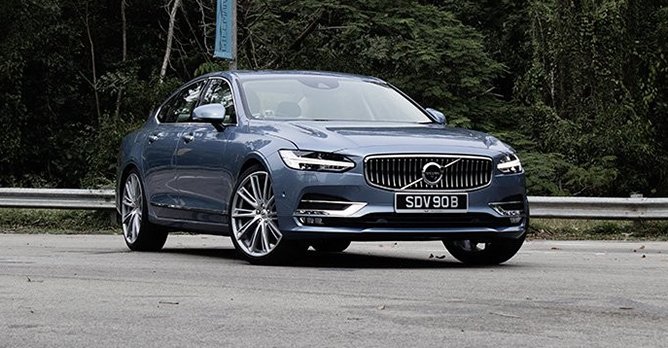
    The S90 is now made in China since Geely bought over Swede carmaker Volvo in 2010
    Seeing how our smartphones, luxury handbags, furniture, shoes, clothes, television sets, refrigerators (yes, the list can go on and on and on and on), etc are mostly made in China, it's hard to ignore the country. In fact, there are a lot of nice, high-quality stuff that are made there.

    And it's the same for cars, although there's a good chance you may not know that since the cars are branded differently - much like the smartphone and luxury handbag you're holding onto now.

    Take Volvo for instance. In 2010, China's Zhejiang Geely Holding Group, which also owns 51% of Lotus, acquired the Volvo brand from Ford Motor Company for around US$1.8 billion. But Volvo cars are, well, still branded as Volvo cars instead of Geely. Thus, to casual observers and non-interested parties, Volvo cars are all rightfully made in Sweden.

    MG cars still bear the MG badge despite being owned by Chinese automotive giant SAIC motor
    Another recent classic example in Singapore is the classic British car brand MG. Owned by Chinese automotive giant SAIC motor, MG is one of the six brands that is currently distributed by multi-brand franchisee Eurokars Group here in Singapore. And both the SUVs - the petrol-driven MG HS as well as the fully-electric MG ZS - bear the MG badge up front on the grille.

    Good looks and high-quality build make them attractive

    And boy do the cars from these brands look good. 10 years ago, if you sat in a Chinese domestic branded car like I did, they felt like copies of other vehicles, and that's because in most cases they were. Chinese carmakers that were not being managed through a joint venture with a foreign brand largely copied popular models that were selling well because they had to rely on their own designs, which was a problem.

    The Landwind X7 (pictured) is an exact copy of the Range Rover Evoque
    From the McLaren 570GT and the Vision Mercedes-Maybach 6 (yes, even a concept car) to the Volkswagen Passat and the Range Rover Evoque, different Chinese carmakers have managed to copy them all - lines, design, shape - the whole nine yards.

    But, today, things are a tad different. Chinese carmakers are focusing their design efforts and extensive manufacturing expertise on cars that will appeal to the rest of the world. Just take a look at the funky Volvo XC40 and the stunningly elegant Volvo S90, both of which are made in China.

    Of course, some of these Chinese-owned cars aren't made in China. The XC90, for instance, was made in Sweden while the XC40 Plug-in-Hybrid was made in Belgium. Then again, perhaps it really doesn't matter where all these cars come from, because a 'German car' like the Volkswagen Touareg was made in Slovakia and a 'Japanese car' like the second generation Toyota Auris was made in the U.K.

    Growth in production and sales make them inevitable

    Every fourth passenger vehicle produced in the world was produced in China
    But more than just looking good, it's the growth of car production in China in the past decade that makes them inevitable. According to statistics, passenger vehicle sales surged from around seven million in 2008 to over 20 million units in 2020. In fact, China was the world's leading car producing country in 2019, producing approximately 21 million passenger cars and claiming a 26.5% share of total global vehicle production.

    It was followed by Japan at 8.3 million passenger cars, Germany at 4.6 million and South Korea at 3.6 million - countries that are home to car brands in countries all over the world, including Singapore.

    Hence, on average, every fourth passenger vehicle produced in the world was produced in China, with almost all of the leading best-selling cars in China being the product of joint ventures with foreign manufacturers.

    Volkswagen cars are manufactured in China by Volkswagen Group China under joint ventures with FAW Volkswagen and SAIC Volkswagen
    There's a good reason for that. Chinese carmakers mostly made cars only for the Chinese market in the past and if a foreign carmaker wanted to produce cars in China, it was required by law that they had to form joint ventures with Chinese brands.

    These include Audi and Volkswagen, whose cars are manufactured in China by Volkswagen Group China under joint ventures with FAW Volkswagen and SAIC Volkswagen. Also, Beijing Benz Automotive Co., Ltd - an alliance formed from a joint venture between BAIC Motor and Daimler AG - builds and sells Mercedes-Benz vehicles in China.

    Chinese automakers' advancement in technology makes them the future

    The EC6 here is an SUV by NIO that sports a coupe roofline and a premium cabin
    Apart from significant car growth over the past decade, there's a need for car manufacturers to rethink today's approaches to vehicle software and electronic architecture, more so if cars are positioned to offer levels of electrification and autonomy. In this aspect, several of China's automakers seem to have a strong lead.

    Take leading and modern Chinese carmakers such as NIO and Xpeng as examples. Both these car companies have revolutionised and moved on with their Electric Vehicles (EVs).

    Backed by TenCent and Baidu, NIO differentiates itself from its competitors with its battery-swapping capabilities. Since 2014 when NIO began producing cars like the EP9 two-seater coupe, and SUVs like the EC6 and the ES6, the start-up has made battery swapping part of its business model - a clear sign of technological advancement in today's automotive context, but albeit an expensive one.

    NIO unveiled the second generation battery swap station in Beijing last month
    In fact, Tesla's CEO Elon Musk showed off Tesla's battery swapping technology in 2013, which can remove and replace the empty battery pack of a Model S with a fully charged one in just 90 seconds. But the service was suspended due to high costs and the lack of popularity amongst Tesla owners.

    When it comes to electric cars, energy replenishment is a key factor in ownership, methinks. Unlike a regular gasoline vehicle, where it'll only take five minutes to fill the tank from a petrol station that's just round the corner, an EV typically requires at least half an hour to get juiced up. This makes owning a gasoline vehicle more convenient and efficient.

    Hence, I see two solutions - construct more high-powered charging stations that will allow fast charging in 10 minutes or allow battery swapping, which will take a much shorter time.

    Cabin of the NIO ES6 - another electric SUV - shapes a sophisticated and high-tech mobile living space
    In Beijing, the battery swapping technology is a strong welcome. The Chinese government made battery swapping a requirement for receiving subsidies on EVs, a move that clearly benefits NIO.

    Thus, the Chinese electric car manufacturer went on to unveil the second generation of its battery swap station in Beijing just last month, which will allow up to 312 battery swaps per day, and allow vehicles to manoeuvre into the station automatically, according to NIO.

    Thanks to 239 sensors and four collaborating cloud computing systems that maximise the application of visual recognition technologies, drivers can complete the battery swapping process in one click, while staying in the car - another strong testament to Chinese carmakers' technological advancement and capabilities.

    Xpeng P5 revealed as its first production car with built-in LiDAR technology
    Xpeng, on the other hand, who is backed by Alibaba and Beijing smartphone supplier Xiaomi, unveiled the P7 Sports Sedan last year that will offer a longer range as compared to Tesla's Model 3.

    More importantly, Xpeng also recently unveiled the P5 at this year's Shanghai Motor Show, the third production model in its lineup that's equipped with automotive-grade LiDAR technology. According to Xpeng, LiDAR is able to distinguish between pedestrians, cyclists and scooters, static obstacles, and road works, including in tunnels and during night driving and poor weather. Most companies developing self-driving systems plan to use LiDAR in combination with other types of sensors.

    Sophisticated computerised design tools that allow them to experiment their own designs have, I'm sure, aided these aforementioned cars. Thus, if you ever get a chance to ride around in some of these cars, not only will you find sophisticated engines, smooth turbochargers and complex automatic transmissions, there's a good chance you'll also notice high levels of cabin detailing. Such a progress in a span of approximately 10 years is nothing short of remarkable.

    Accepting and embracing is a good thing

    Products like the Xpeng P7 Sports Sedan, which offers a longer range than the Tesla Model 3, shows just how much action is coming from China
    Therefore, accepting China-made cars is like accepting the fact that the global automotive industry is going electric. It's inevitable. Instead of denying them, we should be embracing them and celebrating the fact that they're becoming, slowly and steadily, good at making cars.

    While most Singaporeans have a global view of the automotive industry fixed on America, Europe, Korea and Japan, we should pay more attention to what's going on in China.

    After all, from fashion and design like Shanghai Tang and Belle to technology and digital platforms such as Baidu and Alibaba, a lot of the action is going to be coming from China.
    Julian Kho
    Julian Kho
    Julian is a lot shorter than you think, but he has a big heart for cars. That sort of makes up for what he lacks.
    Photos by Low Fai Ming, NIO
    Xpeng
    SAIC
    24.4k

    Tags

    china made cars dismissing china made cars volvo geely saic china cars chinese cars mg eurokars

    AllReviewsNewsAdviceFeaturesVideos
    • Home
    • Car Articles
    • features
    • features Listings
    • Features

    The German, Japanese and Korean cars are fine, but China-made should not be dismissed

    25 May 2021

    |

    26,138 views

    Dismissing China-made cars may not bode well for buyers and competitors. Not only are they technologically advanced, their massive growth make them inevitable.


    Just early this month, news broke about Shanghai-based electric car start-up NIO starting its overseas foray, with plans to sell its car in Norway from the third quarter of this year.

    This sparked a debate between some friends and I about China-made cars and whether or not we should be quick to dismiss them.

    They're manufacturing and buying over almost everything

    The S90 is now made in China since Geely bought over Swede carmaker Volvo in 2010
    Seeing how our smartphones, luxury handbags, furniture, shoes, clothes, television sets, refrigerators (yes, the list can go on and on and on and on), etc are mostly made in China, it's hard to ignore the country. In fact, there are a lot of nice, high-quality stuff that are made there.

    And it's the same for cars, although there's a good chance you may not know that since the cars are branded differently - much like the smartphone and luxury handbag you're holding onto now.

    Take Volvo for instance. In 2010, China's Zhejiang Geely Holding Group, which also owns 51% of Lotus, acquired the Volvo brand from Ford Motor Company for around US$1.8 billion. But Volvo cars are, well, still branded as Volvo cars instead of Geely. Thus, to casual observers and non-interested parties, Volvo cars are all rightfully made in Sweden.
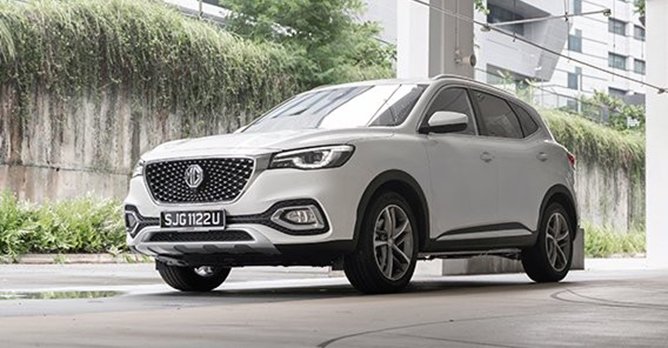
    MG cars still bear the MG badge despite being owned by Chinese automotive giant SAIC motor
    Another recent classic example in Singapore is the classic British car brand MG. Owned by Chinese automotive giant SAIC motor, MG is one of the six brands that is currently distributed by multi-brand franchisee Eurokars Group here in Singapore. And both the SUVs - the petrol-driven MG HS as well as the fully-electric MG ZS - bear the MG badge up front on the grille.

    Good looks and high-quality build make them attractive

    And boy do the cars from these brands look good. 10 years ago, if you sat in a Chinese domestic branded car like I did, they felt like copies of other vehicles, and that's because in most cases they were. Chinese carmakers that were not being managed through a joint venture with a foreign brand largely copied popular models that were selling well because they had to rely on their own designs, which was a problem.
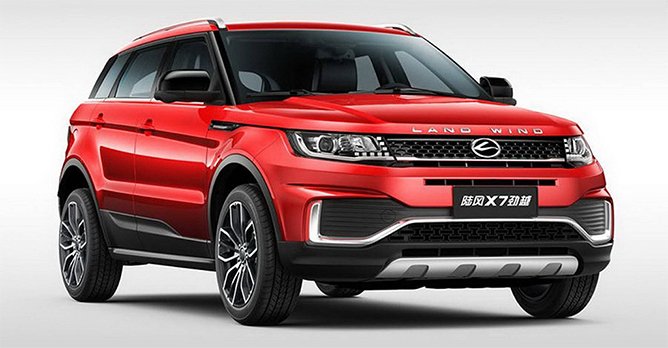
    The Landwind X7 (pictured) is an exact copy of the Range Rover Evoque
    From the McLaren 570GT and the Vision Mercedes-Maybach 6 (yes, even a concept car) to the Volkswagen Passat and the Range Rover Evoque, different Chinese carmakers have managed to copy them all - lines, design, shape - the whole nine yards.

    But, today, things are a tad different. Chinese carmakers are focusing their design efforts and extensive manufacturing expertise on cars that will appeal to the rest of the world. Just take a look at the funky Volvo XC40 and the stunningly elegant Volvo S90, both of which are made in China.

    Of course, some of these Chinese-owned cars aren't made in China. The XC90, for instance, was made in Sweden while the XC40 Plug-in-Hybrid was made in Belgium. Then again, perhaps it really doesn't matter where all these cars come from, because a 'German car' like the Volkswagen Touareg was made in Slovakia and a 'Japanese car' like the second generation Toyota Auris was made in the U.K.

    Growth in production and sales make them inevitable
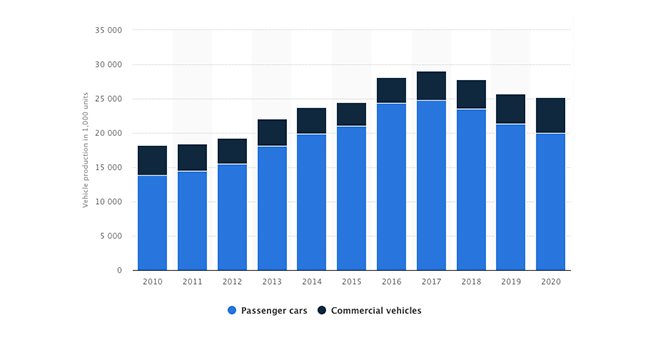
    Every fourth passenger vehicle produced in the world was produced in China
    But more than just looking good, it's the growth of car production in China in the past decade that makes them inevitable. According to statistics, passenger vehicle sales surged from around seven million in 2008 to over 20 million units in 2020. In fact, China was the world's leading car producing country in 2019, producing approximately 21 million passenger cars and claiming a 26.5% share of total global vehicle production.

    It was followed by Japan at 8.3 million passenger cars, Germany at 4.6 million and South Korea at 3.6 million - countries that are home to car brands in countries all over the world, including Singapore.

    Hence, on average, every fourth passenger vehicle produced in the world was produced in China, with almost all of the leading best-selling cars in China being the product of joint ventures with foreign manufacturers.
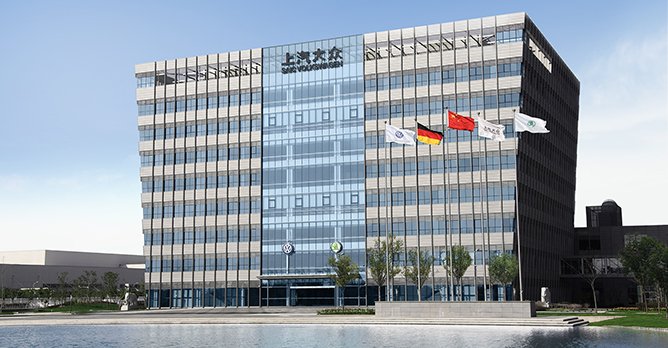
    Volkswagen cars are manufactured in China by Volkswagen Group China under joint ventures with FAW Volkswagen and SAIC Volkswagen
    There's a good reason for that. Chinese carmakers mostly made cars only for the Chinese market in the past and if a foreign carmaker wanted to produce cars in China, it was required by law that they had to form joint ventures with Chinese brands.

    These include Audi and Volkswagen, whose cars are manufactured in China by Volkswagen Group China under joint ventures with FAW Volkswagen and SAIC Volkswagen. Also, Beijing Benz Automotive Co., Ltd - an alliance formed from a joint venture between BAIC Motor and Daimler AG - builds and sells Mercedes-Benz vehicles in China.

    Chinese automakers' advancement in technology makes them the future
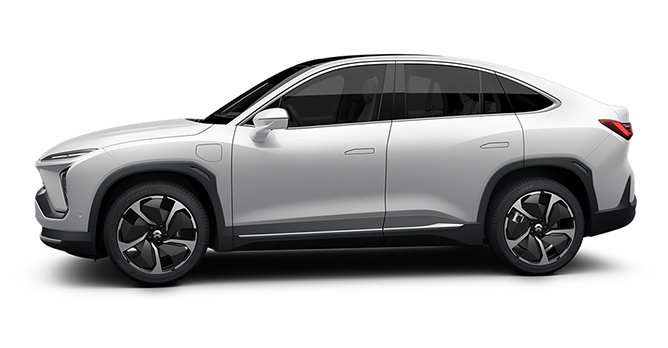
    The EC6 here is an SUV by NIO that sports a coupe roofline and a premium cabin
    Apart from significant car growth over the past decade, there's a need for car manufacturers to rethink today's approaches to vehicle software and electronic architecture, more so if cars are positioned to offer levels of electrification and autonomy. In this aspect, several of China's automakers seem to have a strong lead.

    Take leading and modern Chinese carmakers such as NIO and Xpeng as examples. Both these car companies have revolutionised and moved on with their Electric Vehicles (EVs).

    Backed by TenCent and Baidu, NIO differentiates itself from its competitors with its battery-swapping capabilities. Since 2014 when NIO began producing cars like the EP9 two-seater coupe, and SUVs like the EC6 and the ES6, the start-up has made battery swapping part of its business model - a clear sign of technological advancement in today's automotive context, but albeit an expensive one.
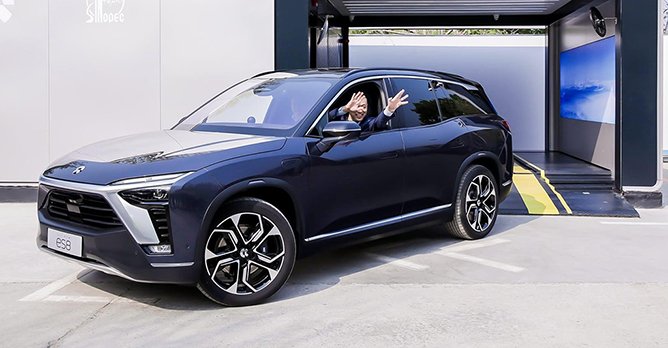
    NIO unveiled the second generation battery swap station in Beijing last month
    In fact, Tesla's CEO Elon Musk showed off Tesla's battery swapping technology in 2013, which can remove and replace the empty battery pack of a Model S with a fully charged one in just 90 seconds. But the service was suspended due to high costs and the lack of popularity amongst Tesla owners.

    When it comes to electric cars, energy replenishment is a key factor in ownership, methinks. Unlike a regular gasoline vehicle, where it'll only take five minutes to fill the tank from a petrol station that's just round the corner, an EV typically requires at least half an hour to get juiced up. This makes owning a gasoline vehicle more convenient and efficient.

    Hence, I see two solutions - construct more high-powered charging stations that will allow fast charging in 10 minutes or allow battery swapping, which will take a much shorter time.
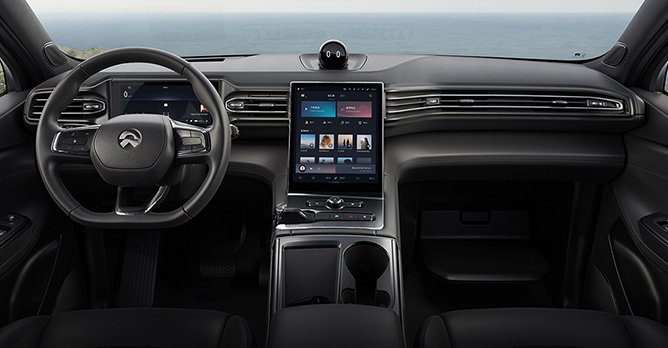
    Cabin of the NIO ES6 - another electric SUV - shapes a sophisticated and high-tech mobile living space
    In Beijing, the battery swapping technology is a strong welcome. The Chinese government made battery swapping a requirement for receiving subsidies on EVs, a move that clearly benefits NIO.

    Thus, the Chinese electric car manufacturer went on to unveil the second generation of its battery swap station in Beijing just last month, which will allow up to 312 battery swaps per day, and allow vehicles to manoeuvre into the station automatically, according to NIO.

    Thanks to 239 sensors and four collaborating cloud computing systems that maximise the application of visual recognition technologies, drivers can complete the battery swapping process in one click, while staying in the car - another strong testament to Chinese carmakers' technological advancement and capabilities.
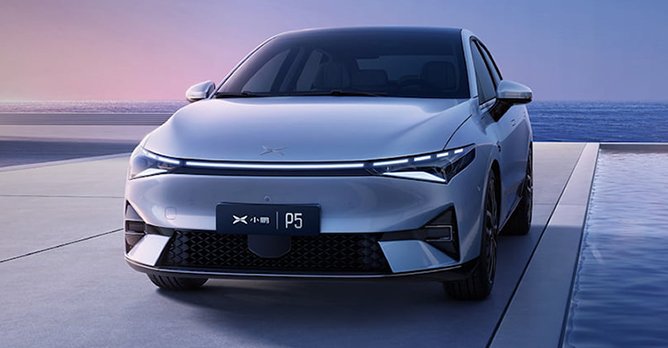
    Xpeng P5 revealed as its first production car with built-in LiDAR technology
    Xpeng, on the other hand, who is backed by Alibaba and Beijing smartphone supplier Xiaomi, unveiled the P7 Sports Sedan last year that will offer a longer range as compared to Tesla's Model 3.

    More importantly, Xpeng also recently unveiled the P5 at this year's Shanghai Motor Show, the third production model in its lineup that's equipped with automotive-grade LiDAR technology. According to Xpeng, LiDAR is able to distinguish between pedestrians, cyclists and scooters, static obstacles, and road works, including in tunnels and during night driving and poor weather. Most companies developing self-driving systems plan to use LiDAR in combination with other types of sensors.

    Sophisticated computerised design tools that allow them to experiment their own designs have, I'm sure, aided these aforementioned cars. Thus, if you ever get a chance to ride around in some of these cars, not only will you find sophisticated engines, smooth turbochargers and complex automatic transmissions, there's a good chance you'll also notice high levels of cabin detailing. Such a progress in a span of approximately 10 years is nothing short of remarkable.

    Accepting and embracing is a good thing
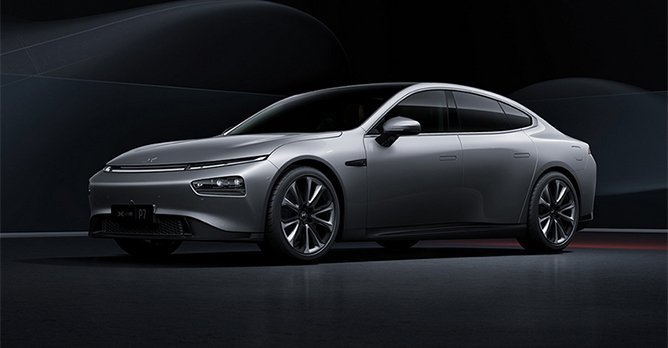
    Products like the Xpeng P7 Sports Sedan, which offers a longer range than the Tesla Model 3, shows just how much action is coming from China
    Therefore, accepting China-made cars is like accepting the fact that the global automotive industry is going electric. It's inevitable. Instead of denying them, we should be embracing them and celebrating the fact that they're becoming, slowly and steadily, good at making cars.

    While most Singaporeans have a global view of the automotive industry fixed on America, Europe, Korea and Japan, we should pay more attention to what's going on in China.

    After all, from fashion and design like Shanghai Tang and Belle to technology and digital platforms such as Baidu and Alibaba, a lot of the action is going to be coming from China.

    Julian Kho
    Julian Kho
    Julian is a lot shorter than you think, but he has a big heart for cars. That sort of makes up for what he lacks.
    Photos by Low Fai Ming, NIO
    Xpeng
    SAIC
    24.4k

    Tags

    china made cars dismissing china made cars volvo geely saic china cars chinese cars mg eurokars

    Newsletter

    Be Notified On The Latest News

    Newsletter

    Be Notified On The Latest News

    You May Also Like

    EV NEXT: Peace of mind with battery SOH certification

    EV NEXT: Peace of mind with battery SOH certification

    New cars are safer: Opt for one when you can

    New cars are safer: Opt for one when you can

    Maxus MIFA 7 Elite: Going big for the little moments

    Maxus MIFA 7 Elite: Going big for the little moments

    Multi-Pathway approach: Toyota was always right

    Multi-Pathway approach: Toyota was always right

    LTA sets up poll to decide the least-ugliest EV plate

    LTA sets up poll to decide the least-ugliest EV plate

    Don't get yourself trapped in your high-tech EV

    Don't get yourself trapped in your high-tech EV

    Big Test: Which brand makes the best hybrid?

    Big Test: Which brand makes the best hybrid?

    Is parallel import hesitancy growing among car buyers?

    Is parallel import hesitancy growing among car buyers?

    Sgcarmart Explores: Bras Basah!

    Sgcarmart Explores: Bras Basah!

    The rise of PHEVs: A closer look at the numbers

    The rise of PHEVs: A closer look at the numbers

    We try out roadside parking with the new OBU!

    We try out roadside parking with the new OBU!

    A first look at Chery's iCaur V23 and Jaecoo J8 in Singapore

    A first look at Chery's iCaur V23 and Jaecoo J8 in Singapore

    iCaur V23 100kW Review

    iCaur V23 100kW Review

    Hongqi Singapore opens its showroom doors

    Hongqi Singapore opens its showroom doors

    The BYD Sealion 8 seven-seater SUV arrives in Singapore

    The BYD Sealion 8 seven-seater SUV arrives in Singapore

    Inside Foton's commercial vehicle range in Singapore

    Inside Foton's commercial vehicle range in Singapore

    You May Also Like

    EV NEXT: Peace of mind with battery SOH certification

    EV NEXT: Peace of mind with battery SOH certification

    New cars are safer: Opt for one when you can

    New cars are safer: Opt for one when you can

    Maxus MIFA 7 Elite: Going big for the little moments

    Maxus MIFA 7 Elite: Going big for the little moments

    Multi-Pathway approach: Toyota was always right

    Multi-Pathway approach: Toyota was always right

    LTA sets up poll to decide the least-ugliest EV plate

    LTA sets up poll to decide the least-ugliest EV plate

    Don't get yourself trapped in your high-tech EV

    Don't get yourself trapped in your high-tech EV

    Big Test: Which brand makes the best hybrid?

    Big Test: Which brand makes the best hybrid?

    Is parallel import hesitancy growing among car buyers?

    Is parallel import hesitancy growing among car buyers?

    Sgcarmart Explores: Bras Basah!

    Sgcarmart Explores: Bras Basah!

    The rise of PHEVs: A closer look at the numbers

    The rise of PHEVs: A closer look at the numbers

    We try out roadside parking with the new OBU!

    We try out roadside parking with the new OBU!

    A first look at Chery's iCaur V23 and Jaecoo J8 in Singapore

    A first look at Chery's iCaur V23 and Jaecoo J8 in Singapore

    iCaur V23 100kW Review

    iCaur V23 100kW Review

    Hongqi Singapore opens its showroom doors

    Hongqi Singapore opens its showroom doors

    The BYD Sealion 8 seven-seater SUV arrives in Singapore

    The BYD Sealion 8 seven-seater SUV arrives in Singapore

    Inside Foton's commercial vehicle range in Singapore

    Inside Foton's commercial vehicle range in Singapore

    Related Articles

    Opinion: Is it time for a change to our road traffic laws?

    Opinion: Is it time for a change to our road traffic laws?

    Should I buy a car in July / August / September 2026?

    Should I buy a car in July / August / September 2026?

    16 noteworthy production models at the 2026 Auto Beijing!

    16 noteworthy production models at the 2026 Auto Beijing!

    Opinion: Why do we even need green number plates?

    Opinion: Why do we even need green number plates?

    EV NEXT: Peace of mind with battery SOH certification

    EV NEXT: Peace of mind with battery SOH certification

    Inside Foton's commercial vehicle range in Singapore

    Inside Foton's commercial vehicle range in Singapore

    From dreams to departures: The brands of yesteryear

    From dreams to departures: The brands of yesteryear

    Hongqi E-HS9: A modern expression of Eastern Luxury

    Hongqi E-HS9: A modern expression of Eastern Luxury

    Related Articles

    Opinion: Is it time for a change to our road traffic laws?

    Opinion: Is it time for a change to our road traffic laws?

    Should I buy a car in July / August / September 2026?

    Should I buy a car in July / August / September 2026?

    16 noteworthy production models at the 2026 Auto Beijing!

    16 noteworthy production models at the 2026 Auto Beijing!

    Opinion: Why do we even need green number plates?

    Opinion: Why do we even need green number plates?

    EV NEXT: Peace of mind with battery SOH certification

    EV NEXT: Peace of mind with battery SOH certification

    Inside Foton's commercial vehicle range in Singapore

    Inside Foton's commercial vehicle range in Singapore

    From dreams to departures: The brands of yesteryear

    From dreams to departures: The brands of yesteryear

    Hongqi E-HS9: A modern expression of Eastern Luxury

    Hongqi E-HS9: A modern expression of Eastern Luxury