Mazda CX-5
Swankier, more elegant design
More driver-focused
Sweeter handling
Volkswagen Tiguan
More advanced cockpit
Keener performance
Roomier and more practical
For most people, buying a car means listening to your head rather than your heart. Making a sensible, rather than emotional choice, is typically the route for most people.
The two 'red-hot' SUVs here, however, can make buyers question whether to heed their head or their heart. In the 'sensible' corner is the Volkswagen Tiguan. Recently updated, it features improvements to both its exterior and cabin. The biggest change, though, is the return of the 2.0-litre drivetrain, which replaces the 1.4-litre one in the pre-facelift model.
The Mazda CX-5, on the other hand, represents the 'emotional' choice. Apart from its swanky design, it has also been given several significant upgrades that enhance its safety and convenience. However, unlike the Tiguan, the CX-5 hasn't received a performance boost. But as we shall soon see, the SUV has ways of making up for this.
Will this contest end with the head ruling the heart? Or will the heart overrule the head?
Style shootout
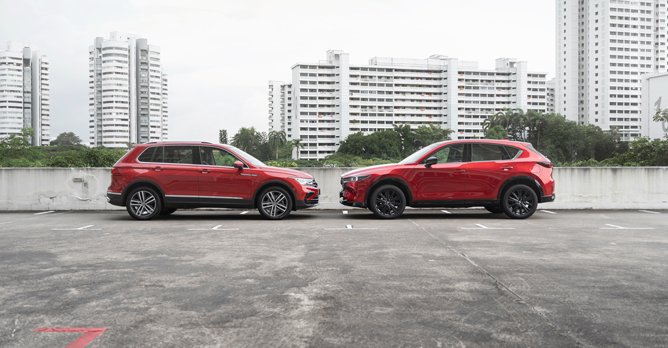

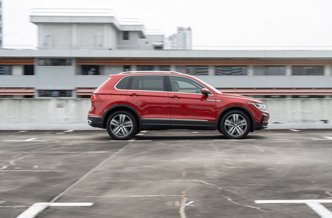
The latest Tiguan features a new grille, front bumper and LED head lights. Its rear end, too, has been given a new bumper with exhaust finishers, while the 'Tiguan' badging is now found across the tailgate. It's a clean and smart look for sure.
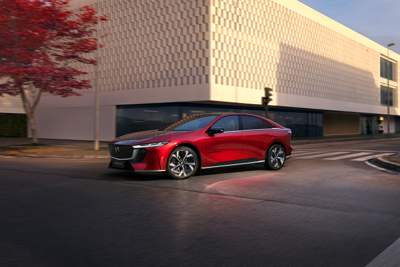
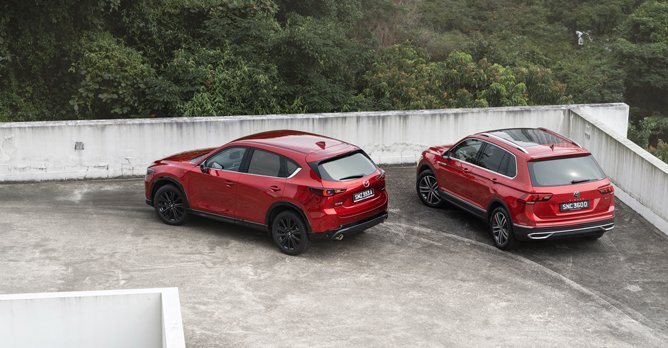
But sitting beside the CX-5, the Tiguan sort of fades into the background. While the Tiguan looks muscular with its straight lines, the CX-5 and its curves are alluring.
Mazda gave their popular crossover slimmer headlamps and a three-dimensional grille. Depending on the trim level, the grille will have either bright lime green or vivid red detailing. Piano black trim is used for the front spoiler, wheel arches and side skirts, giving the model some elegant contrasts.
Immerse yourself
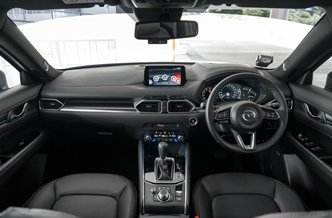
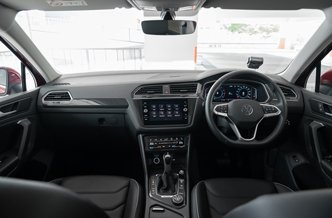
Unlike the CX-5's part-analogue, part-digital instrument panel, the Tiguan has always had a full digital cluster. The latest unit here offers various layouts to choose from, and boasts even sharper graphics, too.
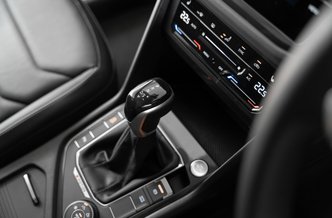
There's a new infotainment unit as well. Based on the brand's MIB3 system, it has a cleaner interface with fewer physical buttons. Even the air-con controls have become more advanced, with touch sliders replacing temperature knobs.
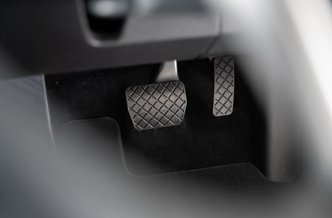
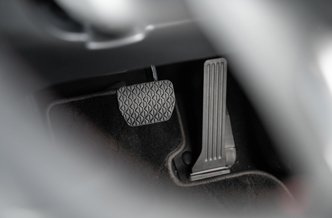
Practicality remains a Tiguan strength, too, as the door bins are larger than the CX-5's. The Tiguan also has an additional storage point atop the dashboard, which could be useful for say, spare CashCards.
But while the Tiguan has the lead in terms of tech, the CX-5 has the advantage in terms of overall build quality.
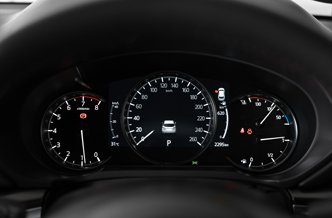
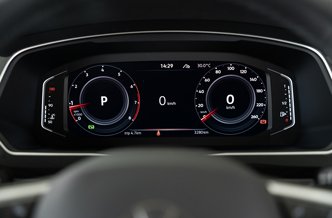
While the CX-5's mostly analogue gauges might seem dated, they do look good and work as intended. Mazda should have updated the infotainment though, as the screen could be larger, and the graphics much nicer.
That said, the biggest bugbear is that the system tends to feel like it's lagging, especially when compared to the Tiguan's snappy interface.
Backseat matters
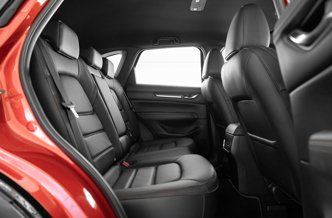
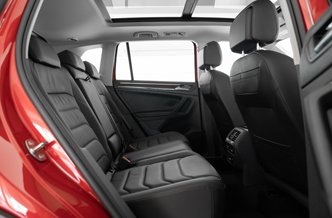
The Tiguan's backseat is roomier, and the occupants have their own climate zone as well. There are also larger door bins for loose items, and a panoramic sunroof to make the space feel airier still.
These items aren't offered by the CX-5, so the passengers here must make do with air vents sans climate controls and smaller storage points. What the CX-5 does offer, though, are plusher seats and more headroom, since there's no sunroof.
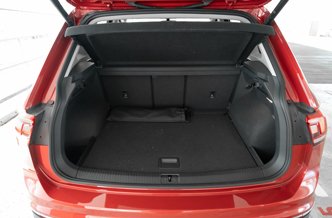
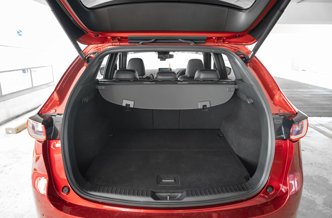
Now, the CX-5 also offers the same flexibility and split-folding rear seats.
However, the boot capacity of 442 litres is considerably less than what the Tiguan has.
Opposing approaches
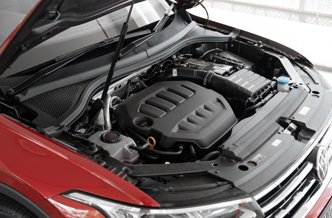
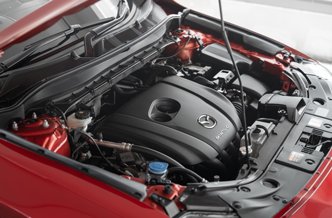
This enables the Tiguan's 1,984cc unit to kick out 187bhp and 320Nm. Paired to a seven-speed dual-clutch transmission, the Tiguan finishes the century sprint in 7.4 seconds.
The CX-5's naturally aspirated 1,998cc motor, on the other hand, produces 162bhp and 213Nm. Not surprisingly, the CX-5 takes 10.2 seconds (2.8 seconds longer) to go from zero to 100km/h.
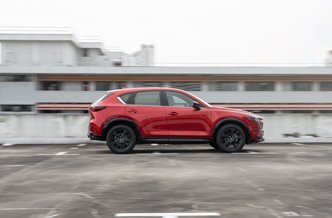
The steering also feels pointier and more communicative than the Tiguan's helm. This may be an SUV, but it's nevertheless still nice to have.
Then there's Mazda's six-speed automatic gearbox. It can't swap cogs as quickly as VW's dual-clutch, but even without selecting 'Sport' mode, the gearbox's initial responses feel snappier.
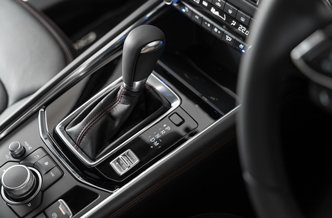
But though the Tiguan is quicker and more surefooted thanks to its 4Motion all-wheel drive, the slower, front-wheel drive CX-5 is more fun and engaging to punt around corners.
There's no question though, that the Tiguan has overall performance and ride quality in the bag.
Making the call
Objectively, the Tiguan is the better family SUV. It offers superior power, practicality and space. And with its digital cockpit, it's more modern as well. You want an SUV that ticks nearly all the boxes? It's this one.
Plus, since both models cost over $200k, the Tiguan's current price of $215,900 isn't that much of a premium over the CX-5, which goes for $201,888.
Now, although the Tiguan is the better option on paper, buying a car isn't always just about finding the model that ticks all the boxes. The car I choose has to appeal to me on other fronts as well, and this is why I'd personally go for the CX-5 (though I acknowedge it has its shortcomings).
The Tiguan's performance and speed are great, but in the CX-5, I can work the engine and enjoy the responsiveness of the gearbox. Practicality is also more than adequate, as my wife and I have no kids. Besides, design is even more critical. I see the CX-5 as something I can both use and admire, and that makes it the more appealing option for me.
Looking to compare more cars? Check out these other Group Tests
Nissan Qashqai faces off against the Skoda Karoq
Honda HR-V lines up alongside the Peugeot 3008
Mercedes-Benz CLA180 goes head-to-head with the BMW 216i Gran Coupe
Opel Mokka takes on the Renault Captur
Polestar 2 Long Range Single Motor goes up against the Tesla Model 3
Audi Q5 lines up alongside the Jaguar F-Pace