View page in desktop
|
Report error
  •   Apple app store icon
  • Google play store icon
Terms of Service
|
Privacy Policy
|
PDPA
|
Site Map
©2004-2026 Sgcarmart, Singapore. All rights reserved.
  • Home
  • Car Articles
  • advice
  • advice Listings
  • Car Ownership Advice

12 ways to save petrol and money

01 Sep 2007

|

120,951 views

Here are some of the ways to ease the stress on your pocket with your car.


The price of petrol has always been climbing upwards. Instead of complaining about the increase in cost of petrol, let's see how can you cut down on petrol costs. Choosing the right type of petrol is a good start! As a general rule of thumb, you should always flip through your vehicle owner's manual and choose the lowest recommended grade of petrol required. Contrary to popular belif, higher grades of petrol actually does nothing to improve the performance of your car.

In addition, below are 12 good driving tips for saving fuel. Read them carefully, and you will probably save a pile on your next petrol bill.

1. Pump up your tyres
Keeping your tyres inflated is one of the easiest and essential way to reduce petrol usage. Saving petrol = saving money. Thus, your should try to improve your fuel economy.

If a range is recommended by the manufacturer, the higher pressure should be used to maximize fuel efficiency. Deflated tyres run hot and jeopardize safety. It will cause the tyres to wear out prematurely, affect the vehicles adversely. It also decrease the fuel economy by increasing the rolling resistance.

Tyres lose about one psi pressure per month due to air loss caused by the tyre hitting holes, bumps and kerbs. There is thus a need to check tyres at least once a month. A tyre deflated by two psi will result in a one per cent increase in fuel consumption.

2. Drive at a moderate speed
Avoid speeding on open roads. Driving at the acceptable speed limit is safer and increases the fuel economy. As for highway driving, over 50% of the power produced by the engine is used to overcome aerodynamic drag. For this reason, fuel consumption increases rapidly at speeds above 90km/h. On an average, a car uses about 15% more fuel at 100km/h, and 25% more fuel at 110km/h as compared to when it is cruising at 90km/h.

However, this should not lead one to conclude that the lower the speed, the better the fuel economy. The fuel consumption of an average car increases sharply at any speed below 50km/h.
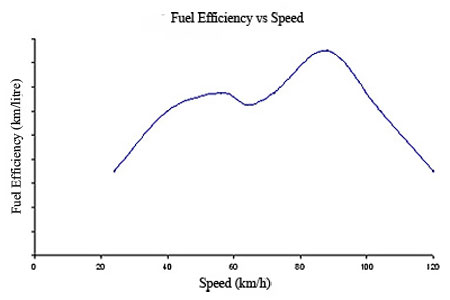
Driving at a moderate speed increases the fuel efficiency.

3. Clean the air filter regularly
Clogged air filters increase fuel consumption by restricting airflow to the engine. It should be cleaned/replaced when necessary. Clogged air filters can increase fuel consumption by up to 10 per cent.

4. Use thinner tyres
Tyres with thick width will improve the handling of your car. On the flip side, it will also increase your car's fuel consumption. Thicker tyres mean more rolling resistance, and naturally higher fuel consumption.

5. Start up the car properly
Cars these days do not require you to prime the engine by pumping the accelerator pedal repeatedly before starting. Such an action wastes fuel, so avoid doing it. When starting the engine, idle it for no more than 30 seconds to warm it up. An engine will warm up faster on the road. However, avoid sudden acceleration before the engine has warmed up sufficiently.

6. Drive in high gear (Overdrive)
The engine runs most efficiently between around 1,500 and 2,500 rpm. To maintain low engine revolutions, you should increase through the gears as soon as possible and before the revolution reach 2500 rpm.

For automatic transmission cars, you should always switch on your overdrive to help save fuel. Overdrive will allow your engine to change gears at lower revolutions. It also puts your transmission into an "economy" mode. It engages the final "overdrive" gear when cruising to keep the rpms extra low, thereby increasing fuel economy.

7. Travel light
Avoid carrying any unnecessary weight in your car. On the average, every 50kg added load in your car will increase fuel consumption by two per cent.

8. Anticipate traffic ahead
A driver can reduce fuel consumption by up to 10 per cent if he does not brake or accelerate unnecessarily. Anticipate traffic conditions ahead, adjust your speed accordingly and avoid tailgating. Accelerations and decelerations waste fuel. Braking and abrupt stops can be minimized by not following too closely and slowing down gradually when approaching a red light.

It takes up to six times as much fuel to move a car from a dead stop than it does for one moving at just a few km/h.

9. Avoid strong acceleration
The fuel consumption remains at a minimum when driving steadily at a moderate speed of about 90km/h. Bear in mind that every time the accelerator is depressed, the engine goes into a "fuel-enrichment" mode which wastes fuel.

The vehicle should always be gradually and smoothly accelerated. Using cruise control on highways can help maintain a constant speed and reduce fuel consumption.

10. Minimise aerodynamic drag
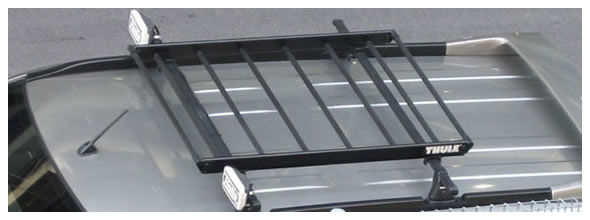
Additional parts on the exterior of a vehicle such as roof racks and spoilers, or having the window open, increases aerodynamic drag.
Roof racks are bad for fuel economy as they increase air resistance and fuel consumption.

11. Don't let your engine idle
Minimize fuel wastage when idling by stopping the engine whenever your car is stationary or held up for an extended period of time.

Idling for more than a minute consumes much more fuel than restarting an engine. By having the engine switched off, you will save more fuel than that you lose from the burst of fuel involved in restarting the engine. The net increased wear and tear from this practice is negligible.

12. Use the air-con sparingly
Air conditioners can use about 10 per cent more fuel when operating. However, if you are driving at more than 80 km/h, using the air condition is better for fuel economy than an open window.

AllReviewsNewsAdviceFeaturesVideos
  • Home
  • Car Articles
  • advice
  • advice Listings
  • Car Ownership Advice

12 ways to save petrol and money

01 Sep 2007

|

120,951 views

Here are some of the ways to ease the stress on your pocket with your car.


The price of petrol has always been climbing upwards. Instead of complaining about the increase in cost of petrol, let's see how can you cut down on petrol costs. Choosing the right type of petrol is a good start! As a general rule of thumb, you should always flip through your vehicle owner's manual and choose the lowest recommended grade of petrol required. Contrary to popular belif, higher grades of petrol actually does nothing to improve the performance of your car.

In addition, below are 12 good driving tips for saving fuel. Read them carefully, and you will probably save a pile on your next petrol bill.

1. Pump up your tyres
Keeping your tyres inflated is one of the easiest and essential way to reduce petrol usage. Saving petrol = saving money. Thus, your should try to improve your fuel economy.

If a range is recommended by the manufacturer, the higher pressure should be used to maximize fuel efficiency. Deflated tyres run hot and jeopardize safety. It will cause the tyres to wear out prematurely, affect the vehicles adversely. It also decrease the fuel economy by increasing the rolling resistance.

Tyres lose about one psi pressure per month due to air loss caused by the tyre hitting holes, bumps and kerbs. There is thus a need to check tyres at least once a month. A tyre deflated by two psi will result in a one per cent increase in fuel consumption.

2. Drive at a moderate speed
Avoid speeding on open roads. Driving at the acceptable speed limit is safer and increases the fuel economy. As for highway driving, over 50% of the power produced by the engine is used to overcome aerodynamic drag. For this reason, fuel consumption increases rapidly at speeds above 90km/h. On an average, a car uses about 15% more fuel at 100km/h, and 25% more fuel at 110km/h as compared to when it is cruising at 90km/h.

However, this should not lead one to conclude that the lower the speed, the better the fuel economy. The fuel consumption of an average car increases sharply at any speed below 50km/h.

Driving at a moderate speed increases the fuel efficiency.

3. Clean the air filter regularly
Clogged air filters increase fuel consumption by restricting airflow to the engine. It should be cleaned/replaced when necessary. Clogged air filters can increase fuel consumption by up to 10 per cent.

4. Use thinner tyres
Tyres with thick width will improve the handling of your car. On the flip side, it will also increase your car's fuel consumption. Thicker tyres mean more rolling resistance, and naturally higher fuel consumption.

5. Start up the car properly
Cars these days do not require you to prime the engine by pumping the accelerator pedal repeatedly before starting. Such an action wastes fuel, so avoid doing it. When starting the engine, idle it for no more than 30 seconds to warm it up. An engine will warm up faster on the road. However, avoid sudden acceleration before the engine has warmed up sufficiently.

6. Drive in high gear (Overdrive)
The engine runs most efficiently between around 1,500 and 2,500 rpm. To maintain low engine revolutions, you should increase through the gears as soon as possible and before the revolution reach 2500 rpm.

For automatic transmission cars, you should always switch on your overdrive to help save fuel. Overdrive will allow your engine to change gears at lower revolutions. It also puts your transmission into an "economy" mode. It engages the final "overdrive" gear when cruising to keep the rpms extra low, thereby increasing fuel economy.

7. Travel light
Avoid carrying any unnecessary weight in your car. On the average, every 50kg added load in your car will increase fuel consumption by two per cent.

8. Anticipate traffic ahead
A driver can reduce fuel consumption by up to 10 per cent if he does not brake or accelerate unnecessarily. Anticipate traffic conditions ahead, adjust your speed accordingly and avoid tailgating. Accelerations and decelerations waste fuel. Braking and abrupt stops can be minimized by not following too closely and slowing down gradually when approaching a red light.

It takes up to six times as much fuel to move a car from a dead stop than it does for one moving at just a few km/h.

9. Avoid strong acceleration
The fuel consumption remains at a minimum when driving steadily at a moderate speed of about 90km/h. Bear in mind that every time the accelerator is depressed, the engine goes into a "fuel-enrichment" mode which wastes fuel.

The vehicle should always be gradually and smoothly accelerated. Using cruise control on highways can help maintain a constant speed and reduce fuel consumption.

10. Minimise aerodynamic drag
Additional parts on the exterior of a vehicle such as roof racks and spoilers, or having the window open, increases aerodynamic drag.
Roof racks are bad for fuel economy as they increase air resistance and fuel consumption.

11. Don't let your engine idle
Minimize fuel wastage when idling by stopping the engine whenever your car is stationary or held up for an extended period of time.

Idling for more than a minute consumes much more fuel than restarting an engine. By having the engine switched off, you will save more fuel than that you lose from the burst of fuel involved in restarting the engine. The net increased wear and tear from this practice is negligible.

12. Use the air-con sparingly
Air conditioners can use about 10 per cent more fuel when operating. However, if you are driving at more than 80 km/h, using the air condition is better for fuel economy than an open window.
Jegan Das Haridas
Text and photos by Jegan Das Haridas
Writing may be my thing, but cars, well, that's just pure passion that I simply cannot get rid off.
24.4k

Tags

12 ways to save petrol petrol and money 12 ways to save petrol 12 ways to save money save money and petrol

Jegan Das Haridas
Text and photos by Jegan Das Haridas
Writing may be my thing, but cars, well, that's just pure passion that I simply cannot get rid off.
24.4k

Tags

12 ways to save petrol petrol and money 12 ways to save petrol 12 ways to save money save money and petrol

All Advice Categories

Car BuyingCar SellingCar OwnershipCar TechnicalCar MaintenanceMiscellaneous

All Advice Categories

Car BuyingCar SellingCar OwnershipCar TechnicalCar MaintenanceMiscellaneous

Related Motor Directory Categories

    Solar Films & TintingPaint ProtectionTyres & RimsSpray PaintingUpholstery - Seats & TopsDecals, Stickers & Number Plates

Related Motor Directory Categories

    Solar Films & TintingPaint ProtectionTyres & RimsSpray PaintingUpholstery - Seats & TopsDecals, Stickers & Number Plates

You May Also Like

We try out roadside parking with the new OBU!

We try out roadside parking with the new OBU!

New cars are safer: Opt for one when you can

New cars are safer: Opt for one when you can

EV NEXT: Peace of mind with battery SOH certification

EV NEXT: Peace of mind with battery SOH certification

Mazda 6e Fastback GT Electric review

Mazda 6e Fastback GT Electric review

Sgcarmart Explores: Bras Basah!

Sgcarmart Explores: Bras Basah!

Opinion: Is it time for a change to our road traffic laws?

Opinion: Is it time for a change to our road traffic laws?

Hongqi Singapore opens its showroom doors

Hongqi Singapore opens its showroom doors

Is parallel import hesitancy growing among car buyers?

Is parallel import hesitancy growing among car buyers?

The BYD Sealion 8 seven-seater SUV arrives in Singapore

The BYD Sealion 8 seven-seater SUV arrives in Singapore

A first look at Chery's iCaur V23 and Jaecoo J8 in Singapore

A first look at Chery's iCaur V23 and Jaecoo J8 in Singapore

Toyota RAV4 Hybrid vs Subaru Forester e-Boxer

Toyota RAV4 Hybrid vs Subaru Forester e-Boxer

Tesla launches Model Y L in Singapore, first six-seater here

Tesla launches Model Y L in Singapore, first six-seater here

7 things we learnt about the Zeekr 7GT

7 things we learnt about the Zeekr 7GT

Motoring Icons: JDM legends - Honda NSX

Motoring Icons: JDM legends - Honda NSX

Mercedes-Benz GLC debuts alongside Studio opening

Mercedes-Benz GLC debuts alongside Studio opening

Tesla Model Y L Premium AWD 88kWh Review

Tesla Model Y L Premium AWD 88kWh Review

You May Also Like

We try out roadside parking with the new OBU!

We try out roadside parking with the new OBU!

New cars are safer: Opt for one when you can

New cars are safer: Opt for one when you can

EV NEXT: Peace of mind with battery SOH certification

EV NEXT: Peace of mind with battery SOH certification

Mazda 6e Fastback GT Electric review

Mazda 6e Fastback GT Electric review

Sgcarmart Explores: Bras Basah!

Sgcarmart Explores: Bras Basah!

Opinion: Is it time for a change to our road traffic laws?

Opinion: Is it time for a change to our road traffic laws?

Hongqi Singapore opens its showroom doors

Hongqi Singapore opens its showroom doors

Is parallel import hesitancy growing among car buyers?

Is parallel import hesitancy growing among car buyers?

The BYD Sealion 8 seven-seater SUV arrives in Singapore

The BYD Sealion 8 seven-seater SUV arrives in Singapore

A first look at Chery's iCaur V23 and Jaecoo J8 in Singapore

A first look at Chery's iCaur V23 and Jaecoo J8 in Singapore

Toyota RAV4 Hybrid vs Subaru Forester e-Boxer

Toyota RAV4 Hybrid vs Subaru Forester e-Boxer

Tesla launches Model Y L in Singapore, first six-seater here

Tesla launches Model Y L in Singapore, first six-seater here

7 things we learnt about the Zeekr 7GT

7 things we learnt about the Zeekr 7GT

Motoring Icons: JDM legends - Honda NSX

Motoring Icons: JDM legends - Honda NSX

Mercedes-Benz GLC debuts alongside Studio opening

Mercedes-Benz GLC debuts alongside Studio opening

Tesla Model Y L Premium AWD 88kWh Review

Tesla Model Y L Premium AWD 88kWh Review

Related Articles

New to driving? Here's how to become a better driver

New to driving? Here's how to become a better driver

Elevate every drive with these car audio upgrades

Elevate every drive with these car audio upgrades

10-Year COE Survival Kit: Essential Checklist

10-Year COE Survival Kit: Essential Checklist

Value-for-Money Servicing Packages for Your Car

Value-for-Money Servicing Packages for Your Car

Road Trip Checklist Before You Hit the Road

Road Trip Checklist Before You Hit the Road

Related Articles

New to driving? Here's how to become a better driver

New to driving? Here's how to become a better driver

Elevate every drive with these car audio upgrades

Elevate every drive with these car audio upgrades

10-Year COE Survival Kit: Essential Checklist

10-Year COE Survival Kit: Essential Checklist

Value-for-Money Servicing Packages for Your Car

Value-for-Money Servicing Packages for Your Car

Road Trip Checklist Before You Hit the Road

Road Trip Checklist Before You Hit the Road