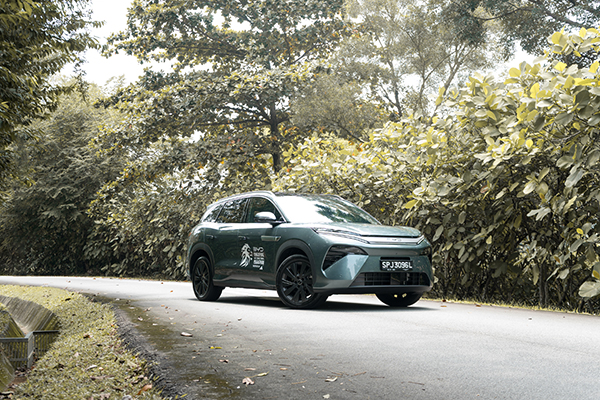
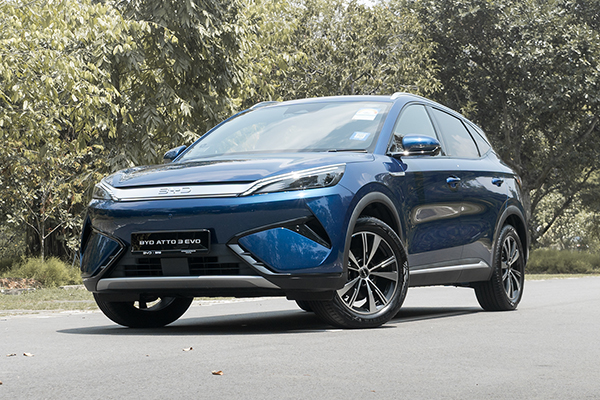
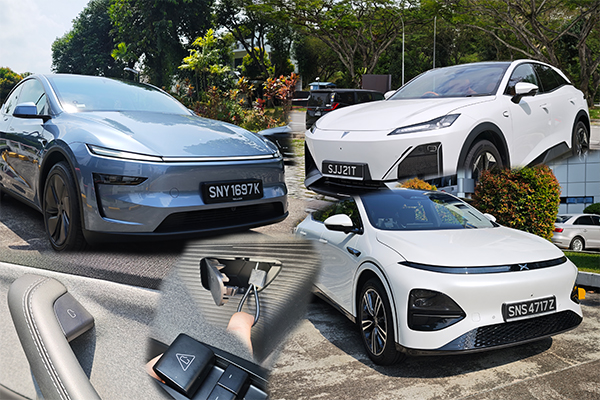
Will the petrolhead ever consider an electric 'engine' for his next sports car? Perhaps,but in the meantime,here is some encouragement in the form of dynamic driving machines at the
cutting-edge of electric-vehicle design and engineering. We hereby discuss the nuts and bolts (plus volts) of creating electric sports cars with the best of 'current' automotive technology.
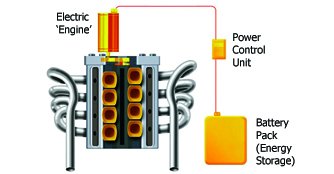
 This is the basic technical setup of an F1 Kinetic Energy Recovery System
A Blessing and a KERS
Four years ago in 2009, Formula One authorities allowed the incorporation of a Kinetic Energy Recovery System (KERS)on F1 racecars. The device uses a battery to energise an electric motor, which gives a momentary boost to the drivetrain for short spurts of acceleration in critical situations, such as when overtaking.
The battery was limited in capacity, as was the motor power, so KERS was only available for less than seven seconds per lap. Although rated at a paltry 60kW(equivalent to 80.4bhp), which is barely 10 percent of an F1 engine's output, KERS is the closest we ever got to electrical power in Formula One racing.
Theoretically, the immediate response and instant maximum torque of an electric motor make it a perfect powerplant for any racecar, not just in Formula One. In any case, there'll be totally new formula for F1 engines from the 2014 season onwards, but any F1 fan hoping for some form of pure electric power will be disappointed.
For the foreseeable future, the primary racing engines will continue to be reciprocating-piston types with internal combustion, fuelled by either petrol or diesel.
cutting-edge of electric-vehicle design and engineering. We hereby discuss the nuts and bolts (plus volts) of creating electric sports cars with the best of 'current' automotive technology.
A Blessing and a KERS
Four years ago in 2009, Formula One authorities allowed the incorporation of a Kinetic Energy Recovery System (KERS)on F1 racecars. The device uses a battery to energise an electric motor, which gives a momentary boost to the drivetrain for short spurts of acceleration in critical situations, such as when overtaking.
The battery was limited in capacity, as was the motor power, so KERS was only available for less than seven seconds per lap. Although rated at a paltry 60kW(equivalent to 80.4bhp), which is barely 10 percent of an F1 engine's output, KERS is the closest we ever got to electrical power in Formula One racing.
Theoretically, the immediate response and instant maximum torque of an electric motor make it a perfect powerplant for any racecar, not just in Formula One. In any case, there'll be totally new formula for F1 engines from the 2014 season onwards, but any F1 fan hoping for some form of pure electric power will be disappointed.
For the foreseeable future, the primary racing engines will continue to be reciprocating-piston types with internal combustion, fuelled by either petrol or diesel.
However, in every category of international level championship motor racing, electricity-assisted engines or hybrid powertrains will be an increasingly integral part of the regulations. It should only be a matter of time before we catch fully electric racecars in action.
Leading the Charge
The credit for taking the bold first step in producing an everyday electric sportscar for general sale is Tesla Motors. Established in 2003, the company has no carmaking history and doesn't possess any motorsport pedigree, but it has been at the forefront of speedy electric motoring for the past decade. Not surprisingly, Tesla started in San Francisco's Silicon Valley, the Californian hotbed of high technology.
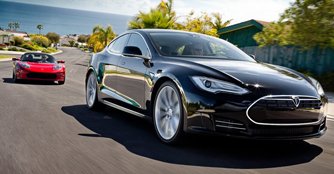 Following the launch of the Roadster (left), Tesla has produced a second production model, the Model S (right) - a full-electric luxury performance sedanHigh-tech but low-slung is the firm's first product, the Tesla Roadster. Based on the Lotus Elise, it went into series production in 2008. Unlike any Lotus that ever bloomed, however, the groundbreaking Tesla has no engine,no fuel tank/ancillaries, and makes no noise when 'idling' at the traffic junction.
Mounted in a midship position is a 375-volt AC electric motor, which drives the rear wheels through a single-reduction
gearset and a conventional differential. The juice is supplied by lithium-ion batteries, which are claimed to store enough energy on a complete charge to power the car for a distance of 390km.
Leading the Charge
The credit for taking the bold first step in producing an everyday electric sportscar for general sale is Tesla Motors. Established in 2003, the company has no carmaking history and doesn't possess any motorsport pedigree, but it has been at the forefront of speedy electric motoring for the past decade. Not surprisingly, Tesla started in San Francisco's Silicon Valley, the Californian hotbed of high technology.
Mounted in a midship position is a 375-volt AC electric motor, which drives the rear wheels through a single-reduction
gearset and a conventional differential. The juice is supplied by lithium-ion batteries, which are claimed to store enough energy on a complete charge to power the car for a distance of 390km.
While the Tesla is nowhere as lithe as a Lotus roadster, because the batteries alone weigh around 450kg (roughly five times heavier than an Elise tank filled to the brim with petrol), the Tesla's instantaneous 400Nm of torque (from zero rpm to 5100rpm) is shockingly effective and simply addictive.
It takes less than four seconds to go from a standstill to 100km/h, and its on-the-move acceleration is so amazing that the rest of the traffic alongside seems to 'freeze'. All electric cars accelerate briskly, but the Tesla Roadster is in a much faster performance league.
The Tesla Roadster Sport, which we tested back in 2010, is still the only electric sports car we've driven on Singapore roads. However, we have seen a number of exciting models sporting plug-in hybrid drivetrains (part electric, part petrol driven), such as the recently launched BMW i8.
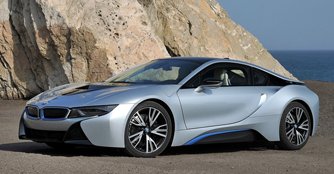 An alternative to full-electric sports cars: Plug-in hybrid sports cars, like the BMW i8, combine low emissions with high everyday practicality
Another Electrifying Performer
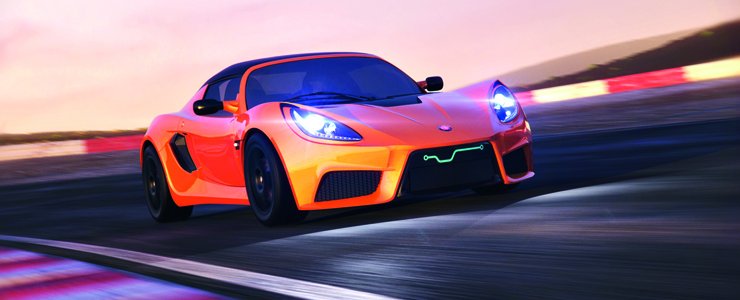
The Detroit Electric SP:01 (pictured in banner) is America's 'other' electric sports car. Curiously, it's a mid-engined two-seater spun off from the Lotus Elise/Exige, combining carbon fibre bodywork with Lotus' classic aluminium chassis. All in, the SP:01 weighs a commendably low 1080kg.
Its manufacturer has a history much older than that of the 10-year-young Tesla Motors. In fact, Detroit Electric has been around for as long as the motorcar. Established in 1907, nearly a century before Tesla, the company was once the largest producer of electric vehicles (EVs).
It takes less than four seconds to go from a standstill to 100km/h, and its on-the-move acceleration is so amazing that the rest of the traffic alongside seems to 'freeze'. All electric cars accelerate briskly, but the Tesla Roadster is in a much faster performance league.
The Tesla Roadster Sport, which we tested back in 2010, is still the only electric sports car we've driven on Singapore roads. However, we have seen a number of exciting models sporting plug-in hybrid drivetrains (part electric, part petrol driven), such as the recently launched BMW i8.
Another Electrifying Performer
The Detroit Electric SP:01 (pictured in banner) is America's 'other' electric sports car. Curiously, it's a mid-engined two-seater spun off from the Lotus Elise/Exige, combining carbon fibre bodywork with Lotus' classic aluminium chassis. All in, the SP:01 weighs a commendably low 1080kg.
Its manufacturer has a history much older than that of the 10-year-young Tesla Motors. In fact, Detroit Electric has been around for as long as the motorcar. Established in 1907, nearly a century before Tesla, the company was once the largest producer of electric vehicles (EVs).
That was when petrol was very expensive, and internal combustion engines were noisy and dirty. But the EV pioneer faded into oblivion in the 1930s when petrol became affordable and petrol engines got reliable. The 'new' Detroit Electric reemerged in 2008 to manufacture a range of all-electric passenger cars, with the SP:01 being the first.
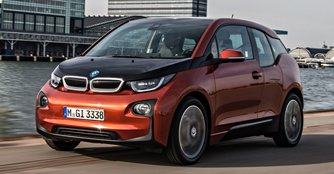 While short of being a sports car, the all-electric BMW i3 still feels energetic with 170bhp and 250Nm of instantenous torqueDespite looking uncannily similar to the Tesla Roadster, the SP:01 has some interesting differences. Its mid-mounted
motor is rated at 201bhp (Tesla 300bhp)and 225Nm (Tesla 400Nm), while its claimed 0-100km/h timing of 3.7 seconds
is identical to that of its rival.
The SP:01 has a much higher top speed (249km/h versus 201km/h), but its quoted range is shorter (300km versus 390km), and the newcomer uses a lithium-polymer battery pack, which is arguably more advanced than the Tesla’s lithium-ion cells.
Both 'engines' are the AC synchronous type, but the SP:01’s drivetrain employs a four or five-speed transmission. This is
somewhat perplexing, because a gearbox adds kilogrammes to the otherwise lightweight design and the electric motor's torque output is consistent, which makes gears unnecessary in the first place. There's also a two-speed automatic option.
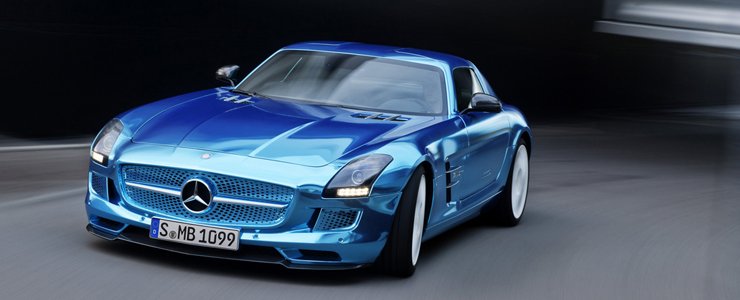
King of Zing
The Mercedes-Benz SLS AMG Electric Drive (pictured in banner) is a technological tour de force that makes the Detroit Electric SP:01 and Tesla Roadster look like school projects.
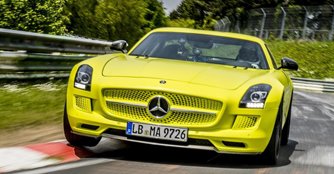 The predecessor of the SLS AMG Electric Drive, the SLS AMG E-Cell prototype, was unveiled in 2011 at the Geneva Motor ShowThe special SLS derivative has one motor for each wheel (that would be four motors in total), so it cannot be classified in the conventional sense as front, rear or mid-engined. Each motor is mounted on the chassis, close to the car's centre line and with power transmitted to the relevant wheel via a driveshaft.
There are no differentials because each motor is computer-controlled to deliver the precise amount of torque to each wheel, whether on a straight road or through a challenging corner.
No four-wheel drive system, even one with fancy electronics and clever mechanicals, can offer anything close to the torque-vectoring capability of the electric SLS' individual wheel motors.
Together, the 400-volt AC motors develop 552kW (751bhp) and 1000Nm - safely, promptly and powerfully.
Electrical energy for the motor units is provided by a lithium-ion battery cluster housed in a longitudinal carbon fibre monocoque that forms the backbone of the SLS.
Charged using a domestic 240-volt power point, the batteries require 20 hours to 'fill up', which is claimed to be good for 250km. But this distance will no doubt drop significantly if you exploit the car's 250km/h (governed) top speed and 3.9-second century sprint timing.
The Mercedes-Benz SLS AMG Electric Drive (pictured in banner) is a technological tour de force that makes the Detroit Electric SP:01 and Tesla Roadster look like school projects.
There are no differentials because each motor is computer-controlled to deliver the precise amount of torque to each wheel, whether on a straight road or through a challenging corner.
No four-wheel drive system, even one with fancy electronics and clever mechanicals, can offer anything close to the torque-vectoring capability of the electric SLS' individual wheel motors.
Together, the 400-volt AC motors develop 552kW (751bhp) and 1000Nm - safely, promptly and powerfully.
Electrical energy for the motor units is provided by a lithium-ion battery cluster housed in a longitudinal carbon fibre monocoque that forms the backbone of the SLS.
Charged using a domestic 240-volt power point, the batteries require 20 hours to 'fill up', which is claimed to be good for 250km. But this distance will no doubt drop significantly if you exploit the car's 250km/h (governed) top speed and 3.9-second century sprint timing.
Electric Circuit
Like the fuel consumption figures on the windscreen stickers of new cars, the 'range' claimed by electric vehicle makers is based on a specific driving pattern, which is ultimately quite
different from real-world motoring conditions.
In extreme driving, such as on a racing circuit, none of these electric sports cars is likely to achieve their theoretical 'mileage', because the batteries would deplete so quickly during hard acceleration and high speed bursts that, on the track, these machines would struggle to nudge even 25 percent of their 'full' range.
We won't be seeing electric-powered racecars in F1 or the GT arena anytime soon, but the FIA's Formula E championship that kicks off next year is an important first step towards a world-class electric racing programme.
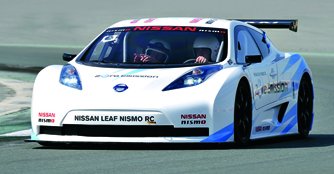 Nissan made a race-ready version of its electric Leaf to showcase the potential future of motorsportsIn the meantime, hybrids are appearing on racetracks and state-of-the-art automotive technology is filtering into roadgoing cars, so the novel electric sports car is destined to become a viable proposition for far more early-adopter petrolheads.
Here are some related articles that might interest you
12 hybrid cars you can buy in Singapore that will save your wallet
Should you buy an electric car in Singapore right now?
Can you actually save money by buying a hybrid car?
You need to avoid these 5 car buying mistakes at all costs!
Tips you need to know when buying a car in Singapore
Like the fuel consumption figures on the windscreen stickers of new cars, the 'range' claimed by electric vehicle makers is based on a specific driving pattern, which is ultimately quite
different from real-world motoring conditions.
In extreme driving, such as on a racing circuit, none of these electric sports cars is likely to achieve their theoretical 'mileage', because the batteries would deplete so quickly during hard acceleration and high speed bursts that, on the track, these machines would struggle to nudge even 25 percent of their 'full' range.
We won't be seeing electric-powered racecars in F1 or the GT arena anytime soon, but the FIA's Formula E championship that kicks off next year is an important first step towards a world-class electric racing programme.
Here are some related articles that might interest you
12 hybrid cars you can buy in Singapore that will save your wallet
Should you buy an electric car in Singapore right now?
Can you actually save money by buying a hybrid car?
You need to avoid these 5 car buying mistakes at all costs!
Tips you need to know when buying a car in Singapore